

South Korea Enforces Mandatory IPC Security Standard
On May 21, 2026, South Korea’s Korea Agency for Technology and Standards (KATS) implemented the mandatory KS X 3007:2026 standard for IP cameras — a development with direct implications for IPC manufacturers, exporters, and supply chain stakeholders in China, particularly those based in Shenzhen and Hangzhou.
Event Overview
Effective May 21, 2026, KATS enforced KS X 3007:2026, titled Information Security Requirements for Network Cameras. The standard mandates that all IP cameras imported into South Korea must support firmware digital signature verification, enforce default password modification upon first setup, use TLS 1.2 or higher for encrypted communications, and obtain KC (Korea Certification) security certification. Non-compliant products are prohibited from importation.
Industries Affected
Direct Exporters and Trading Enterprises
Exporters shipping IPCs to South Korea face immediate compliance barriers. Products without KC certification — including those previously cleared under older or non-security-focused KC modules — may be rejected at customs. This affects not only branded exporters but also OEM/ODM trading firms handling private-label shipments.
IPC Manufacturing Enterprises (OEM/ODM)
Over one hundred IPC contract manufacturers in Shenzhen and Hangzhou are directly impacted. Compliance requires firmware-level changes (e.g., cryptographic signing infrastructure), hardware-level TLS support, and integration with KC-certified secure boot processes. Retrofitting legacy production lines may incur engineering and validation delays.
Supply Chain and Component Sourcing Firms
Firms supplying SoCs, secure elements, or firmware development services must align with KS X 3007:2026 requirements. For example, chipsets lacking hardware-accelerated TLS 1.2+ or secure key storage may no longer qualify for KC-certified designs targeting the Korean market.
Distribution and Certification Support Providers
Third-party KC certification consultants, testing labs, and logistics intermediaries handling Korean market entry now need updated technical capacity to validate firmware signature integrity, TLS handshake behavior, and initial setup workflows — areas previously outside standard KC scope for consumer IPCs.
Key Focus Areas and Recommended Actions
Monitor official KC certification guidance updates
KATS and the Korea Testing & Research Institute (KTR) have not yet published detailed test procedures or firmware signing key management rules for KS X 3007:2026. Exporters and manufacturers should track announcements from KTR and the National Radio Research Agency (RRA), as interpretation of “firmware digital signature” (e.g., signing scope, key rotation policy, signature verification failure behavior) will shape implementation feasibility.
Prioritize product families destined for South Korea
Rather than retrofitting entire portfolios, manufacturers should identify SKUs with active Korean distribution agreements or pending orders. These require immediate firmware revision, KC application submission, and lab testing — especially where TLS 1.2+ support depends on specific bootloader or OS versions.
Distinguish between regulatory signal and operational enforcement
Analysis shows that while the standard is legally effective as of May 21, 2026, customs enforcement timelines and transitional arrangements (e.g., grace periods for existing stock) remain unconfirmed. Observably, some Korean importers are already requesting pre-approval documentation — suggesting de facto enforcement may precede formal border controls.
Prepare firmware signing infrastructure and supplier coordination
Manufacturers must establish internal or outsourced cryptographic key management systems compatible with KC requirements. This includes coordinating with chipset vendors to verify secure bootchain compatibility and validating signature verification logic across all firmware update vectors (OTA, USB, web UI). Delays in signing toolchain readiness could halt new model certifications.
Editorial Perspective / Industry Observation
This mandate is better understood as both a regulatory milestone and an early indicator of broader Asia-Pacific convergence toward hardware-rooted security baselines for IoT devices. From an industry perspective, KS X 3007:2026 reflects a shift from functional safety to verifiable trust — moving beyond “what the device does” to “how it proves what it does.” While currently limited to South Korea, its technical pillars (firmware signing, mandatory credential reset, encrypted channels) mirror emerging frameworks in Japan (METI’s IoT Security Guidelines) and the EU (EN 303 645 alignment efforts). Current enforcement remains narrowly targeted, but its design signals growing regulatory appetite for supply-chain accountability in embedded firmware.
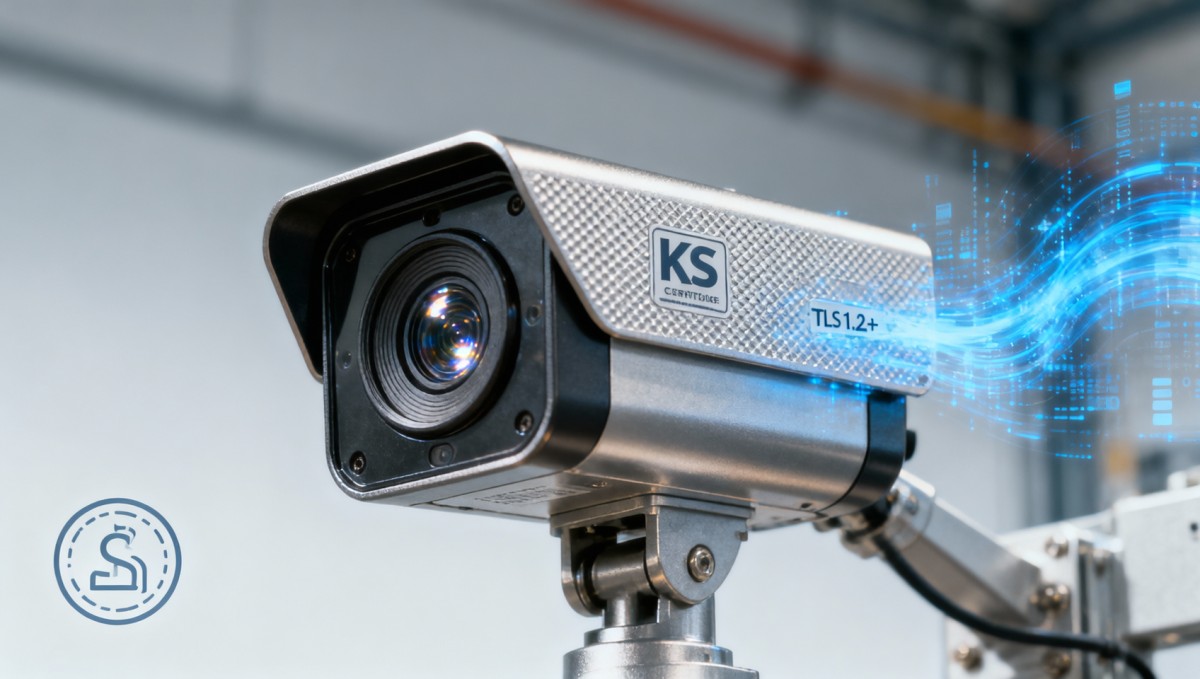
Conclusion: KS X 3007:2026 is not merely a certification hurdle — it marks the institutionalization of firmware integrity as a non-negotiable import requirement for network cameras in South Korea. For affected enterprises, the priority is not broad compliance preparation, but precise, model-level readiness aligned with confirmed KC test criteria. It is more accurately interpreted as a market-access gatekeeper than a general cybersecurity benchmark — its relevance remains geographically and technically bounded, yet operationally urgent for exporters engaged with Korea.
Source(s): Korea Agency for Technology and Standards (KATS), official announcement dated May 21, 2026; KS X 3007:2026 standard document (publicly released version).
Areas requiring ongoing observation: KTR’s forthcoming test procedure documents, RRA’s enforcement guidance on transitional imports, and any announced grace period for existing inventory.
 Which global manufacturing trends by sector matter most for sourcing plans?Global manufacturing trends by sector: identify sourcing risks, supplier resilience, compliance demands, and cost drivers to build smarter, more reliable procurement plans.
 What industrial trade intelligence pricing should include before you subscribeIndustrial trade intelligence pricing explained: compare coverage, data quality, access rights, and workflow value before choosing a subscription that supports smarter trade decisions.
 How an industrial trade intelligence dashboard can identify new supplier marketsDiscover how an industrial trade intelligence dashboard helps identify new supplier markets by comparing capacity, landed cost, logistics resilience, and compliance risk.
 Which global market entry barriers should exporters assess first?Global market entry barriers exporters should assess first: tariffs, compliance, buyer qualification, logistics, and payment risk. Build a practical strategy for confident market entry.
 How trade data aggregation analytics can reveal emerging supplier marketsTrade data aggregation analytics reveals emerging supplier markets by connecting trade flows, capacity signals, logistics, and compliance insights for smarter sourcing decisions.
 When an export market analysis platform can validate demand in a new marketExport market analysis platform insights help validate new-market demand through buyer fit, regulations, logistics, competition, and profitable entry conditions.
 What is driving the beauty and personal care market in the USA?Beauty and personal care in USA is driven by targeted solutions, selective premiumization, digital discovery, clean-label trust, diverse needs, and compliance. Explore key growth opportunities.
 How trade flow monitoring reports reveal changing regional demandTrade flow monitoring reports reveal changing regional demand through import volumes, sourcing shifts, product mix, logistics signals, and regulatory trends. Explore actionable market insights.
 How international market intelligence for investors reduces market-entry riskInternational market intelligence for investors reduces market-entry risk by validating demand, regulations, logistics, and competition before capital is committed.
 How international sourcing intelligence helps identify supplier risk earlyInternational sourcing intelligence helps businesses spot supplier risks early, protect supply continuity, and make smarter global procurement decisions.
 How trade data aggregation analytics reveals emerging supplier marketsTrade data aggregation analytics reveals emerging supplier markets through export trends, input flows, logistics, and regulatory signals. Discover smarter sourcing insights.
 What industrial cluster monitoring in Vietnam reveals about site riskIndustrial cluster monitoring Vietnam reveals hidden site risks across labor, utilities, logistics, compliance, and supplier dependencies. Make smarter sourcing and expansion decisions.
 Food Technology Trends Reshaping Shelf Life, Safety, and Product InnovationFood technology is reshaping shelf life, safety, and innovation. Discover the trends helping food businesses cut risk, improve compliance, and unlock stronger global market growth.
 How electronics manufacturing services are changing with low-volume demandElectronics manufacturing services are evolving fast with low-volume demand. Learn how agile EMS partners improve flexibility, compliance, sourcing resilience, and speed to market.
 How Can Buyers Reduce Procurement Risks for Electronic Components?How to reduce procurement risks for electronic components: learn how buyers assess traceability, lead times, compliance, and supplier types to avoid costly sourcing mistakes.
 What Sourcing Intelligence India Reveals About Supplier Risk and Cost ShiftsSourcing intelligence India reveals hidden supplier risk, compliance gaps, logistics pressure, and real cost shifts—helping buyers compare vendors smarter and source with more confidence.
 Fashion Trends 2026: Which Materials, Colors, and Silhouettes Are Gaining Ground?Fashion trends 2026 spotlight tactile fabrics, mineral colors, and controlled volume. Explore the materials, shades, and silhouettes shaping smarter, more wearable style.
 Smart Device Market Outlook: Key Growth Drivers, Segments, and Business OpportunitiesSmart device market trends are shifting toward system value, industrial demand, and resilient supply chains. Explore key growth drivers, high-potential segments, and business opportunities.
 How Global Trade Intelligence Services Help B2B Firms Evaluate Markets and SuppliersGlobal trade intelligence services help B2B firms compare suppliers, assess market potential, and uncover compliance, logistics, and pricing risks before costly decisions are made.
 Manufacturing Sector Updates for Investors: What Signals Matter Most in 2025?Manufacturing sector updates for investors in 2025: track orders, margins, supply chains, regulation, and exports to spot resilient manufacturers and smarter investment signals.
 How Energy Market Intelligence Helps Businesses Track Price Risks and Demand ShiftsEnergy market intelligence helps businesses spot price risks, demand shifts, and supply pressure early—improving procurement, resilience, and faster strategic decisions.





















Global Trade Insights & Industry
Our mission is to empower global exporters and importers with data-driven insights that foster strategic growth.
Search News
Popular Tags
Industry Overview
The global commercial kitchen equipment market is projected to reach $112 billion by 2027. Driven by urbanization, the rise of e-commerce food delivery, and strict hygiene regulations.