

What to audit before upgrading hotel security systems
Before investing in new hotel security systems, project managers need a clear audit of current risks, infrastructure limits, compliance gaps, and operational priorities. A well-planned review helps avoid costly disruptions, incompatible upgrades, and weak protection points. This guide outlines the critical areas to assess so your security upgrade supports guest safety, project efficiency, and long-term property performance.
Start with the audit questions that affect budget, timeline, and risk
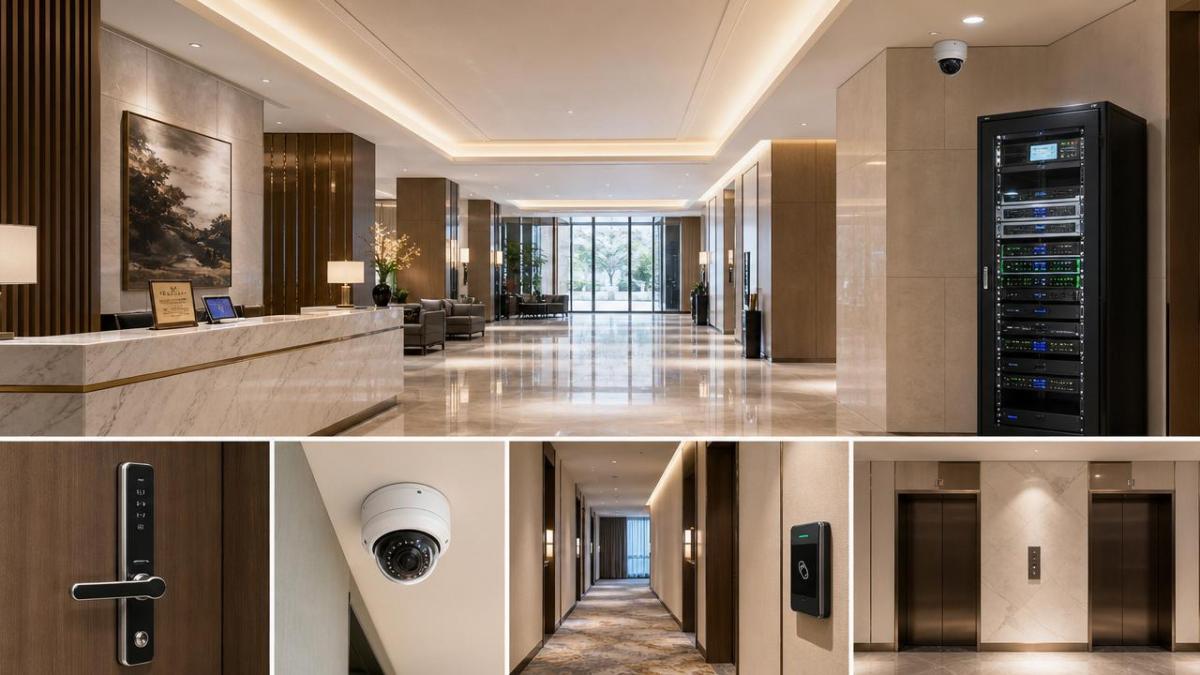
When project managers search for guidance on hotel security systems, they rarely want a generic list of devices. They need to know what to verify before committing capital, vendors, and installation schedules.
The core intent is practical decision support. Readers want to identify weak points, prevent specification errors, and build an upgrade plan that protects guests without interrupting hotel operations or wasting budget.
For this audience, the most useful content is not theory. It is a structured audit framework covering risk exposure, existing infrastructure, integration needs, compliance obligations, operational workflows, and long-term maintenance impact.
If the audit is shallow, the upgrade often becomes expensive twice. Hotels may buy systems that do not fit the building, cannot scale across properties, or create daily friction for front desk and engineering teams.
A strong pre-upgrade review gives project leaders leverage. It clarifies what must be replaced, what can be retained, where hidden costs sit, and how to align security improvements with business outcomes.
What are you actually trying to protect, and from which risks?
Before comparing products, define the property’s real risk profile. Different hotel formats face different exposure patterns, and the audit should reflect whether the site is an urban business hotel, resort, boutique property, or mixed-use complex.
List the assets and areas that matter most. Guest rooms, back-of-house corridors, cash handling points, parking areas, loading zones, server rooms, staff entrances, and public amenities all carry different threat levels and response needs.
Review past incident data rather than relying only on assumptions. Theft reports, unauthorized access events, key card misuse, elevator access issues, parking lot complaints, and emergency response delays reveal where the current system is underperforming.
It also helps to map risks by time. Some problems occur late at night, others during shift changes, deliveries, conventions, or peak check-in periods. Security planning becomes stronger when operational patterns are part of the audit.
This first step prevents overspending on low-priority features while missing critical vulnerabilities. In hotel security systems, the right design starts with realistic threat ranking, not with the most advanced technology brochure.
Which parts of the current system still work, and which are limiting the upgrade?
Many properties do not need a full rip-and-replace approach. Project managers should audit the existing environment carefully to determine what is still serviceable and what will create performance, compatibility, or reliability problems later.
Start with the basics: access control hardware, surveillance cameras, recording servers, wiring, door locks, alarm panels, intercoms, network switches, storage capacity, power backup, and central monitoring tools.
Then assess the age, condition, and support status of each component. A device may still function today but no longer receive manufacturer updates, replacement parts, or cybersecurity patches. That makes it a hidden liability.
Pay close attention to analog-to-digital transition points. Older cabling, proprietary lock platforms, or isolated camera systems may appear usable but block integration with modern software, mobile credentials, analytics, or centralized reporting.
Another common issue is undocumented infrastructure. If floor plans, cable routes, device inventories, and controller locations are incomplete, installation costs and downtime risks increase. A physical verification walk-through is often necessary.
The goal is to create a retention-versus-replacement matrix. This gives stakeholders a clearer view of where budget can be preserved and where retaining legacy equipment would simply shift cost into future failures.
Can the existing building and network support modern hotel security systems?
Security upgrades fail as often from infrastructure limits as from bad product choices. For project managers, one of the most important audit tasks is checking whether the property can technically support the intended solution.
Evaluate network bandwidth first. High-resolution cameras, cloud-connected access control, remote monitoring, and real-time alerts all increase traffic. An undersized network can cause recording gaps, latency, and unreliable device communication.
Power capacity matters as well. Confirm whether doors, readers, controllers, switches, and storage equipment have stable power, surge protection, and adequate battery backup. During outages, weak power design quickly becomes a safety issue.
Inspect environmental conditions in equipment rooms and field locations. Heat, moisture, dust, and poor ventilation shorten hardware life and affect system stability. Exterior devices and parking installations need particular attention.
Building layout also shapes feasibility. Thick walls, elevator cores, sprawling low-rise buildings, and detached facilities can complicate wireless performance, cable pathways, and emergency communication coverage.
If the hotel plans phased renovations, audit timing dependencies too. Security work may need coordination with guest room refurbishment, elevator modernization, front office redesign, or fire system upgrades to avoid rework.
Will the upgrade integrate with hotel operations, or create new friction?
For hospitality properties, security cannot be isolated from daily service delivery. A technically advanced system still fails if it slows check-in, frustrates housekeeping access, complicates contractor control, or burdens engineering staff.
Audit every operational workflow touched by security. That includes guest entry, staff shift access, visitor management, lost credential handling, room change procedures, event area access, after-hours deliveries, and emergency override rules.
Integration with the property management system is especially important. If room status, guest check-in, credential issuance, and access permissions are disconnected, staff will rely on manual workarounds that increase both delay and risk.
Also examine role-based permissions. Department heads, front desk agents, housekeeping teams, security supervisors, engineering technicians, and external vendors all need different access rights and audit visibility.
From a project perspective, the right question is not only “Does it integrate?” but “How much manual effort disappears after integration?” Time saved in daily operations is often one of the strongest business cases for an upgrade.
Audit reporting should be part of this review too. Managers need usable logs, incident search functions, and exception alerts. Without these, hotels collect security data but gain little operational intelligence from it.
Are there compliance, privacy, and duty-of-care gaps you must close first?
Hotel security decisions are influenced by more than physical protection. Project managers should review local safety codes, fire-life-safety coordination rules, privacy laws, employee access policies, and any brand or insurance requirements.
Video surveillance deserves particular scrutiny. Camera placement, retention periods, access permissions, signage, and export procedures may be regulated differently by market. An upgrade should improve control, not introduce privacy exposure.
Access logs and guest-related identity data also require careful handling. If the property uses mobile keys, cloud dashboards, or remote administration, the audit should include data storage location, encryption standards, and account governance.
For multi-property groups, standardization matters. Different sites often operate under inconsistent lock systems, retention rules, or access approval processes. That creates audit difficulty and raises enterprise-level risk.
Insurance carriers may also influence system design. Better documentation of door control, surveillance coverage, alarm response, and incident handling can support underwriting discussions and future claims defensibility.
In short, compliance should not be treated as a box-checking exercise after procurement. It belongs early in the audit because it shapes scope, architecture, vendor selection, and internal approval.
How resilient is the system during outages, emergencies, and high-stress events?
Hotels are 24/7 operating environments, so security resilience matters as much as normal performance. A pre-upgrade audit should test how the current setup behaves during power loss, network failure, fire alarms, or high-occupancy events.
Ask whether critical doors fail safe or fail secure in the right scenarios. Review emergency egress, stairwell access, assembly point coverage, and coordination with life-safety systems. Misalignment here creates serious operational and legal risk.
Examine recording continuity and recovery procedures. If a recorder fails, how quickly can footage be restored? If network links go down, do edge devices keep recording? Resilience is a specification issue, not just an IT concern.
Hotels that host conferences, VIP guests, or seasonal peaks should also stress-test staffing assumptions. A system that works during normal occupancy may become difficult to monitor and manage during crowded periods.
Project managers should document response ownership too. During incidents, who can unlock, isolate, review footage, export evidence, reset devices, or contact the vendor? Unclear responsibility turns minor events into major disruptions.
What will the upgrade cost beyond procurement?
One of the biggest decision errors in hotel security systems is focusing only on equipment price. A proper audit expands the cost view to installation complexity, network upgrades, software licensing, training, maintenance, and lifecycle replacement.
Hidden costs often appear in legacy door preparation, rewiring, server room improvements, after-hours installation windows, temporary guestroom access management, and integration middleware. These should be surfaced before vendor comparison.
It is also smart to estimate the cost of not upgrading. Frequent lock failures, poor incident evidence, excessive manual key handling, weak audit trails, and repeated service calls all have measurable financial impact.
Where possible, define value in operational terms: reduced loss events, fewer lockouts, faster investigations, lower manual administration, improved guest confidence, and stronger brand protection. These outcomes matter to executive approval.
For phased projects, create must-have and future-phase scopes. This helps preserve budget discipline while ensuring the architecture chosen today can support later expansion without another disruptive redesign.
How should project managers turn the audit into an actionable upgrade plan?
A useful audit ends with decisions, not just observations. Convert findings into a prioritized roadmap that ranks risks, identifies dependencies, and separates urgent remediation from strategic enhancement.
Begin with a documented baseline: current asset inventory, system diagrams, incident history, compliance gaps, operational pain points, and infrastructure constraints. This becomes the reference point for internal alignment and vendor briefings.
Next, define the target operating model. Decide how the hotel wants security to function after the upgrade, including staffing expectations, guest experience standards, remote management needs, reporting requirements, and resilience levels.
Then build technical requirements around that model. This is where project managers should specify integration needs, retention standards, access logic, migration constraints, commissioning expectations, and support service levels.
When engaging vendors, request site-specific recommendations rather than generic packages. The best proposals demonstrate understanding of hotel workflows, renovation timing, support realities, and the practical limits of the property.
Finally, plan acceptance testing before purchase orders are closed. Test door behavior, video quality, incident retrieval, failover response, user permissions, PMS connectivity, and staff usability. Commissioning is where many upgrade assumptions are proven wrong.
Conclusion: audit first, then upgrade with confidence
Upgrading hotel security systems should begin with a disciplined audit, not a product shortlist. For project managers, the priority is to understand risk, infrastructure readiness, operational fit, compliance exposure, resilience, and total lifecycle cost.
That approach reduces surprises during installation and improves the odds that the final system will support both guest safety and property performance. It also strengthens communication with owners, operators, IT teams, and external vendors.
If the audit is thorough, the upgrade becomes easier to justify and easier to execute. More importantly, it results in hotel security systems that work in real operating conditions, not just on a specification sheet.
 Which global manufacturing trends by sector matter most for sourcing plans?Global manufacturing trends by sector: identify sourcing risks, supplier resilience, compliance demands, and cost drivers to build smarter, more reliable procurement plans.
 What industrial trade intelligence pricing should include before you subscribeIndustrial trade intelligence pricing explained: compare coverage, data quality, access rights, and workflow value before choosing a subscription that supports smarter trade decisions.
 How an industrial trade intelligence dashboard can identify new supplier marketsDiscover how an industrial trade intelligence dashboard helps identify new supplier markets by comparing capacity, landed cost, logistics resilience, and compliance risk.
 Which global market entry barriers should exporters assess first?Global market entry barriers exporters should assess first: tariffs, compliance, buyer qualification, logistics, and payment risk. Build a practical strategy for confident market entry.
 How trade data aggregation analytics can reveal emerging supplier marketsTrade data aggregation analytics reveals emerging supplier markets by connecting trade flows, capacity signals, logistics, and compliance insights for smarter sourcing decisions.
 When an export market analysis platform can validate demand in a new marketExport market analysis platform insights help validate new-market demand through buyer fit, regulations, logistics, competition, and profitable entry conditions.
 What is driving the beauty and personal care market in the USA?Beauty and personal care in USA is driven by targeted solutions, selective premiumization, digital discovery, clean-label trust, diverse needs, and compliance. Explore key growth opportunities.
 How trade flow monitoring reports reveal changing regional demandTrade flow monitoring reports reveal changing regional demand through import volumes, sourcing shifts, product mix, logistics signals, and regulatory trends. Explore actionable market insights.
 How international market intelligence for investors reduces market-entry riskInternational market intelligence for investors reduces market-entry risk by validating demand, regulations, logistics, and competition before capital is committed.
 How international sourcing intelligence helps identify supplier risk earlyInternational sourcing intelligence helps businesses spot supplier risks early, protect supply continuity, and make smarter global procurement decisions.
 How trade data aggregation analytics reveals emerging supplier marketsTrade data aggregation analytics reveals emerging supplier markets through export trends, input flows, logistics, and regulatory signals. Discover smarter sourcing insights.
 What industrial cluster monitoring in Vietnam reveals about site riskIndustrial cluster monitoring Vietnam reveals hidden site risks across labor, utilities, logistics, compliance, and supplier dependencies. Make smarter sourcing and expansion decisions.
 Food Technology Trends Reshaping Shelf Life, Safety, and Product InnovationFood technology is reshaping shelf life, safety, and innovation. Discover the trends helping food businesses cut risk, improve compliance, and unlock stronger global market growth.
 How electronics manufacturing services are changing with low-volume demandElectronics manufacturing services are evolving fast with low-volume demand. Learn how agile EMS partners improve flexibility, compliance, sourcing resilience, and speed to market.
 How Can Buyers Reduce Procurement Risks for Electronic Components?How to reduce procurement risks for electronic components: learn how buyers assess traceability, lead times, compliance, and supplier types to avoid costly sourcing mistakes.
 What Sourcing Intelligence India Reveals About Supplier Risk and Cost ShiftsSourcing intelligence India reveals hidden supplier risk, compliance gaps, logistics pressure, and real cost shifts—helping buyers compare vendors smarter and source with more confidence.
 Fashion Trends 2026: Which Materials, Colors, and Silhouettes Are Gaining Ground?Fashion trends 2026 spotlight tactile fabrics, mineral colors, and controlled volume. Explore the materials, shades, and silhouettes shaping smarter, more wearable style.
 Smart Device Market Outlook: Key Growth Drivers, Segments, and Business OpportunitiesSmart device market trends are shifting toward system value, industrial demand, and resilient supply chains. Explore key growth drivers, high-potential segments, and business opportunities.
 How Global Trade Intelligence Services Help B2B Firms Evaluate Markets and SuppliersGlobal trade intelligence services help B2B firms compare suppliers, assess market potential, and uncover compliance, logistics, and pricing risks before costly decisions are made.
 Manufacturing Sector Updates for Investors: What Signals Matter Most in 2025?Manufacturing sector updates for investors in 2025: track orders, margins, supply chains, regulation, and exports to spot resilient manufacturers and smarter investment signals.
 How Energy Market Intelligence Helps Businesses Track Price Risks and Demand ShiftsEnergy market intelligence helps businesses spot price risks, demand shifts, and supply pressure early—improving procurement, resilience, and faster strategic decisions.





















Global Trade Insights & Industry
Our mission is to empower global exporters and importers with data-driven insights that foster strategic growth.
Search News
Popular Tags
Industry Overview
The global commercial kitchen equipment market is projected to reach $112 billion by 2027. Driven by urbanization, the rise of e-commerce food delivery, and strict hygiene regulations.