

OEM vs Aftermarket Auto Parts and Accessories: Which Offers Better Value?
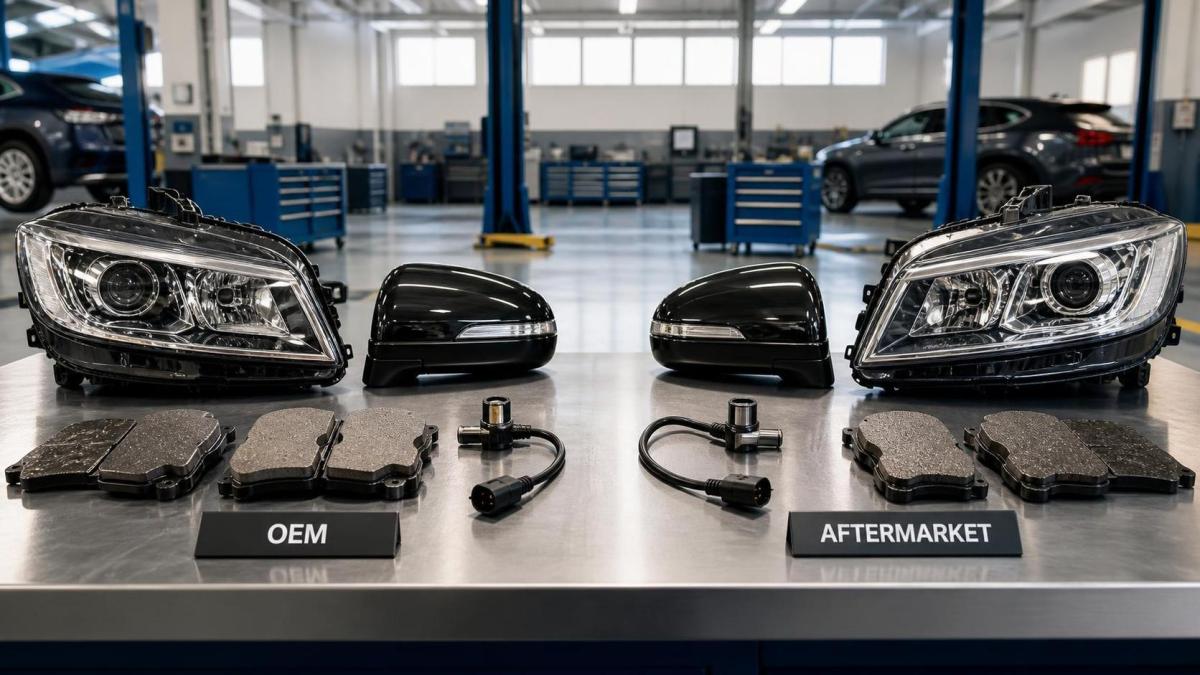
It often starts with a repair that seems simple. A mirror cover cracks in a parking lot, brake pads wear down earlier than expected, or a headlight housing fogs up and needs replacement. Then comes the part many drivers find unexpectedly frustrating: the same part appears in two very different versions, usually labeled OEM and aftermarket, with a noticeable gap in price. One promises original fit and familiar quality. The other may cost less, offer more features, or be available faster. At that point, the real question is not just which one is cheaper, but which one is actually worth buying.
This matters more than it seems. A poor choice can lead to repeat labor, strange fitment issues, extra noise, shorter service life, or even problems when selling the vehicle later. On the other hand, paying extra for an original part is not always necessary. Many people end up overpaying in low-risk situations or taking avoidable risks on parts that affect safety and performance. If you are comparing auto parts and accessories and trying to decide between OEM and aftermarket, the best answer usually depends on the part itself, the age of the car, and how you use it day to day.
Why the OEM vs aftermarket decision feels harder than it should
Most people assume the choice is easy: OEM means better, aftermarket means cheaper. In practice, that shortcut creates bad decisions. Some aftermarket parts are made to a very high standard and perform perfectly well. Some are even designed to solve known weak points in factory parts. At the same time, not every low-cost replacement is worth the savings, especially if the part affects braking, steering, sensors, sealing, or long-term reliability.
The confusion also comes from how parts are sold. Online listings may look similar, but small differences in trim level, engine code, production date, or connector shape can change compatibility. A part that “fits your car” according to a search filter may still require modification, create warning lights, or wear out quickly. That is where value gets distorted. The cheaper option stops being cheaper if it adds hassle, downtime, or a second repair.
Start with the real use case, not the label
Before comparing brands or prices, it helps to ask a more practical question: what job does this part need to do on your car, and how sensitive is that job? A floor mat, cargo liner, phone mount, or seat cover can be judged very differently from an oxygen sensor, control arm, or ignition coil. Accessories leave more room for preference. Functional repair parts leave less room for error.
A useful way to think about it is to divide parts into three broad groups. The first group includes safety-critical parts such as brakes, suspension, steering components, tires, and lighting elements that directly affect visibility or control. The second group includes performance and system-sensitive parts such as sensors, gaskets, filters, engine electronics, cooling components, and modules. The third group includes appearance items and convenience accessories where fit, finish, and style matter more than exact factory matching.
Once you sort the part into one of those groups, the OEM vs aftermarket choice becomes much clearer.
Where OEM usually earns its higher price
OEM stands for original equipment manufacturer. In everyday buying terms, it usually means the part is the same as, or made to the same specification as, the one installed when the vehicle was built. That does not automatically make it the best option in every case, but it does reduce uncertainty.
OEM tends to make sense when exact fit and predictable performance matter more than upfront savings. This is especially true for parts with tight tolerances, integrated electronics, or vehicle-specific calibration. A sensor that sends the wrong reading, even if it physically fits, can trigger drivability issues that are difficult to trace. A body panel clip that is slightly off can lead to rattles or poor alignment. Weather seals, trim pieces, switches, and some electronic assemblies often fall into this category.
OEM is also worth serious consideration if your vehicle is newer, still under some form of warranty, or if you plan to keep it in very original condition. In those cases, the extra cost often buys confidence: better fitment, fewer surprises during installation, and a lower chance of needing to redo the work.
There is another practical reason many drivers overlook. Labor can cost more than the part. If replacing a part involves significant disassembly, it may be smarter to choose the option with the lowest chance of failure or poor fit, even if the part itself is more expensive. In that situation, value is tied to avoiding repeat work.
Where aftermarket can be the smarter buy
Aftermarket does not mean one thing. It includes everything from budget replacements to premium performance upgrades. This is why broad statements about aftermarket quality are rarely useful. The important question is not whether a part is aftermarket, but which aftermarket part it is, who made it, and whether it is appropriate for the job.
Aftermarket often delivers better value when the original part is overpriced, when multiple reputable alternatives exist, or when you want a feature the factory version does not offer. Common examples include upgraded brake pads for less dust, heavier-duty shocks for rougher roads, all-weather floor liners, roof racks, lighting upgrades, and replacement cosmetic pieces.
For older vehicles, aftermarket may be the more realistic path simply because OEM availability becomes limited. In that case, a well-reviewed replacement from a trusted supplier may be far more practical than searching for an original part with long lead times. The same applies to common maintenance items like filters, wiper blades, or some belts and hoses, where strong aftermarket options are easy to find and often perform just fine.
When shopping for auto parts and accessories, aftermarket also gives you more choice in material, finish, and intended use. That matters if your priorities are not identical to the factory setup. Some drivers want durability over appearance, others want easier cleaning, quieter braking, or better cold-weather performance.
The mistakes that usually lead to regret
The most common buying mistake is comparing only the shelf price. That works for a phone charger, not for a vehicle part that must fit, function, and last under heat, vibration, moisture, and road stress. If a low-cost part fails early or creates side effects, the actual cost becomes much higher.
Another mistake is assuming all OEM parts are automatically superior in every way. Some factory parts are chosen to balance manufacturing cost, expected service life, and production efficiency. That means certain aftermarket upgrades can genuinely improve on the original design, especially for wear items or accessories where users want different performance characteristics.
There is also the issue of buying too generic a solution for a specific problem. A universal accessory may technically fit but still interfere with controls, storage space, or visibility. A replacement lamp assembly may physically install but throw off beam pattern or sealing. The more specific the part’s role, the less room there is for compromise.
A better way to judge value before you buy
If you are stuck between OEM and aftermarket, try using a few practical filters instead of relying on brand perception alone.
Look at failure consequences
If the part fails, what happens? If the answer is inconvenience, mild cosmetic annoyance, or easy replacement, aftermarket is easier to justify. If the answer is reduced safety, drivability problems, water intrusion, or expensive labor to replace it again, OEM or a very well-vetted premium aftermarket option is usually the better call.
Think about installation effort
A part that takes minutes to swap gives you more flexibility. A part buried behind major assemblies does not. The more labor-intensive the job, the more important consistent fit and durability become.
Check how exact the fit needs to be
Interior accessories and basic storage upgrades can tolerate some variation. Sensors, clips, trim interfaces, seals, and body-related pieces often cannot. Even a small mismatch can become visible or irritating over time.
Match the purchase to the age and purpose of the vehicle
A newer daily driver, a family vehicle, or a car you plan to resell in clean condition may justify OEM more often. An older commuter where cost control matters may do perfectly well with selected aftermarket parts. A weekend vehicle may call for upgrades the original part was never designed to provide.
Separate premium aftermarket from bargain aftermarket
This is where many comparisons go wrong. The best aftermarket option is rarely the cheapest one on the page. If the savings come from unclear specifications, poor packaging, vague fitment notes, or no usable product support, the risk goes up quickly.
Part-by-part thinking works better than a single rule
Drivers often want a simple answer: always buy OEM, or always save money with aftermarket. Realistically, good decisions are usually mixed decisions.
For example, many people are comfortable choosing aftermarket accessories for storage, protection, and convenience, while staying closer to OEM for electronic components and critical mechanical systems. That is not inconsistency. It is a sensible response to different risk levels.
Brake components are a good example of where nuance matters. Some drivers prefer OEM because it preserves the original pedal feel and expected behavior. Others choose reputable aftermarket pads because they want lower dust, less noise, or a different driving response. Both choices can be reasonable if the quality level is appropriate and the part is matched correctly to the vehicle.
The same applies to cosmetic exterior pieces. If perfect paint match, panel gap, and finish are priorities, OEM may be worth the premium. If the goal is simply to restore function on an older car, a solid aftermarket option may offer better overall value.
When online research helps, and when it misleads
Reading product descriptions and owner comments can be useful, but it helps to read them with caution. A review that says a part “fit perfectly” does not always mention whether the vehicle had the same trim, region specification, or build variation as yours. Fitment databases are helpful starting points, not final proof.
It is usually better to verify part numbers, connector styles, dimensions, and any notes about production dates before ordering. If the listing lacks clear details, that is often a warning sign rather than a minor inconvenience. The goal is not to collect endless opinions. It is to reduce uncertainty around fit, function, and expected service life.
When people need more structured information across product categories, supply conditions, and sourcing differences, it also helps to look for organized industry references rather than relying only on marketplace listings. The useful part is not hype but context: how product categories differ, where quality variations usually appear, and which trade-offs matter in actual purchasing decisions.
So which offers better value?
The honest answer is that neither OEM nor aftermarket wins by default. OEM usually offers better value when the part is safety-related, highly specific, difficult to install, or sensitive to exact fit and calibration. Aftermarket often offers better value when the part is easy to replace, widely available from reputable makers, or when you want better features than the factory version provides.
If you are unsure, avoid treating every part the same. A smarter approach is to spend more where failure is costly and save where variation is manageable. That one adjustment prevents a lot of frustration. It also makes your budget work harder, because you are not paying a premium where you do not need to and not cutting corners where you should not.
For most buyers, the best long-term habit is simple: identify the part’s role, check fitment carefully, judge the cost of getting it wrong, and then decide whether original consistency or aftermarket flexibility matters more in that specific case. That is usually where real value in auto parts and accessories is found.
 When dual sourcing makes sense in a sourcing strategy for manufacturersSourcing strategy for manufacturers: learn when dual sourcing strengthens supply continuity, reduces disruption risk, and protects production without adding unnecessary complexity.
 How bulk commodities pricing affects long-term supply contractsBulk commodities pricing shapes long-term supply contracts through index rules, freight, quality, volume, and currency risk. Explore strategies for resilient costs and supply security.
 Which global manufacturing trends by sector matter most for sourcing plans?Global manufacturing trends by sector: identify sourcing risks, supplier resilience, compliance demands, and cost drivers to build smarter, more reliable procurement plans.
 What industrial trade intelligence pricing should include before you subscribeIndustrial trade intelligence pricing explained: compare coverage, data quality, access rights, and workflow value before choosing a subscription that supports smarter trade decisions.
 How an industrial trade intelligence dashboard can identify new supplier marketsDiscover how an industrial trade intelligence dashboard helps identify new supplier markets by comparing capacity, landed cost, logistics resilience, and compliance risk.
 Which global market entry barriers should exporters assess first?Global market entry barriers exporters should assess first: tariffs, compliance, buyer qualification, logistics, and payment risk. Build a practical strategy for confident market entry.
 How trade data aggregation analytics can reveal emerging supplier marketsTrade data aggregation analytics reveals emerging supplier markets by connecting trade flows, capacity signals, logistics, and compliance insights for smarter sourcing decisions.
 When an export market analysis platform can validate demand in a new marketExport market analysis platform insights help validate new-market demand through buyer fit, regulations, logistics, competition, and profitable entry conditions.
 What is driving the beauty and personal care market in the USA?Beauty and personal care in USA is driven by targeted solutions, selective premiumization, digital discovery, clean-label trust, diverse needs, and compliance. Explore key growth opportunities.
 How trade flow monitoring reports reveal changing regional demandTrade flow monitoring reports reveal changing regional demand through import volumes, sourcing shifts, product mix, logistics signals, and regulatory trends. Explore actionable market insights.
 How international market intelligence for investors reduces market-entry riskInternational market intelligence for investors reduces market-entry risk by validating demand, regulations, logistics, and competition before capital is committed.
 How international sourcing intelligence helps identify supplier risk earlyInternational sourcing intelligence helps businesses spot supplier risks early, protect supply continuity, and make smarter global procurement decisions.
 How trade data aggregation analytics reveals emerging supplier marketsTrade data aggregation analytics reveals emerging supplier markets through export trends, input flows, logistics, and regulatory signals. Discover smarter sourcing insights.
 What industrial cluster monitoring in Vietnam reveals about site riskIndustrial cluster monitoring Vietnam reveals hidden site risks across labor, utilities, logistics, compliance, and supplier dependencies. Make smarter sourcing and expansion decisions.
 Food Technology Trends Reshaping Shelf Life, Safety, and Product InnovationFood technology is reshaping shelf life, safety, and innovation. Discover the trends helping food businesses cut risk, improve compliance, and unlock stronger global market growth.
 How electronics manufacturing services are changing with low-volume demandElectronics manufacturing services are evolving fast with low-volume demand. Learn how agile EMS partners improve flexibility, compliance, sourcing resilience, and speed to market.
 How Can Buyers Reduce Procurement Risks for Electronic Components?How to reduce procurement risks for electronic components: learn how buyers assess traceability, lead times, compliance, and supplier types to avoid costly sourcing mistakes.
 What Sourcing Intelligence India Reveals About Supplier Risk and Cost ShiftsSourcing intelligence India reveals hidden supplier risk, compliance gaps, logistics pressure, and real cost shifts—helping buyers compare vendors smarter and source with more confidence.
 Fashion Trends 2026: Which Materials, Colors, and Silhouettes Are Gaining Ground?Fashion trends 2026 spotlight tactile fabrics, mineral colors, and controlled volume. Explore the materials, shades, and silhouettes shaping smarter, more wearable style.
 Smart Device Market Outlook: Key Growth Drivers, Segments, and Business OpportunitiesSmart device market trends are shifting toward system value, industrial demand, and resilient supply chains. Explore key growth drivers, high-potential segments, and business opportunities.
 How Global Trade Intelligence Services Help B2B Firms Evaluate Markets and SuppliersGlobal trade intelligence services help B2B firms compare suppliers, assess market potential, and uncover compliance, logistics, and pricing risks before costly decisions are made.




















Global Trade Insights & Industry
Our mission is to empower global exporters and importers with data-driven insights that foster strategic growth.
Search News
Popular Tags
Industry Overview
The global commercial kitchen equipment market is projected to reach $112 billion by 2027. Driven by urbanization, the rise of e-commerce food delivery, and strict hygiene regulations.