

Next-gen wireless charging for electric vehicles faces gaps
Next-gen wireless charging for electric vehicles is moving from concept to commercial pilot, but business evaluators still face critical gaps in infrastructure readiness, interoperability, cost modeling, and regulatory alignment. As automakers, utilities, charging providers, and supply-chain partners test dynamic and stationary wireless systems, the technology’s long-term value depends on more than technical efficiency. This article examines the market signals, operational barriers, and investment considerations shaping adoption, helping decision-makers assess whether wireless EV charging can become a scalable commercial opportunity or remain a niche innovation.
For procurement teams, fleet operators, infrastructure investors, and cross-border suppliers, the central question is not whether wireless EV charging works in a laboratory. The practical issue is whether it can be specified, sourced, installed, maintained, insured, and scaled across different vehicles, sites, regulations, and grid conditions.
Market signals: why wireless EV charging is entering commercial evaluation
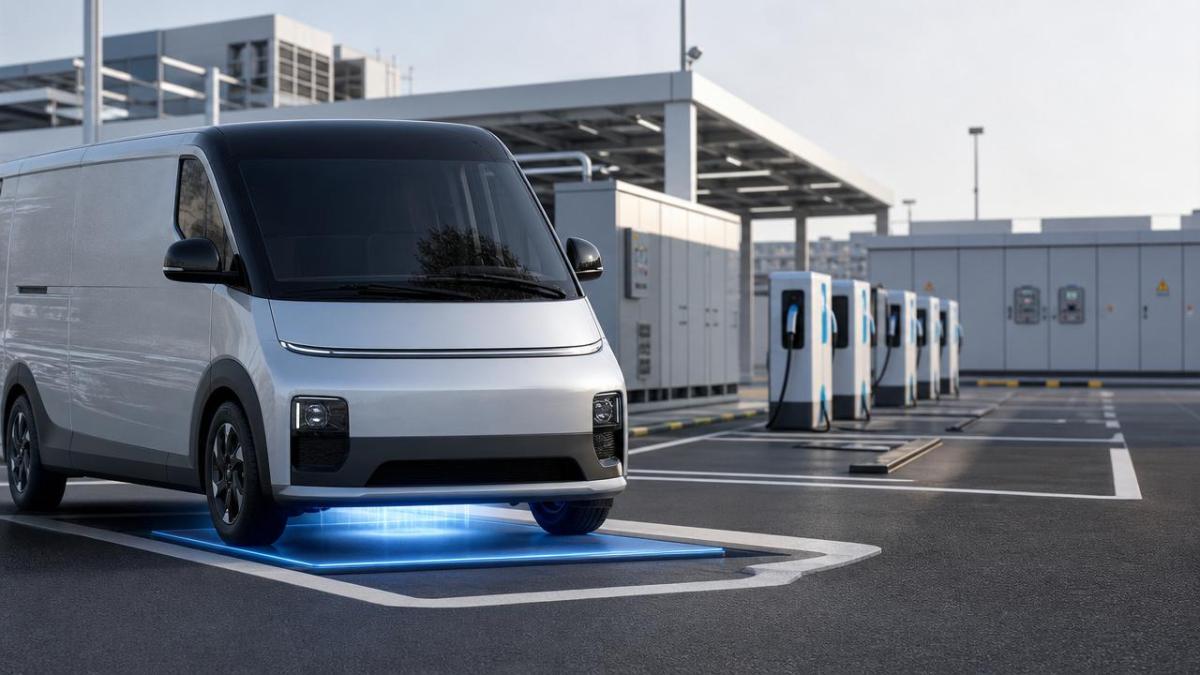
Next-gen wireless charging for electric vehicles is gaining attention because it addresses 3 persistent barriers in EV operations: driver friction, connector wear, and charging availability. These issues are especially visible in high-utilization fleets, shared mobility, logistics depots, and urban charging locations.
Unlike plug-in charging, wireless systems use inductive power transfer between a ground assembly and a vehicle receiver. Stationary systems charge while parked, while dynamic systems transfer energy across road segments. Commercial pilots typically examine 7 kW to 22 kW light-duty charging and higher-power concepts for buses, delivery fleets, and industrial vehicles.
Adoption is being shaped by use case economics
The business case varies significantly by duty cycle. A private passenger car may charge once per day, but a taxi, airport shuttle, or last-mile delivery van may need 2 to 6 charging opportunities within a 24-hour period. In those settings, automation can reduce idle time and simplify charging compliance.
Business evaluators should avoid treating wireless charging as a universal replacement for cables. In many projects, the more realistic model is a hybrid infrastructure plan where plug-in DC fast charging, AC depot charging, and wireless charging each serve different operating windows.
The following table compares common application scenarios and the evaluation logic behind them. It is intended for early-stage screening rather than final engineering design.
The strongest near-term cases are usually controlled environments with predictable vehicles, predictable parking positions, and measurable dwell time. Open public deployment remains more complex because it requires broader interoperability and stronger user education.
The infrastructure readiness gap
Infrastructure readiness is one of the largest gaps facing next-gen wireless charging for electric vehicles. A charging pad is only one component. A complete project may require civil engineering, electrical protection, communications, metering, cybersecurity controls, pavement integration, signage, and a maintenance access plan.
For a depot or parking installation, buyers often need 4 assessment layers before supplier selection: site electrical capacity, vehicle alignment tolerance, ground assembly durability, and operations management. A site that is suitable for cable charging may still be unsuitable for embedded wireless equipment.
Civil works can change the total cost profile
Wireless charging is frequently evaluated on hardware cost alone, but installation can be decisive. Cutting pavement, protecting coils from water ingress, routing conduits, managing thermal conditions, and coordinating with parking layouts can add 2 to 8 weeks to a project schedule.
Procurement teams should request a site survey before final pricing. A practical survey should document at least 6 items: load availability, transformer distance, trenching requirements, drainage risk, vehicle positioning accuracy, and future expansion space.
Operational questions for site owners
- Can vehicles park within the required alignment tolerance, commonly expressed in centimeters rather than meters?
- Will charging be used for 1 shift, 2 shifts, or continuous 24-hour operations?
- Does the site need outdoor protection against rain, snow, dust, de-icing chemicals, or heavy vehicle loads?
- Can maintenance teams access equipment without shutting down the entire parking or depot area?
These questions are not administrative details. They determine whether wireless charging performs as an operational asset or becomes a costly demonstration unit with limited daily use.
Interoperability, standards, and cross-border sourcing risks
Interoperability is a central commercial uncertainty. Next-gen wireless charging for electric vehicles must connect vehicle hardware, ground assemblies, software protocols, billing systems, and grid interfaces. If any layer is locked to one vendor, long-term sourcing flexibility may decline.
Standards alignment matters because EV platforms are traded globally. A fleet operator may buy vehicles from 2 or 3 automakers, operate in multiple jurisdictions, and depend on imported power electronics. Without clear compatibility documentation, procurement risk increases.
What buyers should verify before committing
A credible supplier should provide technical documentation covering power class, electromagnetic compatibility, foreign object detection, living object protection, communication protocol, and safety shutdown logic. Business evaluators should also ask how firmware updates are delivered over a 5-year operating period.
The table below summarizes practical procurement checks. It helps buyers compare suppliers without relying only on sales presentations or isolated efficiency claims.
For international buyers, documentation should be reviewed alongside customs classifications, electrical safety rules, radiofrequency requirements, and local installation codes. A technically capable product can still face deployment delay if import or compliance files are incomplete.
Cost modeling beyond hardware price
The economics of next-gen wireless charging for electric vehicles depend on total cost of ownership rather than equipment price alone. A realistic model should include hardware, installation, grid upgrades, software fees, vehicle-side receivers, maintenance, utilization rate, and residual flexibility.
A 10% difference in charging efficiency may matter less than a 30% improvement in fleet adherence to charging schedules. Conversely, poor utilization can erase the value of automation, even when the system performs well technically.
Five cost categories to include
- Capital expenditure: ground pads, power cabinets, receivers, controllers, metering equipment, and protective civil works.
- Installation and permitting: electrical design, trenching, inspections, public-space approval, and utility coordination.
- Operational cost: electricity tariffs, demand charges, network fees, software subscriptions, and cleaning procedures.
- Maintenance: diagnostics, firmware updates, coil inspection, enclosure checks, and spare part replacement cycles.
- Business continuity: downtime exposure, backup chargers, service-level agreements, and escalation response within 24 to 72 hours.
For commercial fleets, payback analysis should be tied to route schedules and vehicle availability. If wireless charging saves 10 minutes per vehicle per day across 100 vehicles, the time value may be material. If the same system is used by 5 vehicles irregularly, the investment logic weakens.
Why utilization is more important than novelty
A procurement model should test at least 3 utilization scenarios: conservative, expected, and high-frequency. This prevents decision-makers from accepting a pilot design that looks attractive only under ideal assumptions.
Business evaluators should also compare wireless charging with alternatives such as automated plug-in systems, battery swapping in selected markets, and higher-power DC charging. The best solution may be a phased mix rather than a single technology decision.
Implementation pathway for commercial pilots
A controlled pilot is usually the most credible pathway for next-gen wireless charging for electric vehicles. The purpose is not only to prove energy transfer, but also to verify procurement assumptions, operator behavior, system uptime, maintenance effort, and regulatory acceptance.
A practical pilot may run for 3 to 6 months, with a smaller technical validation stage before full operational testing. The best pilots use measurable targets rather than broad innovation language.
A 6-step pilot framework
- Define the use case, vehicle group, charging window, and minimum daily energy requirement.
- Conduct a site audit covering grid capacity, civil works, communications, drainage, and safety zones.
- Request supplier documentation for compatibility, safety, software integration, and warranty exclusions.
- Install a limited number of charging points, commonly 1 to 5 units for operational validation.
- Track uptime, charging sessions, energy delivered, positioning errors, and maintenance interventions weekly.
- Decide whether to scale, modify, or stop based on pre-agreed commercial and technical thresholds.
The pilot should include both engineering and commercial stakeholders. Facility managers understand site disruption, fleet managers understand usage behavior, and finance teams can test cost assumptions against real operating data.
Metrics that reveal scale readiness
Useful pilot metrics include session success rate, average delivered energy, alignment failure frequency, maintenance hours per month, software incident count, and user compliance. A system that reaches high energy transfer but requires constant manual correction may not be ready for large deployment.
Decision-makers should also examine whether installation can be repeated across multiple sites within predictable timeframes. If the first installation takes 12 weeks because of undocumented site dependencies, future rollout costs may remain uncertain.
Common misconceptions and decision risks
One misconception is that wireless EV charging eliminates infrastructure complexity. In practice, it shifts complexity from the connector to embedded equipment, positioning accuracy, electromagnetic management, and software coordination.
Another misconception is that dynamic charging will quickly replace large batteries. Dynamic systems may become relevant for selected corridors, ports, transit routes, or industrial loops, but their business case depends on very high utilization and long-term public infrastructure coordination.
Risk areas to monitor
- Technology lock-in if the vehicle receiver and ground pad are not broadly compatible.
- Underestimated civil costs where drainage, pavement thickness, or underground utilities are not mapped.
- Regulatory delays if electromagnetic safety, metering, or public-space approvals are incomplete.
- Weak service coverage when spare parts or qualified technicians are located across borders.
- Unclear data ownership for charging records, fleet analytics, billing, and maintenance logs.
These risks do not mean wireless charging should be dismissed. They mean the purchasing process must be more structured than a standard hardware comparison. A strong request for proposal should include commercial, technical, and compliance requirements in one document.
How GTIIN supports business evaluation and sourcing decisions
GTIIN helps organizations evaluate emerging technologies through structured trade intelligence, supplier research, regulatory monitoring, and cross-sector market analysis. For next-gen wireless charging for electric vehicles, this matters because the supply chain spans electronics, power equipment, green energy, civil infrastructure, logistics, and software services.
Business evaluators need more than product brochures. They need verified information on manufacturing capabilities, component dependencies, export readiness, compliance variations, and service resilience. A wireless charging project may involve 5 or more supplier categories, including coil modules, power electronics, enclosures, communications systems, and installation contractors.
Decision support for cross-border buyers
GTIIN’s approach is useful for manufacturers, importers, procurement teams, logistics providers, and infrastructure planners that must compare suppliers across regions. The objective is to reduce information asymmetry before purchase orders, pilot contracts, or partnership discussions are finalized.
For a business case, evaluators can structure the decision around 4 core questions: Is the technology compatible with planned vehicles? Can the site support the installation? Is the supplier commercially and technically reliable? Can the solution remain compliant over a 3-year to 7-year operating horizon?
Practical next steps for decision-makers
- Build a shortlist based on documented compatibility, not only claimed charging efficiency.
- Separate pilot budgets from scale-up budgets to avoid misleading payback calculations.
- Request maintenance terms, spare part lead times, and remote support scope before contract signing.
- Track regulatory changes in target markets before importing or installing equipment.
Next-gen wireless charging for electric vehicles has credible commercial potential, especially where automation improves fleet discipline, charging access, and operational continuity. Yet the adoption gap remains real: infrastructure, standards, cost modeling, and supplier accountability must be evaluated together.
For business evaluators, the most practical path is a disciplined pilot supported by verified market intelligence and supplier due diligence. To assess sourcing options, compare deployment risks, or build a customized evaluation framework, contact GTIIN to learn more solutions and request tailored decision support.
 When dual sourcing makes sense in a sourcing strategy for manufacturersSourcing strategy for manufacturers: learn when dual sourcing strengthens supply continuity, reduces disruption risk, and protects production without adding unnecessary complexity.
 How bulk commodities pricing affects long-term supply contractsBulk commodities pricing shapes long-term supply contracts through index rules, freight, quality, volume, and currency risk. Explore strategies for resilient costs and supply security.
 Which global manufacturing trends by sector matter most for sourcing plans?Global manufacturing trends by sector: identify sourcing risks, supplier resilience, compliance demands, and cost drivers to build smarter, more reliable procurement plans.
 What industrial trade intelligence pricing should include before you subscribeIndustrial trade intelligence pricing explained: compare coverage, data quality, access rights, and workflow value before choosing a subscription that supports smarter trade decisions.
 How an industrial trade intelligence dashboard can identify new supplier marketsDiscover how an industrial trade intelligence dashboard helps identify new supplier markets by comparing capacity, landed cost, logistics resilience, and compliance risk.
 Which global market entry barriers should exporters assess first?Global market entry barriers exporters should assess first: tariffs, compliance, buyer qualification, logistics, and payment risk. Build a practical strategy for confident market entry.
 How trade data aggregation analytics can reveal emerging supplier marketsTrade data aggregation analytics reveals emerging supplier markets by connecting trade flows, capacity signals, logistics, and compliance insights for smarter sourcing decisions.
 When an export market analysis platform can validate demand in a new marketExport market analysis platform insights help validate new-market demand through buyer fit, regulations, logistics, competition, and profitable entry conditions.
 What is driving the beauty and personal care market in the USA?Beauty and personal care in USA is driven by targeted solutions, selective premiumization, digital discovery, clean-label trust, diverse needs, and compliance. Explore key growth opportunities.
 How trade flow monitoring reports reveal changing regional demandTrade flow monitoring reports reveal changing regional demand through import volumes, sourcing shifts, product mix, logistics signals, and regulatory trends. Explore actionable market insights.
 How international market intelligence for investors reduces market-entry riskInternational market intelligence for investors reduces market-entry risk by validating demand, regulations, logistics, and competition before capital is committed.
 How international sourcing intelligence helps identify supplier risk earlyInternational sourcing intelligence helps businesses spot supplier risks early, protect supply continuity, and make smarter global procurement decisions.
 How trade data aggregation analytics reveals emerging supplier marketsTrade data aggregation analytics reveals emerging supplier markets through export trends, input flows, logistics, and regulatory signals. Discover smarter sourcing insights.
 What industrial cluster monitoring in Vietnam reveals about site riskIndustrial cluster monitoring Vietnam reveals hidden site risks across labor, utilities, logistics, compliance, and supplier dependencies. Make smarter sourcing and expansion decisions.
 Food Technology Trends Reshaping Shelf Life, Safety, and Product InnovationFood technology is reshaping shelf life, safety, and innovation. Discover the trends helping food businesses cut risk, improve compliance, and unlock stronger global market growth.
 How electronics manufacturing services are changing with low-volume demandElectronics manufacturing services are evolving fast with low-volume demand. Learn how agile EMS partners improve flexibility, compliance, sourcing resilience, and speed to market.
 How Can Buyers Reduce Procurement Risks for Electronic Components?How to reduce procurement risks for electronic components: learn how buyers assess traceability, lead times, compliance, and supplier types to avoid costly sourcing mistakes.
 What Sourcing Intelligence India Reveals About Supplier Risk and Cost ShiftsSourcing intelligence India reveals hidden supplier risk, compliance gaps, logistics pressure, and real cost shifts—helping buyers compare vendors smarter and source with more confidence.
 Fashion Trends 2026: Which Materials, Colors, and Silhouettes Are Gaining Ground?Fashion trends 2026 spotlight tactile fabrics, mineral colors, and controlled volume. Explore the materials, shades, and silhouettes shaping smarter, more wearable style.
 Smart Device Market Outlook: Key Growth Drivers, Segments, and Business OpportunitiesSmart device market trends are shifting toward system value, industrial demand, and resilient supply chains. Explore key growth drivers, high-potential segments, and business opportunities.
 How Global Trade Intelligence Services Help B2B Firms Evaluate Markets and SuppliersGlobal trade intelligence services help B2B firms compare suppliers, assess market potential, and uncover compliance, logistics, and pricing risks before costly decisions are made.





















Global Trade Insights & Industry
Our mission is to empower global exporters and importers with data-driven insights that foster strategic growth.
Search News
Popular Tags
Industry Overview
The global commercial kitchen equipment market is projected to reach $112 billion by 2027. Driven by urbanization, the rise of e-commerce food delivery, and strict hygiene regulations.