

EU Imposes 7.8–28.5% Provisional Anti-Dumping Duties on Chinese Adipic Acid
On 5 May 2026, the European Commission announced its definitive anti-dumping ruling on adipic acid originating in the People’s Republic of China, imposing provisional duties ranging from 7.8% to 28.5%. The measure directly affects producers and exporters of adipic acid, as well as downstream users across Europe’s advanced materials, automotive coatings, and high-performance textile sectors — where cost sensitivity, supply chain resilience, and regulatory compliance are increasingly interdependent.
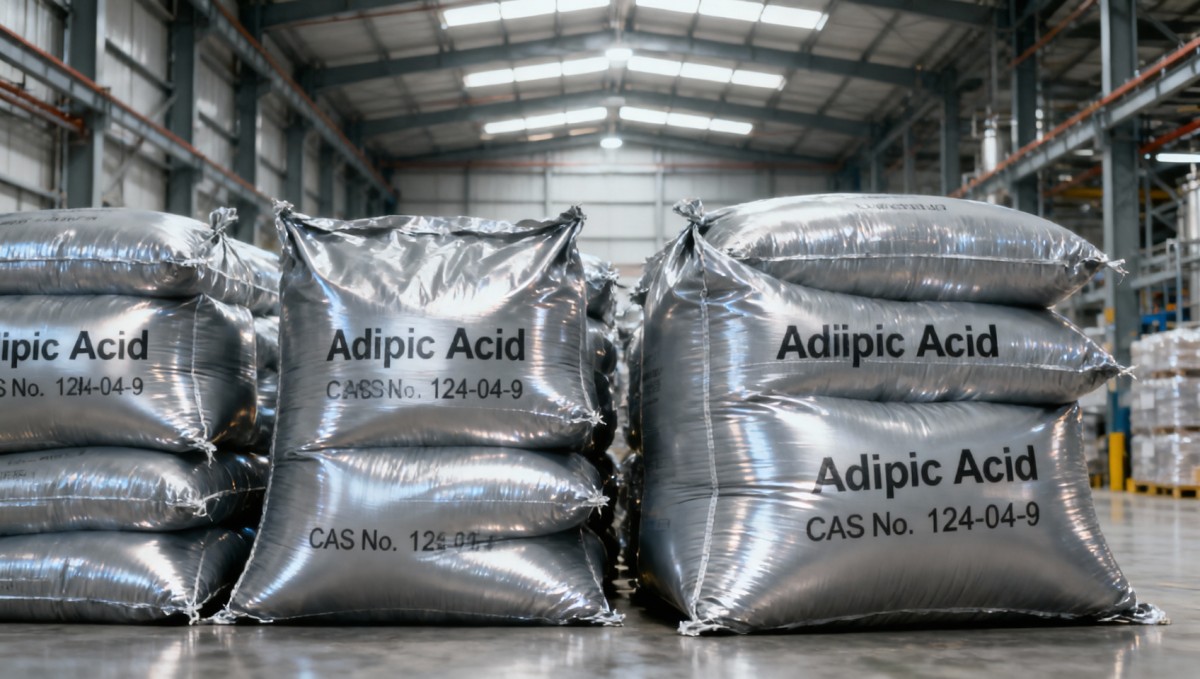
Event Overview
On 5 May 2026, the European Commission published an official notice confirming the final anti-dumping determination on Chinese-origin adipic acid (CAS No. 124-04-9). The Commission concluded that dumped imports caused material injury to the EU industry, and imposed provisional anti-dumping duties effective immediately upon publication. The duties apply for a period of six months and vary by exporting producer, from 7.8% to 28.5%, based on individual company findings in the investigation.
Industries Affected
Direct Trading Enterprises
Exporters and international trading firms handling Chinese adipic acid face immediate margin compression and customs clearance delays. Since duties are levied at the point of import, traders must now pre-calculate landed costs, post bonds or guarantees, and revise contractual terms — especially those referencing Incoterms® such as DAP or CIF. Those without EU-based subsidiaries or authorized representatives may find compliance operationally burdensome.
Raw Material Procurement Entities
Purchasers in the EU — including procurement departments of chemical distributors and compounders — will experience upward pressure on unit costs and reduced price transparency. As adipic acid is typically procured under medium-term framework agreements, buyers may face renegotiation requests or unilateral surcharges from suppliers. More critically, procurement teams must now assess alternative sourcing options (e.g., U.S., South Korean, or domestic EU production), though availability and technical equivalence remain constrained.
Processing & Manufacturing Companies
Manufacturers of nylon 66 polymers, polyurethane industrial coatings, and spandex/elastane-based eco-friendly fabrics confront dual pressures: rising input costs and extended lead times due to customs inspections and documentation verification. For just-in-time production lines — particularly in automotive interiors or premium sportswear — even minor delays in adipic acid delivery could trigger line stoppages or substitution with less performant alternatives.
Supply Chain Service Providers
Custody agents, freight forwarders, and customs brokers report increased demand for duty drawback advisory services and origin certification support. Logistics providers must now verify EUR.1 or Form A certificates more rigorously, while trade finance institutions adjust risk assessments for letters of credit involving Chinese chemical exports. These operational adjustments imply higher service fees and longer processing windows for affected shipments.
Key Considerations and Recommended Actions
Review Origin Documentation and Tariff Classification
Companies should audit current product classifications (HS Code 2917.12) and validate whether their adipic acid shipments meet the exact chemical specification and purity thresholds outlined in the Commission’s Notice (OJ L 124/1, 5.5.2026). Misclassification or incomplete origin evidence may result in retroactive duty assessments.
Assess Eligibility for Duty Exemption or Review
Exporters not individually investigated — or those able to demonstrate non-dumped pricing or negligible market share — may request inclusion in the Commission’s ongoing monitoring review. Applications must be submitted within 30 days of the notice’s entry into force, accompanied by verified sales data and cost-of-production records.
Explore Alternative Sourcing and Blending Strategies
For formulation-dependent users, technical feasibility studies on partial substitution with adipic acid derivatives (e.g., adipoyl chloride) or co-polymer blending approaches should begin immediately. However, analysis shows that full substitution remains technically unviable for high-strength nylon 66 applications without performance trade-offs.
Editorial Perspective / Industry Observation
This ruling marks the first time adipic acid — a mature, globally traded intermediate — has been subject to EU anti-dumping measures. Observably, the decision reflects a broader recalibration of trade enforcement toward upstream chemical intermediates, not just finished goods. From an industry perspective, it signals growing scrutiny of vertically integrated Chinese chemical producers with captive downstream capacity. Current policy momentum suggests similar investigations may emerge for related diacids (e.g., sebacic acid) or polyamide precursors in 2026–2027 — though this is not confirmed.
Conclusion
The imposition of provisional duties on Chinese adipic acid is not merely a tariff adjustment but a structural inflection point for European chemical value chains. It underscores how trade instruments are increasingly deployed to manage strategic input dependencies — especially where alternatives lack scale, certification, or cost parity. A rational interpretation is that resilience, rather than lowest-cost sourcing, is now the dominant procurement logic for critical polymer intermediates in regulated markets.
Source Attribution
European Commission Notice of Final Determination (OJ L 124/1, 5 May 2026); WTO Anti-Dumping Agreement Article 9.3; EU Regulation (EU) 2026/XXX (pending numbering). Note: Final duty rates, potential expiry extensions beyond six months, and possible acceptance of price undertakings remain subject to ongoing Commission review and stakeholder consultation — all to be monitored closely through the DG TRADE public register.
 Which global manufacturing trends by sector matter most for sourcing plans?Global manufacturing trends by sector: identify sourcing risks, supplier resilience, compliance demands, and cost drivers to build smarter, more reliable procurement plans.
 What industrial trade intelligence pricing should include before you subscribeIndustrial trade intelligence pricing explained: compare coverage, data quality, access rights, and workflow value before choosing a subscription that supports smarter trade decisions.
 How an industrial trade intelligence dashboard can identify new supplier marketsDiscover how an industrial trade intelligence dashboard helps identify new supplier markets by comparing capacity, landed cost, logistics resilience, and compliance risk.
 Which global market entry barriers should exporters assess first?Global market entry barriers exporters should assess first: tariffs, compliance, buyer qualification, logistics, and payment risk. Build a practical strategy for confident market entry.
 How trade data aggregation analytics can reveal emerging supplier marketsTrade data aggregation analytics reveals emerging supplier markets by connecting trade flows, capacity signals, logistics, and compliance insights for smarter sourcing decisions.
 When an export market analysis platform can validate demand in a new marketExport market analysis platform insights help validate new-market demand through buyer fit, regulations, logistics, competition, and profitable entry conditions.
 What is driving the beauty and personal care market in the USA?Beauty and personal care in USA is driven by targeted solutions, selective premiumization, digital discovery, clean-label trust, diverse needs, and compliance. Explore key growth opportunities.
 How trade flow monitoring reports reveal changing regional demandTrade flow monitoring reports reveal changing regional demand through import volumes, sourcing shifts, product mix, logistics signals, and regulatory trends. Explore actionable market insights.
 How international market intelligence for investors reduces market-entry riskInternational market intelligence for investors reduces market-entry risk by validating demand, regulations, logistics, and competition before capital is committed.
 How international sourcing intelligence helps identify supplier risk earlyInternational sourcing intelligence helps businesses spot supplier risks early, protect supply continuity, and make smarter global procurement decisions.
 How trade data aggregation analytics reveals emerging supplier marketsTrade data aggregation analytics reveals emerging supplier markets through export trends, input flows, logistics, and regulatory signals. Discover smarter sourcing insights.
 What industrial cluster monitoring in Vietnam reveals about site riskIndustrial cluster monitoring Vietnam reveals hidden site risks across labor, utilities, logistics, compliance, and supplier dependencies. Make smarter sourcing and expansion decisions.
 Food Technology Trends Reshaping Shelf Life, Safety, and Product InnovationFood technology is reshaping shelf life, safety, and innovation. Discover the trends helping food businesses cut risk, improve compliance, and unlock stronger global market growth.
 How electronics manufacturing services are changing with low-volume demandElectronics manufacturing services are evolving fast with low-volume demand. Learn how agile EMS partners improve flexibility, compliance, sourcing resilience, and speed to market.
 How Can Buyers Reduce Procurement Risks for Electronic Components?How to reduce procurement risks for electronic components: learn how buyers assess traceability, lead times, compliance, and supplier types to avoid costly sourcing mistakes.
 What Sourcing Intelligence India Reveals About Supplier Risk and Cost ShiftsSourcing intelligence India reveals hidden supplier risk, compliance gaps, logistics pressure, and real cost shifts—helping buyers compare vendors smarter and source with more confidence.
 Fashion Trends 2026: Which Materials, Colors, and Silhouettes Are Gaining Ground?Fashion trends 2026 spotlight tactile fabrics, mineral colors, and controlled volume. Explore the materials, shades, and silhouettes shaping smarter, more wearable style.
 Smart Device Market Outlook: Key Growth Drivers, Segments, and Business OpportunitiesSmart device market trends are shifting toward system value, industrial demand, and resilient supply chains. Explore key growth drivers, high-potential segments, and business opportunities.
 How Global Trade Intelligence Services Help B2B Firms Evaluate Markets and SuppliersGlobal trade intelligence services help B2B firms compare suppliers, assess market potential, and uncover compliance, logistics, and pricing risks before costly decisions are made.
 Manufacturing Sector Updates for Investors: What Signals Matter Most in 2025?Manufacturing sector updates for investors in 2025: track orders, margins, supply chains, regulation, and exports to spot resilient manufacturers and smarter investment signals.
 How Energy Market Intelligence Helps Businesses Track Price Risks and Demand ShiftsEnergy market intelligence helps businesses spot price risks, demand shifts, and supply pressure early—improving procurement, resilience, and faster strategic decisions.





















Global Trade Insights & Industry
Our mission is to empower global exporters and importers with data-driven insights that foster strategic growth.
Search News
Popular Tags
Industry Overview
The global commercial kitchen equipment market is projected to reach $112 billion by 2027. Driven by urbanization, the rise of e-commerce food delivery, and strict hygiene regulations.