

Zhongju Chemical to Raise Up to $80M for Electronic-Grade Sulfuric Acid Expansion
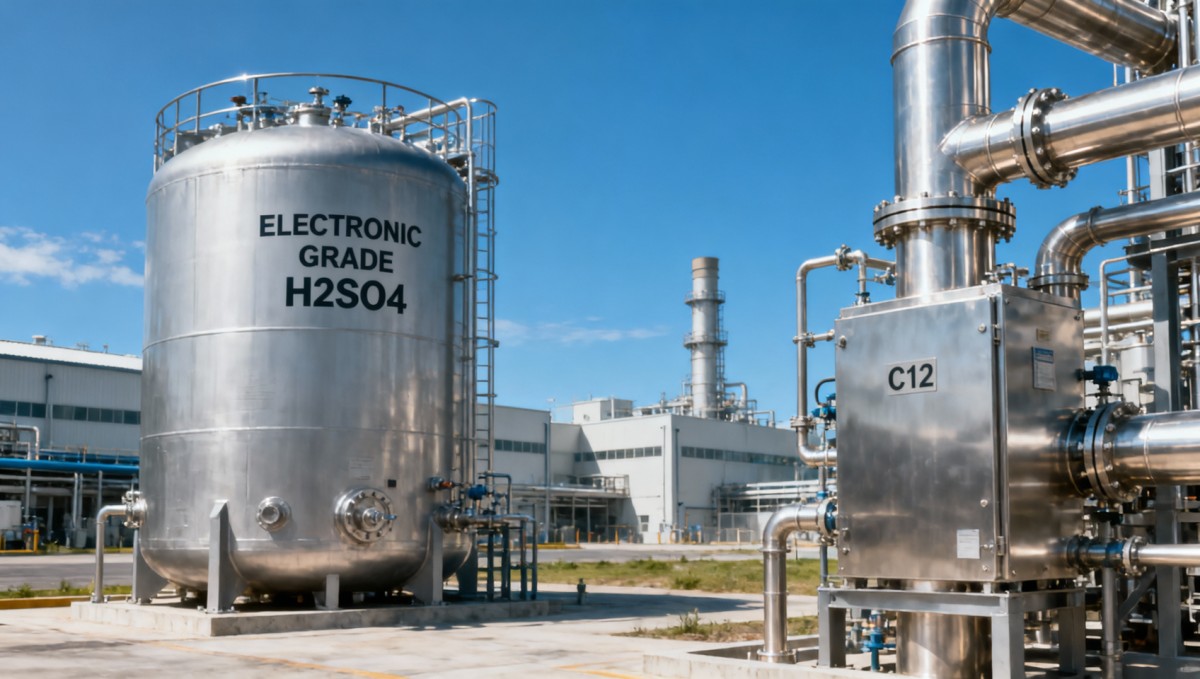
On May 15, 2026, Zhongju Chemical announced plans to raise up to $80 million to fund a new 60,000-ton-per-year electronic-grade sulfuric acid production facility. The project targets SEMI C12 purity standards and aims to address localized supply gaps for high-purity wet electronic chemicals in Southeast Asian and Mexican semiconductor fabs — a development with implications for specialty chemical exporters, supply chain service providers, and downstream fab support vendors.
Event Overview
On May 15, 2026, Zhongju Chemical publicly disclosed its intention to raise no more than $80 million through equity financing. The proceeds are designated exclusively for the construction of an annual 60,000-ton electronic-grade sulfuric acid production line. Upon completion, the facility is expected to meet SEMI C12 purity specifications. The company stated the project intends to serve growing demand from semiconductor fabrication plants (fabs) in Southeast Asia and Mexico, where local sourcing of high-purity wet process chemicals remains limited.
Industries Affected by This Development
Specialty Chemical Exporters
This initiative signals increased demand for certified, export-ready electronic-grade wet chemicals in key overseas fab clusters. Because the project explicitly targets supply gaps in Southeast Asia and Mexico, exporters with established logistics, compliance documentation (e.g., SEMI-certified quality systems), and regional regulatory familiarity may face heightened opportunities to engage as secondary suppliers to those fabs.
Supply Chain & Logistics Service Providers
Fulfilling just-in-time delivery requirements for high-purity chemicals in emerging fab regions demands strict cold-chain integrity, contamination-controlled transport, and traceability infrastructure. Providers offering ISO 14644-compliant warehousing, hazardous material handling certifications for Class 8 acids, and regional customs brokerage in ASEAN or USMCA jurisdictions may see rising tender activity linked to secondary supplier onboarding.
Raw Material Suppliers (High-Purity Acid Precursors)
The expansion implies scaled procurement of ultra-high-purity raw inputs — such as 99.9999% (6N) sulfur trioxide or hydrogen peroxide feedstocks — meeting IECQ QC080000 and REACH Annex XIV criteria. Suppliers with auditable purification histories and batch-level traceability may experience intensified qualification requests from electronic chemical producers like Zhongju Chemical.
Quality Assurance & Certification Bodies
SEMI C12 compliance requires third-party validation across synthesis, packaging, and analytical testing protocols. Certification bodies accredited under ISO/IEC 17065 and experienced in SEMI SP12, SP15, and SP21 standards may observe increased demand for audit services supporting both domestic capacity expansion and export-readiness verification.
What Relevant Enterprises or Practitioners Should Monitor and Act On
Track official project milestones and regulatory filings
Monitor subsequent announcements from Zhongju Chemical regarding environmental impact assessments, construction permits, and SEMI certification timelines — particularly any disclosures about phased commissioning or initial customer qualification batches. These will indicate actual ramp-up velocity versus planning-stage intent.
Assess exposure to Southeast Asia and Mexico fab clusters
Review current or planned engagement with fabs in Vietnam, Malaysia, Thailand, or Monterrey/Guadalajara-based facilities — especially those expanding copper electroplating, wafer cleaning, or etch processes reliant on electronic-grade sulfuric acid. Prioritize alignment with their second-tier supplier onboarding windows.
Distinguish between policy signal and commercial readiness
Recognize that capital raising approval does not equate to immediate volume availability. Focus on verifiable outputs: pilot batch certifications, signed supply MOUs with regional fabs, or inclusion in fab-approved vendor lists — rather than funding announcements alone.
Prepare technical documentation and logistics protocols now
For exporters and service providers, pre-validate SDS formats compliant with ASEAN GHS and Mexican NOM-018-STPS, confirm containerized nitrogen-purged packaging compatibility, and audit internal traceability systems against SEMI E10 and E137 requirements — ahead of formal RFQs from expanded production lines.
Editorial Perspective / Industry Observation
Observably, this move reflects a structural shift toward regionalized high-purity chemical supply chains — driven less by trade policy alone and more by fab operators’ operational need to reduce lead times and contamination risk across global manufacturing nodes. Analysis shows it functions primarily as a forward-looking signal: while the $80 million raise marks a concrete step, actual export-relevant output depends on successful SEMI C12 validation and fab qualification cycles, which typically span 12–18 months post-commissioning. From an industry perspective, this is not yet a supply inflection point — but it is a timely marker of where secondary supply chain integration efforts are likely to concentrate over the next two years.
Conclusion: This announcement underscores the growing strategic importance of localized, standards-aligned wet chemical supply for international semiconductor manufacturing. It does not signify immediate market saturation or guaranteed volume shifts, but rather identifies specific geographies (Southeast Asia, Mexico) and purity benchmarks (SEMI C12) where upstream and midstream participants should calibrate technical readiness, compliance posture, and commercial outreach. Currently, it is better understood as an early-phase infrastructure signal — valuable for planning, not yet actionable as a demand trigger.
Source: Official announcement by Zhongju Chemical dated May 15, 2026. Note: Project commissioning timeline, final SEMI certification status, and customer qualification outcomes remain pending and require ongoing observation.
 Which global manufacturing trends by sector matter most for sourcing plans?Global manufacturing trends by sector: identify sourcing risks, supplier resilience, compliance demands, and cost drivers to build smarter, more reliable procurement plans.
 What industrial trade intelligence pricing should include before you subscribeIndustrial trade intelligence pricing explained: compare coverage, data quality, access rights, and workflow value before choosing a subscription that supports smarter trade decisions.
 How an industrial trade intelligence dashboard can identify new supplier marketsDiscover how an industrial trade intelligence dashboard helps identify new supplier markets by comparing capacity, landed cost, logistics resilience, and compliance risk.
 Which global market entry barriers should exporters assess first?Global market entry barriers exporters should assess first: tariffs, compliance, buyer qualification, logistics, and payment risk. Build a practical strategy for confident market entry.
 How trade data aggregation analytics can reveal emerging supplier marketsTrade data aggregation analytics reveals emerging supplier markets by connecting trade flows, capacity signals, logistics, and compliance insights for smarter sourcing decisions.
 When an export market analysis platform can validate demand in a new marketExport market analysis platform insights help validate new-market demand through buyer fit, regulations, logistics, competition, and profitable entry conditions.
 What is driving the beauty and personal care market in the USA?Beauty and personal care in USA is driven by targeted solutions, selective premiumization, digital discovery, clean-label trust, diverse needs, and compliance. Explore key growth opportunities.
 How trade flow monitoring reports reveal changing regional demandTrade flow monitoring reports reveal changing regional demand through import volumes, sourcing shifts, product mix, logistics signals, and regulatory trends. Explore actionable market insights.
 How international market intelligence for investors reduces market-entry riskInternational market intelligence for investors reduces market-entry risk by validating demand, regulations, logistics, and competition before capital is committed.
 How international sourcing intelligence helps identify supplier risk earlyInternational sourcing intelligence helps businesses spot supplier risks early, protect supply continuity, and make smarter global procurement decisions.
 How trade data aggregation analytics reveals emerging supplier marketsTrade data aggregation analytics reveals emerging supplier markets through export trends, input flows, logistics, and regulatory signals. Discover smarter sourcing insights.
 What industrial cluster monitoring in Vietnam reveals about site riskIndustrial cluster monitoring Vietnam reveals hidden site risks across labor, utilities, logistics, compliance, and supplier dependencies. Make smarter sourcing and expansion decisions.
 Food Technology Trends Reshaping Shelf Life, Safety, and Product InnovationFood technology is reshaping shelf life, safety, and innovation. Discover the trends helping food businesses cut risk, improve compliance, and unlock stronger global market growth.
 How electronics manufacturing services are changing with low-volume demandElectronics manufacturing services are evolving fast with low-volume demand. Learn how agile EMS partners improve flexibility, compliance, sourcing resilience, and speed to market.
 How Can Buyers Reduce Procurement Risks for Electronic Components?How to reduce procurement risks for electronic components: learn how buyers assess traceability, lead times, compliance, and supplier types to avoid costly sourcing mistakes.
 What Sourcing Intelligence India Reveals About Supplier Risk and Cost ShiftsSourcing intelligence India reveals hidden supplier risk, compliance gaps, logistics pressure, and real cost shifts—helping buyers compare vendors smarter and source with more confidence.
 Fashion Trends 2026: Which Materials, Colors, and Silhouettes Are Gaining Ground?Fashion trends 2026 spotlight tactile fabrics, mineral colors, and controlled volume. Explore the materials, shades, and silhouettes shaping smarter, more wearable style.
 Smart Device Market Outlook: Key Growth Drivers, Segments, and Business OpportunitiesSmart device market trends are shifting toward system value, industrial demand, and resilient supply chains. Explore key growth drivers, high-potential segments, and business opportunities.
 How Global Trade Intelligence Services Help B2B Firms Evaluate Markets and SuppliersGlobal trade intelligence services help B2B firms compare suppliers, assess market potential, and uncover compliance, logistics, and pricing risks before costly decisions are made.
 Manufacturing Sector Updates for Investors: What Signals Matter Most in 2025?Manufacturing sector updates for investors in 2025: track orders, margins, supply chains, regulation, and exports to spot resilient manufacturers and smarter investment signals.
 How Energy Market Intelligence Helps Businesses Track Price Risks and Demand ShiftsEnergy market intelligence helps businesses spot price risks, demand shifts, and supply pressure early—improving procurement, resilience, and faster strategic decisions.





















Global Trade Insights & Industry
Our mission is to empower global exporters and importers with data-driven insights that foster strategic growth.
Search News
Popular Tags
Industry Overview
The global commercial kitchen equipment market is projected to reach $112 billion by 2027. Driven by urbanization, the rise of e-commerce food delivery, and strict hygiene regulations.