

RCEP Members Launch 'Green Origin Digital Mutual Recognition Platform', Cutting China's PV Module Export Clearance Time to Under 48 Hours in Southeast Asia
Introduction
On March 24, 2026, the 15 RCEP member states officially launched the Green Origin Digital Mutual Recognition System (G-ROO), enabling Chinese photovoltaic (PV) manufacturers to issue verified electronic certificates of origin online, with real-time customs integration in Vietnam, Thailand, and Malaysia. Field tests show PV module clearance times reduced from 5.2 days to 1.8 days, with logistics costs dropping by approximately 3.7%. This development is particularly significant for renewable energy exporters, logistics providers, and Southeast Asian project developers, as it accelerates cross-border green technology deployment while lowering trade barriers.
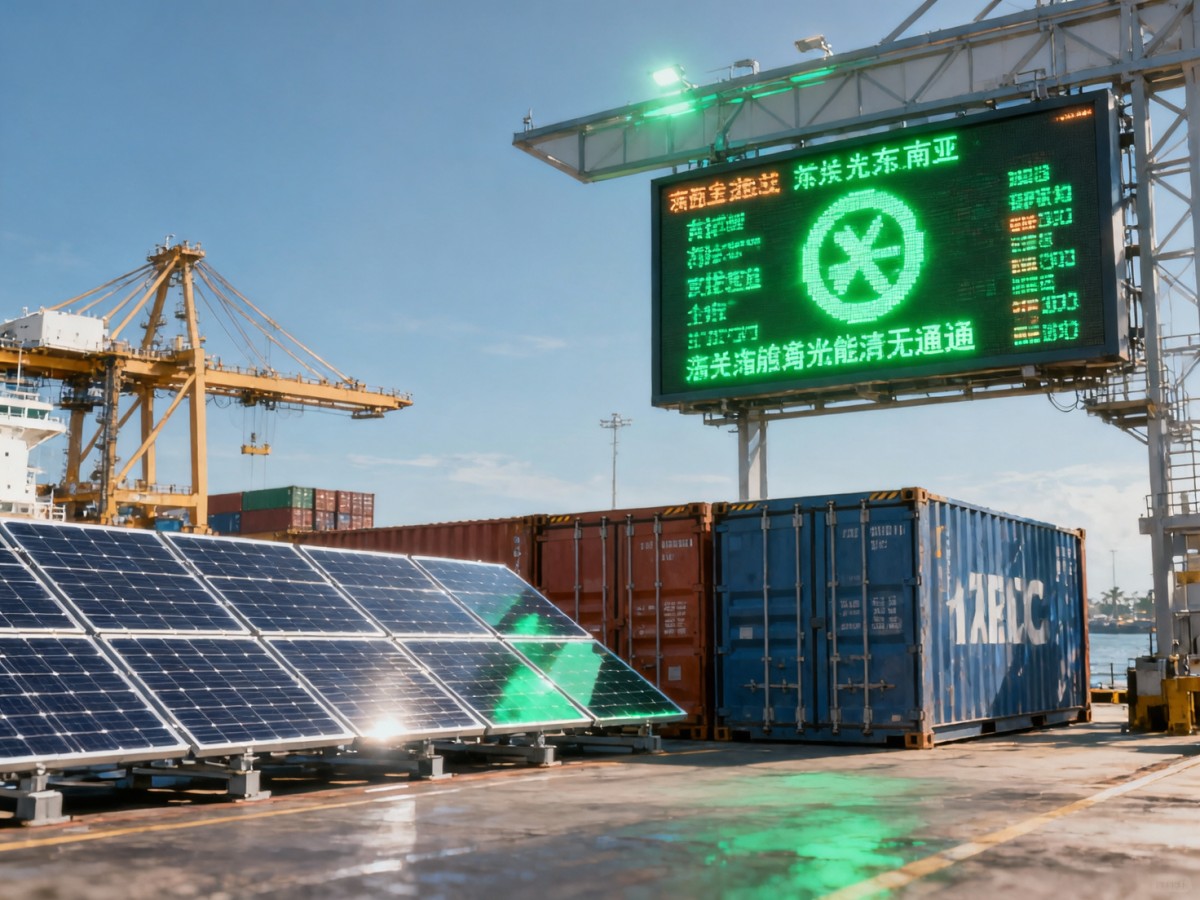
Event Overview
The G-ROO platform, activated on March 24, 2026, digitizes origin certification for environmentally compliant goods under RCEP preferential tariffs. Key operational features include: 1) Automated verification of Chinese PV products' carbon footprint data against ASEAN import standards; 2) Direct API linkage between Chinese certificate issuers and ASEAN customs systems; 3) Priority clearance channels for G-ROO certified shipments at major Southeast Asian ports including Ho Chi Minh City and Port Klang.
Impact on Key Industries
PV Module Exporters
Manufacturers with pre-certified low-carbon production processes (e.g., using renewable-powered facilities) gain immediate advantage, as their products now bypass manual document checks. Analysis suggests exporters maintaining ISO 14067 or similar certifications could see order-to-delivery cycles shrink by 15-20% for ASEAN markets.
Regional EPC Contractors
Engineering firms managing utility-scale solar projects in Vietnam/Thailand benefit from predictable component arrival times, enabling tighter construction schedules. Project planners may now reduce buffer stock requirements by 8-10% given reliable 48-hour customs clearance.
Cross-Border Logistics Providers
Freight forwarders should note the 3.7% cost reduction stems primarily from decreased container demurrage fees at destination ports. Operators with digital customs brokerage capabilities are best positioned to capture this efficiency gain.
Actionable Insights for Businesses
Prioritize Certification Alignment
PV producers without internationally recognized green manufacturing credentials should expedite compliance with IEC 62933-5-2 or equivalent standards to qualify for G-ROO benefits.
Reconfigure Inventory Strategies
Distributors serving Southeast Asia may transition from safety stock models to just-in-time replenishment for certified PV components, potentially freeing up 12-15% of working capital.
Monitor Phase-Two Expansion
Industry observers note Indonesia and the Philippines are expected to join the system by Q3 2026—businesses should track customs policy updates in these markets.
Editorial Perspective
From an industry standpoint, G-ROO represents more than a logistical upgrade—it signals RCEP's evolving role in standardizing green trade rules. The 1.8-day clearance benchmark (versus ASEAN's typical 3-5 day average for non-priority goods) creates de facto preferential treatment for sustainable technologies. However, businesses should view this as an evolving framework rather than a fixed solution, as participating nations may adjust technical requirements during the system's first annual review in December 2026.
Conclusion
This development materially lowers non-tariff barriers for cross-border renewable energy trade within RCEP, with measurable efficiency gains already visible in the PV sector. While the current impact centers on China-ASEAN solar supply chains, the platform's design allows for eventual expansion to other green commodities like wind turbine components and energy storage systems. Market participants should treat this as both an immediate operational improvement and a strategic indicator of regional sustainability-linked trade policies gaining momentum.
Sources
1. RCEP Secretariat official release (March 24, 2026)
2. Vietnam Customs Department operational bulletin
3. Field data from pilot shipments (March 2026, 12 participating exporters)
*Indonesia/Philippines integration timeline based on preliminary statements—await official confirmation
 How an industrial trade intelligence dashboard can identify new supplier marketsDiscover how an industrial trade intelligence dashboard helps identify new supplier markets by comparing capacity, landed cost, logistics resilience, and compliance risk.
 Which global market entry barriers should exporters assess first?Global market entry barriers exporters should assess first: tariffs, compliance, buyer qualification, logistics, and payment risk. Build a practical strategy for confident market entry.
 How trade data aggregation analytics can reveal emerging supplier marketsTrade data aggregation analytics reveals emerging supplier markets by connecting trade flows, capacity signals, logistics, and compliance insights for smarter sourcing decisions.
 When an export market analysis platform can validate demand in a new marketExport market analysis platform insights help validate new-market demand through buyer fit, regulations, logistics, competition, and profitable entry conditions.
 What is driving the beauty and personal care market in the USA?Beauty and personal care in USA is driven by targeted solutions, selective premiumization, digital discovery, clean-label trust, diverse needs, and compliance. Explore key growth opportunities.
 How trade flow monitoring reports reveal changing regional demandTrade flow monitoring reports reveal changing regional demand through import volumes, sourcing shifts, product mix, logistics signals, and regulatory trends. Explore actionable market insights.
 How international market intelligence for investors reduces market-entry riskInternational market intelligence for investors reduces market-entry risk by validating demand, regulations, logistics, and competition before capital is committed.
 How international sourcing intelligence helps identify supplier risk earlyInternational sourcing intelligence helps businesses spot supplier risks early, protect supply continuity, and make smarter global procurement decisions.
 How trade data aggregation analytics reveals emerging supplier marketsTrade data aggregation analytics reveals emerging supplier markets through export trends, input flows, logistics, and regulatory signals. Discover smarter sourcing insights.
 What industrial cluster monitoring in Vietnam reveals about site riskIndustrial cluster monitoring Vietnam reveals hidden site risks across labor, utilities, logistics, compliance, and supplier dependencies. Make smarter sourcing and expansion decisions.
 Food Technology Trends Reshaping Shelf Life, Safety, and Product InnovationFood technology is reshaping shelf life, safety, and innovation. Discover the trends helping food businesses cut risk, improve compliance, and unlock stronger global market growth.
 How electronics manufacturing services are changing with low-volume demandElectronics manufacturing services are evolving fast with low-volume demand. Learn how agile EMS partners improve flexibility, compliance, sourcing resilience, and speed to market.
 How Can Buyers Reduce Procurement Risks for Electronic Components?How to reduce procurement risks for electronic components: learn how buyers assess traceability, lead times, compliance, and supplier types to avoid costly sourcing mistakes.
 What Sourcing Intelligence India Reveals About Supplier Risk and Cost ShiftsSourcing intelligence India reveals hidden supplier risk, compliance gaps, logistics pressure, and real cost shifts—helping buyers compare vendors smarter and source with more confidence.
 Fashion Trends 2026: Which Materials, Colors, and Silhouettes Are Gaining Ground?Fashion trends 2026 spotlight tactile fabrics, mineral colors, and controlled volume. Explore the materials, shades, and silhouettes shaping smarter, more wearable style.
 Smart Device Market Outlook: Key Growth Drivers, Segments, and Business OpportunitiesSmart device market trends are shifting toward system value, industrial demand, and resilient supply chains. Explore key growth drivers, high-potential segments, and business opportunities.
 How Global Trade Intelligence Services Help B2B Firms Evaluate Markets and SuppliersGlobal trade intelligence services help B2B firms compare suppliers, assess market potential, and uncover compliance, logistics, and pricing risks before costly decisions are made.
 Manufacturing Sector Updates for Investors: What Signals Matter Most in 2025?Manufacturing sector updates for investors in 2025: track orders, margins, supply chains, regulation, and exports to spot resilient manufacturers and smarter investment signals.
 How Energy Market Intelligence Helps Businesses Track Price Risks and Demand ShiftsEnergy market intelligence helps businesses spot price risks, demand shifts, and supply pressure early—improving procurement, resilience, and faster strategic decisions.
 Precision Hardware Tools Market: Key Demand Drivers, Segments, and Growth OutlookPrecision hardware tools market trends are reshaping sourcing, compliance, and automation. Explore key demand drivers, segment shifts, regional supply patterns, and growth opportunities.
 How to Use Customs Import Data to Find Buyers, Track Competitors, and Spot Demand?Customs import data helps you find real buyers, track competitors, and spot demand shifts early. Learn practical ways to turn trade records into smarter global business decisions.





















Global Trade Insights & Industry
Our mission is to empower global exporters and importers with data-driven insights that foster strategic growth.
Search News
Popular Tags
Industry Overview
The global commercial kitchen equipment market is projected to reach $112 billion by 2027. Driven by urbanization, the rise of e-commerce food delivery, and strict hygiene regulations.