

What Gets Overlooked When Sourcing Eco-Friendly Outdoor Gear
Sourcing eco-friendly outdoor gear may seem simple at first glance.
Yet the market has changed beyond recycled fabrics, green labels, and low-carbon claims.
Buyers now face tighter compliance rules, rising traceability expectations, and sharper durability scrutiny across outdoor categories.
That shift matters because poor sourcing decisions can damage margins, delay customs clearance, and weaken brand credibility.
The real challenge is identifying what gets overlooked when selecting eco-friendly outdoor gear suppliers and product lines.
This article examines the hidden signals shaping risk, value, and long-term sourcing performance in outdoor sports equipment.
The market signal is clear: eco-friendly outdoor gear is entering a stricter evaluation phase
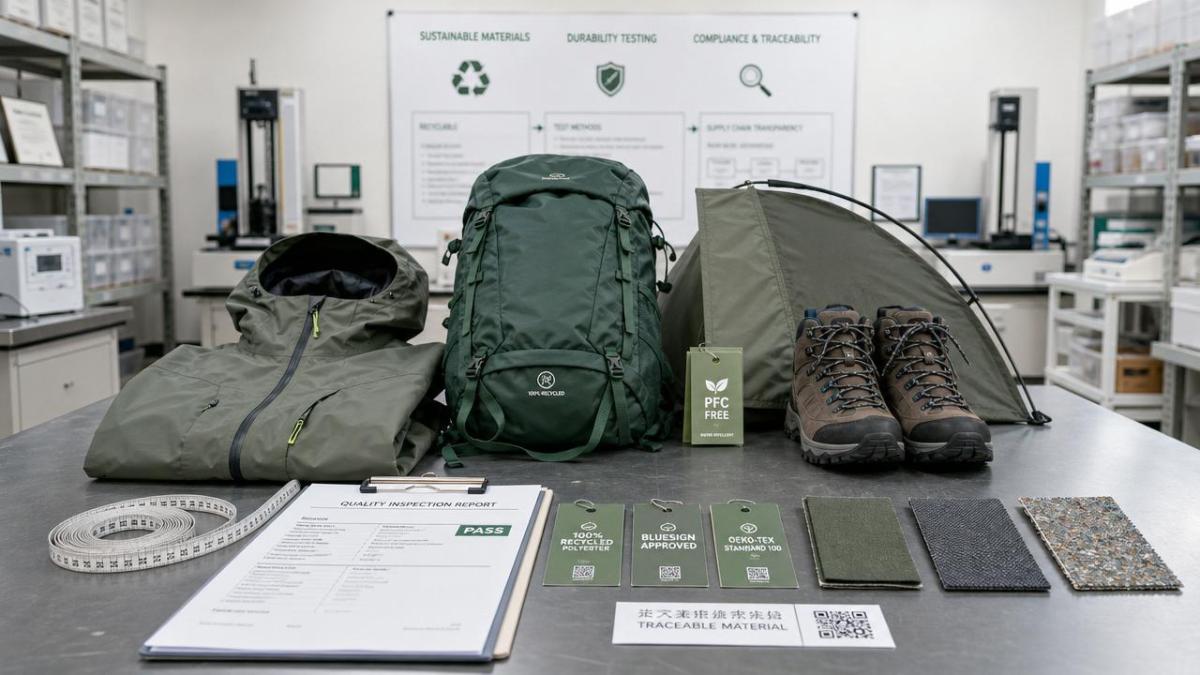
For years, sustainability messaging in outdoor gear focused on visible material choices.
Now, the conversation has moved toward measurable proof, product lifespan, and full supply chain accountability.
This change affects jackets, tents, backpacks, insulation layers, footwear, and accessory systems alike.
In many regions, distributors and retailers want more than a recycled polyester percentage.
They want verified sourcing records, restricted substance compliance, and evidence that products perform outdoors for years.
That means eco-friendly outdoor gear is no longer judged only by materials.
It is judged by transparency, repairability, end-use reliability, and the credibility of every environmental statement.
What is driving this shift in sourcing standards
Several forces are pushing eco-friendly outdoor gear into a more demanding procurement environment.
- More sustainability claims are being challenged by regulators and commercial partners.
- Consumers increasingly compare product longevity with environmental positioning.
- Regional chemical restrictions continue to tighten across textile and polymer components.
- Outdoor performance failures quickly undermine any green brand story.
- Retail channels want stronger documentation before approving new suppliers.
The most overlooked sourcing gaps in eco-friendly outdoor gear
Certification mismatch is more common than many expect
One common mistake is assuming one certification validates the entire product.
In reality, material, chemical, social, and recycled content certifications often cover different scopes.
A shell fabric may be certified, while trims, membranes, adhesives, or dyes remain unclear.
This gap creates compliance and marketing risk for eco-friendly outdoor gear.
Durability is often undervalued in sustainability reviews
A product made with greener inputs is not automatically a better environmental choice.
If zippers fail, coatings peel, or seams leak early, replacement cycles accelerate.
That increases waste, transport emissions, and after-sales costs.
For eco-friendly outdoor gear, lifespan is a core sustainability metric, not a secondary feature.
Waterproof and stain-resistant chemistry needs deeper review
Outdoor gear often relies on treatments that raise environmental questions.
Fluorine-free alternatives may improve compliance positioning, but performance trade-offs must be tested carefully.
Some substitutions reduce breathability, wash durability, or weather resistance under real use conditions.
Without performance validation, sustainable sourcing decisions can trigger product complaints later.
Supply chain transparency is still uneven below tier-one suppliers
Many suppliers can describe final assembly clearly.
Fewer can map yarn sources, membrane producers, dye houses, and trim subcontractors with confidence.
That matters when shipment issues, certification questions, or product recalls emerge.
Reliable eco-friendly outdoor gear sourcing depends on visibility beyond the finishing factory.
How these blind spots affect business performance across the chain
The overlooked details of eco-friendly outdoor gear sourcing create effects far beyond the product page.
A weak decision can disrupt inventory planning, increase return rates, and limit access to premium channels.
It can also reduce confidence among cross-border partners who rely on accurate documentation.
- Product teams face narrower design flexibility when approved materials lack consistency.
- Compliance workflows become slower when testing records are fragmented.
- Sales channels hesitate when environmental claims cannot be defended clearly.
- After-sales costs rise if sustainable materials underperform outdoors.
The consequence is not only financial.
It also shapes trust, and trust has become a ranking factor in both commercial selection and digital visibility.
This is where industry intelligence platforms add value by connecting sourcing decisions with broader market and compliance signals.
GTIIN and TradeVantage support that process through real-time analysis, sector monitoring, and visibility into cross-regional industrial shifts.
What deserves closer attention before finalizing eco-friendly outdoor gear suppliers
A better sourcing review should move beyond brochure claims and basic recycled content declarations.
- Check whether certifications match the exact component scope of the finished product.
- Review abrasion, wash, seam, waterproof, and colorfastness results under likely use conditions.
- Ask how fluorine-free or bio-based treatments perform over repeated field exposure.
- Confirm whether trim suppliers and sub-processors are included in traceability records.
- Assess repairability, spare part access, and replaceable component design.
- Compare regional labeling, packaging, and chemical requirements before shipment planning.
- Evaluate consistency across production lots, not just development samples.
A practical way to judge sourcing options in a changing market
This framework helps compare eco-friendly outdoor gear suppliers with more precision.
It also reduces the risk of selecting a product that looks sustainable but performs weakly in market reality.
The next sourcing advantage will come from intelligence, not claims alone
The future of eco-friendly outdoor gear sourcing will reward better judgment, not louder green messaging.
Competitive decisions will depend on identifying hidden weaknesses before they affect shipments, margins, or reputation.
That requires updated visibility into regulations, material innovation, supplier behavior, and demand shifts across regions.
TradeVantage and GTIIN help businesses monitor those changes through structured industry intelligence and high-visibility market reporting.
The most effective next step is to review current supplier assumptions against traceability, durability, and compliance evidence.
In today’s market, smarter sourcing of eco-friendly outdoor gear starts with asking better questions early.
 How an industrial trade intelligence dashboard can identify new supplier marketsDiscover how an industrial trade intelligence dashboard helps identify new supplier markets by comparing capacity, landed cost, logistics resilience, and compliance risk.
 Which global market entry barriers should exporters assess first?Global market entry barriers exporters should assess first: tariffs, compliance, buyer qualification, logistics, and payment risk. Build a practical strategy for confident market entry.
 How trade data aggregation analytics can reveal emerging supplier marketsTrade data aggregation analytics reveals emerging supplier markets by connecting trade flows, capacity signals, logistics, and compliance insights for smarter sourcing decisions.
 When an export market analysis platform can validate demand in a new marketExport market analysis platform insights help validate new-market demand through buyer fit, regulations, logistics, competition, and profitable entry conditions.
 What is driving the beauty and personal care market in the USA?Beauty and personal care in USA is driven by targeted solutions, selective premiumization, digital discovery, clean-label trust, diverse needs, and compliance. Explore key growth opportunities.
 How trade flow monitoring reports reveal changing regional demandTrade flow monitoring reports reveal changing regional demand through import volumes, sourcing shifts, product mix, logistics signals, and regulatory trends. Explore actionable market insights.
 How international market intelligence for investors reduces market-entry riskInternational market intelligence for investors reduces market-entry risk by validating demand, regulations, logistics, and competition before capital is committed.
 How international sourcing intelligence helps identify supplier risk earlyInternational sourcing intelligence helps businesses spot supplier risks early, protect supply continuity, and make smarter global procurement decisions.
 How trade data aggregation analytics reveals emerging supplier marketsTrade data aggregation analytics reveals emerging supplier markets through export trends, input flows, logistics, and regulatory signals. Discover smarter sourcing insights.
 What industrial cluster monitoring in Vietnam reveals about site riskIndustrial cluster monitoring Vietnam reveals hidden site risks across labor, utilities, logistics, compliance, and supplier dependencies. Make smarter sourcing and expansion decisions.
 Food Technology Trends Reshaping Shelf Life, Safety, and Product InnovationFood technology is reshaping shelf life, safety, and innovation. Discover the trends helping food businesses cut risk, improve compliance, and unlock stronger global market growth.
 How electronics manufacturing services are changing with low-volume demandElectronics manufacturing services are evolving fast with low-volume demand. Learn how agile EMS partners improve flexibility, compliance, sourcing resilience, and speed to market.
 How Can Buyers Reduce Procurement Risks for Electronic Components?How to reduce procurement risks for electronic components: learn how buyers assess traceability, lead times, compliance, and supplier types to avoid costly sourcing mistakes.
 What Sourcing Intelligence India Reveals About Supplier Risk and Cost ShiftsSourcing intelligence India reveals hidden supplier risk, compliance gaps, logistics pressure, and real cost shifts—helping buyers compare vendors smarter and source with more confidence.
 Fashion Trends 2026: Which Materials, Colors, and Silhouettes Are Gaining Ground?Fashion trends 2026 spotlight tactile fabrics, mineral colors, and controlled volume. Explore the materials, shades, and silhouettes shaping smarter, more wearable style.
 Smart Device Market Outlook: Key Growth Drivers, Segments, and Business OpportunitiesSmart device market trends are shifting toward system value, industrial demand, and resilient supply chains. Explore key growth drivers, high-potential segments, and business opportunities.
 How Global Trade Intelligence Services Help B2B Firms Evaluate Markets and SuppliersGlobal trade intelligence services help B2B firms compare suppliers, assess market potential, and uncover compliance, logistics, and pricing risks before costly decisions are made.
 Manufacturing Sector Updates for Investors: What Signals Matter Most in 2025?Manufacturing sector updates for investors in 2025: track orders, margins, supply chains, regulation, and exports to spot resilient manufacturers and smarter investment signals.
 How Energy Market Intelligence Helps Businesses Track Price Risks and Demand ShiftsEnergy market intelligence helps businesses spot price risks, demand shifts, and supply pressure early—improving procurement, resilience, and faster strategic decisions.
 Precision Hardware Tools Market: Key Demand Drivers, Segments, and Growth OutlookPrecision hardware tools market trends are reshaping sourcing, compliance, and automation. Explore key demand drivers, segment shifts, regional supply patterns, and growth opportunities.
 How to Use Customs Import Data to Find Buyers, Track Competitors, and Spot Demand?Customs import data helps you find real buyers, track competitors, and spot demand shifts early. Learn practical ways to turn trade records into smarter global business decisions.





















Global Trade Insights & Industry
Our mission is to empower global exporters and importers with data-driven insights that foster strategic growth.
Search News
Popular Tags
Industry Overview
The global commercial kitchen equipment market is projected to reach $112 billion by 2027. Driven by urbanization, the rise of e-commerce food delivery, and strict hygiene regulations.