

Lifesense at Hospitalar 2026: Bluetooth HIPAA-Compliant Devices for Latin America
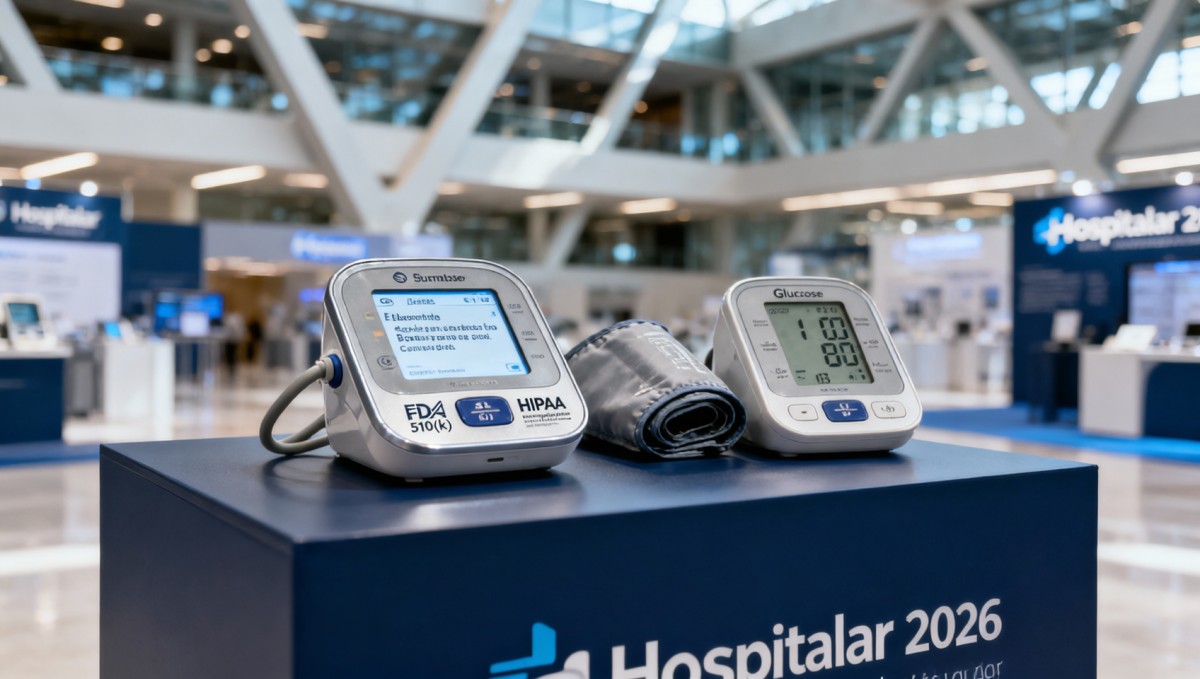
The 31st edition of Hospitalar—the largest healthcare trade fair in Latin America—concluded on May 22, 2026, in São Paulo, Brazil. At booth G-270d, Chinese health technology company Lifesense Medical showcased its integrated digital chronic disease management solution tailored for Latin American markets. The launch of its new Bluetooth-enabled blood pressure monitors and glucose meters—certified under FDA 510(k) and compliant with HIPAA data encryption standards—marks a notable shift in how Chinese medical device exporters engage emerging markets. This development is particularly relevant for medical device exporters, regulatory affairs professionals, regional distribution partners, and digital health platform integrators operating in or targeting Latin America, the Middle East, and other regulated emerging economies.
Event Overview
The 31st Hospitalar exhibition ended on May 22, 2026. Lifesense Medical exhibited at booth G-270d, presenting its home health monitoring solution designed specifically for Latin American users. Its newly launched blood pressure monitors and glucose meters feature built-in Bluetooth modules certified to FDA 510(k) requirements and HIPAA-compliant data encryption. The devices include preloaded Spanish and Portuguese user interfaces and native API integration capabilities with local health insurance platforms in the region.
Industries Affected
Medical Device Exporters
Exporters targeting Latin America may face increased expectations for regulatory alignment beyond basic CE or FDA clearance. Lifesense’s inclusion of HIPAA-grade encryption—and not just general Bluetooth connectivity—signals that buyers and regulators are beginning to treat data security as a baseline requirement, not an optional add-on. This raises the bar for technical documentation, cybersecurity validation, and localization depth (e.g., language UI + API interoperability).
Regional Distribution & Channel Partners
Distributors and value-added resellers in Latin America may need to adapt their service offerings to support integration with local health insurance systems. Pre-integrated APIs imply that end-user adoption now depends less on standalone hardware performance and more on seamless data handoff to payer or clinical platforms. Partners must assess whether their current infrastructure supports secure data routing, consent management, and audit logging required by local privacy laws.
Regulatory Affairs & Compliance Teams
Teams supporting market entry into Latin America may need to broaden scope beyond traditional safety and efficacy assessments. HIPAA compliance—though a U.S. framework—is being adopted de facto in certain Latin American contexts as a proxy for robust health data handling. This suggests growing convergence between U.S.-aligned privacy expectations and regional procurement criteria, especially where public or insurer-backed digital health programs are expanding.
What Relevant Enterprises or Practitioners Should Focus On
Monitor official guidance from ANVISA and regional health authorities on digital health data requirements
While HIPAA compliance was highlighted in Lifesense’s messaging, no Latin American regulator has formally mandated HIPAA. Companies should distinguish between vendor-driven certifications and binding regulatory obligations. Tracking ANVISA’s upcoming guidance on health data interoperability (expected Q3 2026) will clarify whether such certifications are becoming prerequisites—or remain competitive differentiators.
Prioritize verification of API readiness for major local health insurers and SUS-aligned platforms
Lifesense’s pre-integrated APIs suggest demand for plug-and-play connectivity—not just with generic EHRs, but with specific national or regional platforms (e.g., Brazil’s e-SUS, Mexico’s IMSS Digital). Exporters and partners should identify which platforms dominate reimbursement pathways in target countries and validate technical compatibility early in market-entry planning.
Assess supply chain implications of dual-certification modules (FDA 510(k) + HIPAA-grade encryption)
The inclusion of HIPAA-compliant Bluetooth modules implies tighter control over firmware, cryptographic libraries, and hardware-level security features. Manufacturers and OEMs should review whether existing module suppliers can provide traceable, auditable, and updateable security stacks—and whether those stacks meet evolving regional interpretations of data sovereignty and encryption standards.
Prepare bilingual technical documentation and post-market surveillance protocols in Spanish and Portuguese
Preloaded UI languages signal that regulatory submissions and user-facing materials are increasingly expected in local languages—not just English translations. Firms should align internal QA, labeling, and adverse event reporting workflows with linguistic and cultural conventions used in target markets, especially where patient-reported outcomes feed into reimbursement decisions.
Editorial Perspective / Industry Observation
Observably, this move by Lifesense reflects a broader transition—not just in product specs, but in commercial logic—from exporting medical hardware to embedding compliant, interoperable components within regional digital health infrastructures. Analysis shows that the emphasis on HIPAA-grade encryption (a U.S.-origin standard) in a Latin American context does not indicate formal regulatory adoption, but rather signals buyer-led convergence around data trustworthiness as a procurement criterion. From an industry perspective, this is best understood not as a completed market shift, but as an early-stage signal: one that reveals rising sensitivity among payers and providers to data lineage, consent architecture, and system-level integration—not only device accuracy. Continued attention is warranted because similar patterns are now appearing in tender documents across Colombia, Chile, and the UAE, suggesting replication risk and opportunity beyond Brazil.
It remains unclear whether HIPAA compliance will become a formal requirement in future ANVISA guidelines—or whether it will remain a voluntary benchmark adopted by leading vendors to accelerate adoption in complex, fragmented health ecosystems. That uncertainty makes ongoing tracking of procurement language in public tenders and private payer RFPs essential.
Conclusion: This development signifies a maturing phase in China’s medical device export strategy—one where regulatory alignment, data governance, and local system integration are becoming co-equal priorities alongside manufacturing scale and cost efficiency. It is better understood as an operational signal than a finalized market standard: indicative of evolving buyer expectations, not yet a regulatory mandate. For stakeholders, the immediate implication is not to adopt HIPAA wholesale, but to strengthen capacity for modular, auditable, and locally adaptable data-handling architectures—especially when entering digitally ambitious emerging markets.
Source: Official Hospitalar 2026 exhibition records; Lifesense Medical press release (May 22, 2026); publicly available booth information from Hospitalar official website. Note: ANVISA’s formal position on HIPAA-aligned encryption standards remains pending; ongoing observation of upcoming regulatory drafts is recommended.
 Which global manufacturing trends by sector matter most for sourcing plans?Global manufacturing trends by sector: identify sourcing risks, supplier resilience, compliance demands, and cost drivers to build smarter, more reliable procurement plans.
 What industrial trade intelligence pricing should include before you subscribeIndustrial trade intelligence pricing explained: compare coverage, data quality, access rights, and workflow value before choosing a subscription that supports smarter trade decisions.
 How an industrial trade intelligence dashboard can identify new supplier marketsDiscover how an industrial trade intelligence dashboard helps identify new supplier markets by comparing capacity, landed cost, logistics resilience, and compliance risk.
 Which global market entry barriers should exporters assess first?Global market entry barriers exporters should assess first: tariffs, compliance, buyer qualification, logistics, and payment risk. Build a practical strategy for confident market entry.
 How trade data aggregation analytics can reveal emerging supplier marketsTrade data aggregation analytics reveals emerging supplier markets by connecting trade flows, capacity signals, logistics, and compliance insights for smarter sourcing decisions.
 When an export market analysis platform can validate demand in a new marketExport market analysis platform insights help validate new-market demand through buyer fit, regulations, logistics, competition, and profitable entry conditions.
 What is driving the beauty and personal care market in the USA?Beauty and personal care in USA is driven by targeted solutions, selective premiumization, digital discovery, clean-label trust, diverse needs, and compliance. Explore key growth opportunities.
 How trade flow monitoring reports reveal changing regional demandTrade flow monitoring reports reveal changing regional demand through import volumes, sourcing shifts, product mix, logistics signals, and regulatory trends. Explore actionable market insights.
 How international market intelligence for investors reduces market-entry riskInternational market intelligence for investors reduces market-entry risk by validating demand, regulations, logistics, and competition before capital is committed.
 How international sourcing intelligence helps identify supplier risk earlyInternational sourcing intelligence helps businesses spot supplier risks early, protect supply continuity, and make smarter global procurement decisions.
 How trade data aggregation analytics reveals emerging supplier marketsTrade data aggregation analytics reveals emerging supplier markets through export trends, input flows, logistics, and regulatory signals. Discover smarter sourcing insights.
 What industrial cluster monitoring in Vietnam reveals about site riskIndustrial cluster monitoring Vietnam reveals hidden site risks across labor, utilities, logistics, compliance, and supplier dependencies. Make smarter sourcing and expansion decisions.
 Food Technology Trends Reshaping Shelf Life, Safety, and Product InnovationFood technology is reshaping shelf life, safety, and innovation. Discover the trends helping food businesses cut risk, improve compliance, and unlock stronger global market growth.
 How electronics manufacturing services are changing with low-volume demandElectronics manufacturing services are evolving fast with low-volume demand. Learn how agile EMS partners improve flexibility, compliance, sourcing resilience, and speed to market.
 How Can Buyers Reduce Procurement Risks for Electronic Components?How to reduce procurement risks for electronic components: learn how buyers assess traceability, lead times, compliance, and supplier types to avoid costly sourcing mistakes.
 What Sourcing Intelligence India Reveals About Supplier Risk and Cost ShiftsSourcing intelligence India reveals hidden supplier risk, compliance gaps, logistics pressure, and real cost shifts—helping buyers compare vendors smarter and source with more confidence.
 Fashion Trends 2026: Which Materials, Colors, and Silhouettes Are Gaining Ground?Fashion trends 2026 spotlight tactile fabrics, mineral colors, and controlled volume. Explore the materials, shades, and silhouettes shaping smarter, more wearable style.
 Smart Device Market Outlook: Key Growth Drivers, Segments, and Business OpportunitiesSmart device market trends are shifting toward system value, industrial demand, and resilient supply chains. Explore key growth drivers, high-potential segments, and business opportunities.
 How Global Trade Intelligence Services Help B2B Firms Evaluate Markets and SuppliersGlobal trade intelligence services help B2B firms compare suppliers, assess market potential, and uncover compliance, logistics, and pricing risks before costly decisions are made.
 Manufacturing Sector Updates for Investors: What Signals Matter Most in 2025?Manufacturing sector updates for investors in 2025: track orders, margins, supply chains, regulation, and exports to spot resilient manufacturers and smarter investment signals.
 How Energy Market Intelligence Helps Businesses Track Price Risks and Demand ShiftsEnergy market intelligence helps businesses spot price risks, demand shifts, and supply pressure early—improving procurement, resilience, and faster strategic decisions.





















Global Trade Insights & Industry
Our mission is to empower global exporters and importers with data-driven insights that foster strategic growth.
Search News
Popular Tags
Industry Overview
The global commercial kitchen equipment market is projected to reach $112 billion by 2027. Driven by urbanization, the rise of e-commerce food delivery, and strict hygiene regulations.