

WHO Declares Ebola Outbreak a PHEIC
On May 19, 2026, the World Health Organization (WHO) declared the Ebola virus disease outbreak in the Democratic Republic of the Congo and neighboring regions a Public Health Emergency of International Concern (PHEIC). This designation is expected to catalyze coordinated global public health responses—including enhanced border screening, accelerated medical stockpiling, and expanded procurement of biosafety-critical equipment—triggering measurable demand shifts across several export-oriented segments of the global healthcare supply chain.
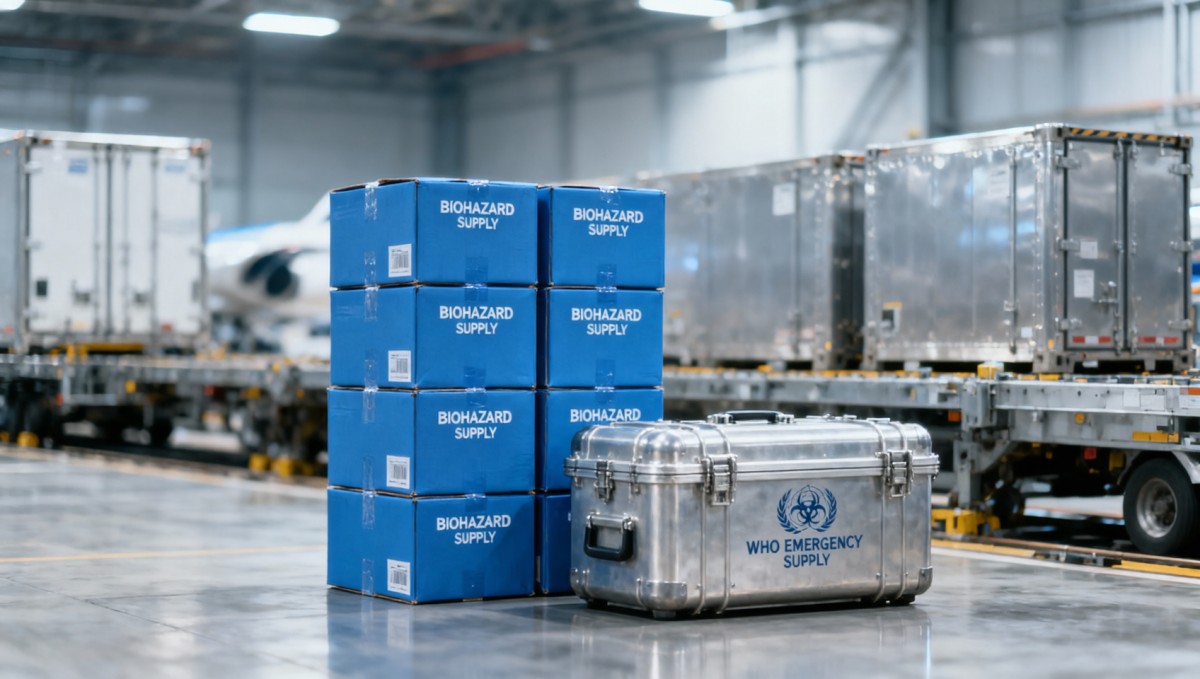
Event Overview
The WHO announced on May 19, 2026, that the ongoing Ebola outbreak in the Democratic Republic of the Congo meets the criteria for a Public Health Emergency of International Concern under the International Health Regulations (2005). The declaration follows evidence of cross-border transmission and concerns about health system capacity limitations in affected and at-risk countries.
Industries Affected
Direct Export Enterprises: Companies exporting medical devices and personal protective equipment (PPE) to Africa, Southeast Asia, and Latin America are likely to see accelerated tender activity and short-term order volume increases. The PHEIC triggers formal procurement mechanisms under WHO-coordinated emergency response frameworks, particularly through UN agencies and regional health bodies—creating faster, more predictable access to government buyers than standard commercial channels.
Raw Material Suppliers: Producers of melt-blown polypropylene (for N95 respirators), HEPA-grade glass fiber media, and high-tensile synthetic nonwovens (for disposable gowns) may experience tighter inventory buffers and earlier-than-expected reorder signals from downstream converters. However, sustained demand remains contingent on the duration and geographic spread of the outbreak—not guaranteed by the PHEIC designation alone.
Manufacturing Firms: OEMs producing PCR analyzers, Class II/III biological safety cabinets, high-speed refrigerated centrifuges, and negative-pressure ambulance conversion kits face near-term production scheduling pressure. Lead times for certified components (e.g., UL-listed blowers, ISO 14644-compliant filtration housings) could constrain output ramp-up, making regulatory compliance readiness a critical bottleneck.
Supply Chain Service Providers: Freight forwarders specializing in temperature-controlled or hazardous-material-certified air cargo, as well as third-party logistics providers with WHO prequalified storage facilities in Nairobi, Bangkok, or Panama City, are positioned to absorb increased shipment volumes. Documentation accuracy—especially for dual-use items subject to export controls (e.g., certain biosafety cabinets)—will be scrutinized more closely post-PHEIC.
Key Considerations and Recommended Actions
Monitor official procurement portals in real time
UNICEF Supply Division, PAHO’s Revolving Fund, and the African Union’s Africa Medical Supplies Platform have all activated emergency procurement protocols. Exporters should register on these platforms immediately—and ensure product registrations (e.g., WHO PQ, CE IVDR, FDA 510(k)) remain valid and jurisdictionally aligned.
Validate certification status for target markets
Several African nations require local registration prior to import—even during emergencies. For example, Nigeria’s NAFDAC mandates emergency use authorization (EUA) applications, while Kenya’s PPB requires batch-specific import permits. Relying solely on CE marking or U.S. FDA clearance is insufficient.
Assess logistics readiness for rapid deployment
Air freight capacity to Kinshasa, Brazzaville, and Monrovia remains constrained. Companies should pre-negotiate slots with carriers offering IATA-permitted biohazard transport (e.g., Lufthansa Cargo’s BioSafe service) and confirm cold-chain compatibility for reagents used in PCR testing.
Editorial Perspective / Industry Observation
Analysis shows that PHEIC declarations do not automatically translate into sustained revenue uplifts for exporters. Historically, only ~37% of PHEIC-related procurement contracts awarded within the first 60 days result in repeat orders beyond the emergency phase (per WHO Procurement Annual Review 2024). Observably, this event places greater strategic weight on companies’ ability to pivot from transactional sales to long-term technical support partnerships—such as field-based maintenance networks or remote diagnostics integration—rather than one-off hardware shipments. From an industry perspective, the current situation is better understood as a stress test for responsiveness, certification agility, and regional distribution depth—not merely a demand spike.
Conclusion
This PHEIC designation underscores how rapidly evolving global health threats recalibrate international trade priorities in life sciences infrastructure. While near-term export opportunities exist, their durability hinges less on the outbreak’s severity and more on how effectively suppliers align operational capabilities with multilateral emergency response architectures. A rational interpretation is that resilience—not scale—will define competitive advantage in this cycle.
Source Attribution
World Health Organization, Statement on the Ebola Virus Disease Outbreak in the Democratic Republic of the Congo, May 19, 2026; International Health Regulations (2005), Annex 2; WHO Emergency Response Framework v4.2. Ongoing monitoring recommended for updates to the WHO Emergency Use Listing (EUL) procedure and regional regulatory waivers issued under national health emergency statutes.
 Which global manufacturing trends by sector matter most for sourcing plans?Global manufacturing trends by sector: identify sourcing risks, supplier resilience, compliance demands, and cost drivers to build smarter, more reliable procurement plans.
 What industrial trade intelligence pricing should include before you subscribeIndustrial trade intelligence pricing explained: compare coverage, data quality, access rights, and workflow value before choosing a subscription that supports smarter trade decisions.
 How an industrial trade intelligence dashboard can identify new supplier marketsDiscover how an industrial trade intelligence dashboard helps identify new supplier markets by comparing capacity, landed cost, logistics resilience, and compliance risk.
 Which global market entry barriers should exporters assess first?Global market entry barriers exporters should assess first: tariffs, compliance, buyer qualification, logistics, and payment risk. Build a practical strategy for confident market entry.
 How trade data aggregation analytics can reveal emerging supplier marketsTrade data aggregation analytics reveals emerging supplier markets by connecting trade flows, capacity signals, logistics, and compliance insights for smarter sourcing decisions.
 When an export market analysis platform can validate demand in a new marketExport market analysis platform insights help validate new-market demand through buyer fit, regulations, logistics, competition, and profitable entry conditions.
 What is driving the beauty and personal care market in the USA?Beauty and personal care in USA is driven by targeted solutions, selective premiumization, digital discovery, clean-label trust, diverse needs, and compliance. Explore key growth opportunities.
 How trade flow monitoring reports reveal changing regional demandTrade flow monitoring reports reveal changing regional demand through import volumes, sourcing shifts, product mix, logistics signals, and regulatory trends. Explore actionable market insights.
 How international market intelligence for investors reduces market-entry riskInternational market intelligence for investors reduces market-entry risk by validating demand, regulations, logistics, and competition before capital is committed.
 How international sourcing intelligence helps identify supplier risk earlyInternational sourcing intelligence helps businesses spot supplier risks early, protect supply continuity, and make smarter global procurement decisions.
 How trade data aggregation analytics reveals emerging supplier marketsTrade data aggregation analytics reveals emerging supplier markets through export trends, input flows, logistics, and regulatory signals. Discover smarter sourcing insights.
 What industrial cluster monitoring in Vietnam reveals about site riskIndustrial cluster monitoring Vietnam reveals hidden site risks across labor, utilities, logistics, compliance, and supplier dependencies. Make smarter sourcing and expansion decisions.
 Food Technology Trends Reshaping Shelf Life, Safety, and Product InnovationFood technology is reshaping shelf life, safety, and innovation. Discover the trends helping food businesses cut risk, improve compliance, and unlock stronger global market growth.
 How electronics manufacturing services are changing with low-volume demandElectronics manufacturing services are evolving fast with low-volume demand. Learn how agile EMS partners improve flexibility, compliance, sourcing resilience, and speed to market.
 How Can Buyers Reduce Procurement Risks for Electronic Components?How to reduce procurement risks for electronic components: learn how buyers assess traceability, lead times, compliance, and supplier types to avoid costly sourcing mistakes.
 What Sourcing Intelligence India Reveals About Supplier Risk and Cost ShiftsSourcing intelligence India reveals hidden supplier risk, compliance gaps, logistics pressure, and real cost shifts—helping buyers compare vendors smarter and source with more confidence.
 Fashion Trends 2026: Which Materials, Colors, and Silhouettes Are Gaining Ground?Fashion trends 2026 spotlight tactile fabrics, mineral colors, and controlled volume. Explore the materials, shades, and silhouettes shaping smarter, more wearable style.
 Smart Device Market Outlook: Key Growth Drivers, Segments, and Business OpportunitiesSmart device market trends are shifting toward system value, industrial demand, and resilient supply chains. Explore key growth drivers, high-potential segments, and business opportunities.
 How Global Trade Intelligence Services Help B2B Firms Evaluate Markets and SuppliersGlobal trade intelligence services help B2B firms compare suppliers, assess market potential, and uncover compliance, logistics, and pricing risks before costly decisions are made.
 Manufacturing Sector Updates for Investors: What Signals Matter Most in 2025?Manufacturing sector updates for investors in 2025: track orders, margins, supply chains, regulation, and exports to spot resilient manufacturers and smarter investment signals.
 How Energy Market Intelligence Helps Businesses Track Price Risks and Demand ShiftsEnergy market intelligence helps businesses spot price risks, demand shifts, and supply pressure early—improving procurement, resilience, and faster strategic decisions.





















Global Trade Insights & Industry
Our mission is to empower global exporters and importers with data-driven insights that foster strategic growth.
Search News
Popular Tags
Industry Overview
The global commercial kitchen equipment market is projected to reach $112 billion by 2027. Driven by urbanization, the rise of e-commerce food delivery, and strict hygiene regulations.