

2026 Global Manufacturing Trends in Renewable Energy Storage
[Technical Procurement Intelligence Summary]:As renewable energy storage enters a faster industrial cycle, global manufacturing trends now shape investment timing, technology choices, and supply resilience across many sectors.
In 2026, battery factories, materials processing, power electronics, and grid integration are evolving together, creating a more complex international production landscape.
This article answers practical questions about global manufacturing trends in renewable energy storage, with emphasis on capacity planning, sourcing, policy, and risk evaluation.
What do global manufacturing trends in renewable energy storage look like in 2026?

The biggest shift is industrial scaling with tighter specialization. Factories no longer compete only on volume. They compete on chemistry flexibility, automation depth, and regional delivery speed.
Global manufacturing trends show three clear directions. First, battery cell output is expanding closer to end markets. Second, supply chains are becoming more regional. Third, software-linked manufacturing is improving traceability.
Lithium-ion remains dominant, but storage manufacturing is broadening. LFP, sodium-ion, flow battery systems, and hybrid storage architectures are gaining industrial attention.
Another major trend is vertical integration. More firms are linking raw material processing, cell production, module assembly, battery management systems, and recycling under coordinated structures.
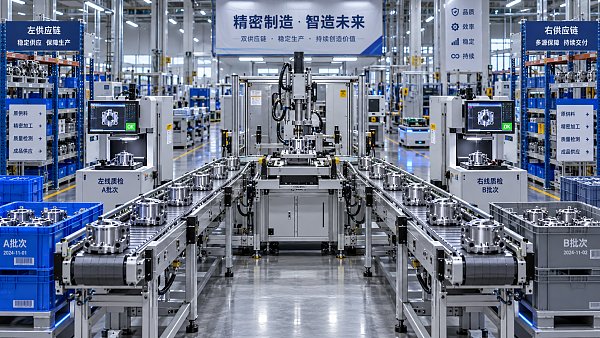
This matters because renewable energy storage now depends on synchronized manufacturing, not isolated production lines. Delays in separators, inverters, thermal systems, or grid controls can slow complete project delivery.
- Regional gigafactory growth continues across Asia, Europe, and North America.
- Factory digitalization improves quality control and throughput forecasting.
- Energy density is no longer the only benchmark; safety and lifecycle economics are rising.
- Storage manufacturing increasingly connects with grid services and utility planning.
Why are regional policies and industrial strategies changing global manufacturing trends?
Policy is now a direct manufacturing variable. Incentives, local content rules, tax credits, and environmental reporting standards influence where capacity is built and how output is certified.
In 2026, global manufacturing trends are shaped by policy competition between major economic regions. Governments want cleaner power systems, but they also want domestic industrial capability.
That creates a dual pressure. Storage producers must meet demand growth while aligning with subsidy rules, origin requirements, and supply chain disclosure frameworks.
Asia still leads in mature battery ecosystems, processing efficiency, and component depth. Europe is pushing sustainability compliance and strategic autonomy. North America is accelerating localized assembly and upstream investment.
These policy differences affect cost, lead time, and market entry conditions. They also change how renewable energy storage projects compare suppliers across regions.
What does this mean for industrial planning?
It means site selection can no longer be based only on labor cost. Energy prices, permitting speed, port access, compliance reporting, and recycling obligations now matter more.
It also means global manufacturing trends should be tracked together with customs changes, emissions accounting, and technology certification pathways.
Which materials and technologies are under the most pressure?
Material pressure remains one of the most searched topics around global manufacturing trends. The reason is simple: storage scale depends on stable input availability.
Lithium, graphite, nickel, manganese, copper, and aluminum still sit at the center of battery economics. However, pressure is no longer only about scarcity.
Processing concentration, refining standards, transport risk, and environmental traceability have become equally important. A material may be available globally but constrained in qualifying industrial form.
This is one reason LFP continues to attract utility-scale storage investment. It reduces exposure to some high-volatility inputs while supporting safer, longer-duration applications.
Sodium-ion is another technology to watch. It may not replace lithium-ion broadly in 2026, but it supports diversification in stationary storage manufacturing.
Power electronics are also under pressure. Inverters, semiconductors, cooling systems, and control software are critical to storage deployment, yet often receive less attention than battery chemistry.
- Watch refining and precursor bottlenecks, not only mining announcements.
- Track thermal management supply with the same priority as cells.
- Compare chemistry roadmaps against project duration needs.
- Review recyclability and second-life pathways early.
How should changing global manufacturing trends be evaluated across regions?
A useful comparison starts with ecosystem depth. Strong regions combine raw materials access, cell expertise, equipment supply, testing capability, logistics, and policy continuity.
A second factor is production maturity. New factories may offer incentives, but mature clusters often deliver better process stability and supplier responsiveness.
A third factor is grid relevance. Renewable energy storage manufacturing performs better when linked to actual deployment markets, service networks, and utility demand signals.
Using this framework helps interpret global manufacturing trends beyond headlines. It reveals whether growth is structurally durable or temporarily incentive-driven.
What risks and misunderstandings often distort renewable energy storage decisions?
One common mistake is assuming that announced capacity equals usable output. In reality, commissioning delays, quality ramp challenges, and equipment tuning can slow production significantly.
Another misunderstanding is focusing only on cell supply. Renewable energy storage performance depends on pack design, safety controls, software integration, and after-sales support.
A third risk is underestimating certification timelines. Fire safety codes, transport regulations, and grid connection standards can change deployment schedules even when equipment is available.
Global manufacturing trends also show rising exposure to data and traceability demands. Carbon reporting, digital product passports, and origin verification may soon influence market access.
Quick risk reminders
- Do not confuse pilot-scale success with stable mass production.
- Do not compare chemistries without lifecycle and safety context.
- Do not ignore inverter and controls availability.
- Do not treat recycling as a future issue only.
How can organizations prepare for 2026 global manufacturing trends effectively?
Preparation starts with better monitoring. Track global manufacturing trends across materials, cells, modules, power systems, shipping routes, and industrial policy at the same time.
Next, build a comparison model that includes cost, compliance, resilience, and technology fit. Short-term price advantages can disappear when regulation or freight conditions change.
It also helps to segment renewable energy storage needs by application. Grid balancing, commercial backup, solar pairing, and long-duration storage often require different manufacturing assumptions.
Reliable decision-making depends on verified industrial intelligence. GTIIN supports this process by organizing market signals, factory updates, policy shifts, and structural trade developments into usable cross-border insight.
In summary, global manufacturing trends in 2026 point toward regionalized growth, tighter traceability, broader technology portfolios, and stronger links between policy and industrial execution.
Renewable energy storage is no longer shaped by battery scale alone. It is shaped by integrated manufacturing ecosystems, trusted data, and the ability to respond early to structural change.
For the next step, review current supply assumptions against regional policy exposure, component bottlenecks, and technology fit. Then update monitoring with verified intelligence sources that track global manufacturing trends continuously.
 When dual sourcing makes sense in a sourcing strategy for manufacturersSourcing strategy for manufacturers: learn when dual sourcing strengthens supply continuity, reduces disruption risk, and protects production without adding unnecessary complexity.
 How bulk commodities pricing affects long-term supply contractsBulk commodities pricing shapes long-term supply contracts through index rules, freight, quality, volume, and currency risk. Explore strategies for resilient costs and supply security.
 Which global manufacturing trends by sector matter most for sourcing plans?Global manufacturing trends by sector: identify sourcing risks, supplier resilience, compliance demands, and cost drivers to build smarter, more reliable procurement plans.
 What industrial trade intelligence pricing should include before you subscribeIndustrial trade intelligence pricing explained: compare coverage, data quality, access rights, and workflow value before choosing a subscription that supports smarter trade decisions.
 How an industrial trade intelligence dashboard can identify new supplier marketsDiscover how an industrial trade intelligence dashboard helps identify new supplier markets by comparing capacity, landed cost, logistics resilience, and compliance risk.
 Which global market entry barriers should exporters assess first?Global market entry barriers exporters should assess first: tariffs, compliance, buyer qualification, logistics, and payment risk. Build a practical strategy for confident market entry.
 How trade data aggregation analytics can reveal emerging supplier marketsTrade data aggregation analytics reveals emerging supplier markets by connecting trade flows, capacity signals, logistics, and compliance insights for smarter sourcing decisions.
 When an export market analysis platform can validate demand in a new marketExport market analysis platform insights help validate new-market demand through buyer fit, regulations, logistics, competition, and profitable entry conditions.
 What is driving the beauty and personal care market in the USA?Beauty and personal care in USA is driven by targeted solutions, selective premiumization, digital discovery, clean-label trust, diverse needs, and compliance. Explore key growth opportunities.
 How trade flow monitoring reports reveal changing regional demandTrade flow monitoring reports reveal changing regional demand through import volumes, sourcing shifts, product mix, logistics signals, and regulatory trends. Explore actionable market insights.
 How international market intelligence for investors reduces market-entry riskInternational market intelligence for investors reduces market-entry risk by validating demand, regulations, logistics, and competition before capital is committed.
 How international sourcing intelligence helps identify supplier risk earlyInternational sourcing intelligence helps businesses spot supplier risks early, protect supply continuity, and make smarter global procurement decisions.
 How trade data aggregation analytics reveals emerging supplier marketsTrade data aggregation analytics reveals emerging supplier markets through export trends, input flows, logistics, and regulatory signals. Discover smarter sourcing insights.
 What industrial cluster monitoring in Vietnam reveals about site riskIndustrial cluster monitoring Vietnam reveals hidden site risks across labor, utilities, logistics, compliance, and supplier dependencies. Make smarter sourcing and expansion decisions.
 Food Technology Trends Reshaping Shelf Life, Safety, and Product InnovationFood technology is reshaping shelf life, safety, and innovation. Discover the trends helping food businesses cut risk, improve compliance, and unlock stronger global market growth.
 How electronics manufacturing services are changing with low-volume demandElectronics manufacturing services are evolving fast with low-volume demand. Learn how agile EMS partners improve flexibility, compliance, sourcing resilience, and speed to market.
 How Can Buyers Reduce Procurement Risks for Electronic Components?How to reduce procurement risks for electronic components: learn how buyers assess traceability, lead times, compliance, and supplier types to avoid costly sourcing mistakes.
 What Sourcing Intelligence India Reveals About Supplier Risk and Cost ShiftsSourcing intelligence India reveals hidden supplier risk, compliance gaps, logistics pressure, and real cost shifts—helping buyers compare vendors smarter and source with more confidence.
 Fashion Trends 2026: Which Materials, Colors, and Silhouettes Are Gaining Ground?Fashion trends 2026 spotlight tactile fabrics, mineral colors, and controlled volume. Explore the materials, shades, and silhouettes shaping smarter, more wearable style.
 Smart Device Market Outlook: Key Growth Drivers, Segments, and Business OpportunitiesSmart device market trends are shifting toward system value, industrial demand, and resilient supply chains. Explore key growth drivers, high-potential segments, and business opportunities.
 How Global Trade Intelligence Services Help B2B Firms Evaluate Markets and SuppliersGlobal trade intelligence services help B2B firms compare suppliers, assess market potential, and uncover compliance, logistics, and pricing risks before costly decisions are made.




















Global Trade Insights & Industry
Our mission is to empower global exporters and importers with data-driven insights that foster strategic growth.
Search News
Popular Tags
Industry Overview
The global commercial kitchen equipment market is projected to reach $112 billion by 2027. Driven by urbanization, the rise of e-commerce food delivery, and strict hygiene regulations.