

How CNC Machines Improve Production Accuracy and Shop Floor Efficiency
Production teams are under pressure from several directions at once: tighter tolerances, shorter delivery windows, more traceability requirements, and a constant need to control labor and material costs. In that environment, accuracy is no longer only a quality issue. It affects rework rates, machine uptime, scheduling reliability, downstream assembly, and even customer confidence. That is why the discussion around CNC machining has moved beyond simple automation and into a broader operational question: how can manufacturers improve precision without slowing the shop floor?
For operators, engineers, quality personnel, and project managers, this topic matters because production errors rarely stay isolated. A dimensional deviation in one batch can lead to inspection bottlenecks, fixture adjustments, assembly mismatch, or delayed shipments. At the same time, many facilities are trying to handle higher product mix and smaller lot sizes, which reduces the margin for manual inconsistency. In many industrial settings, the ability of CNC systems to deliver repeatable motion, programmable control, and process stability has become central to both product quality and workflow efficiency.
Why accuracy has become a strategic production issue
Accuracy on the shop floor is often discussed in technical terms such as tolerance, surface finish, and positional repeatability. But from a business perspective, accuracy shapes a much larger chain of outcomes. When parts are produced consistently to specification, companies may see fewer rejected units, less scrap, and smoother handoff between machining, inspection, coating, welding, or final assembly. This can be especially important in industrial and manufacturing environments where one poorly controlled dimension may affect the performance of an entire system.
Many buyers and technical evaluators now look beyond whether a supplier can make a part once. They want to know whether that supplier can make it again and again with the same quality level, under schedule pressure, and across multiple production runs. That is where machine capability, process control, and programming discipline start to influence commercial competitiveness. For project leaders, poor accuracy often means schedule disruption. For quality and safety teams, it may create hidden risks if components with marginal conformity move further down the line before issues are detected.
As more manufacturers adopt advanced materials and tighter product designs, manual methods alone may not provide enough consistency. Human skill remains essential, especially in setup, inspection, and troubleshooting, but repeatable digital control helps stabilize production when tolerances narrow and complexity increases.
How CNC-based production improves part consistency
The practical value of CNC machining starts with controlled movement. Toolpaths are programmed rather than guided entirely by manual input, which reduces variability between operators and shifts. Once a process has been properly set up, verified, and documented, the same machining logic can usually be repeated with much greater consistency than traditional hand-operated processes. This matters not only for precision components but also for standard production work where repeatability supports predictable throughput.
In many workshops, CNC machines help improve accuracy through several mechanisms at the same time. They enable precise control of cutting paths, spindle behavior, feed rates, and multi-axis movements. They also support standardized part programs, which can reduce setup variation when work is transferred between shifts or production cells. If fixturing, tooling, and inspection practices are aligned, this level of control often leads to more stable dimensions and less process drift over the course of a run.
Another benefit is that CNC workflows can support better process documentation. Program revisions, offset changes, and setup records can usually be tracked more clearly than in loosely controlled manual environments. For quality teams, that improves traceability. For engineering teams, it makes root-cause analysis more manageable when a defect appears. For project managers, documented repeatability may reduce the risk associated with scaling from prototype to batch production.
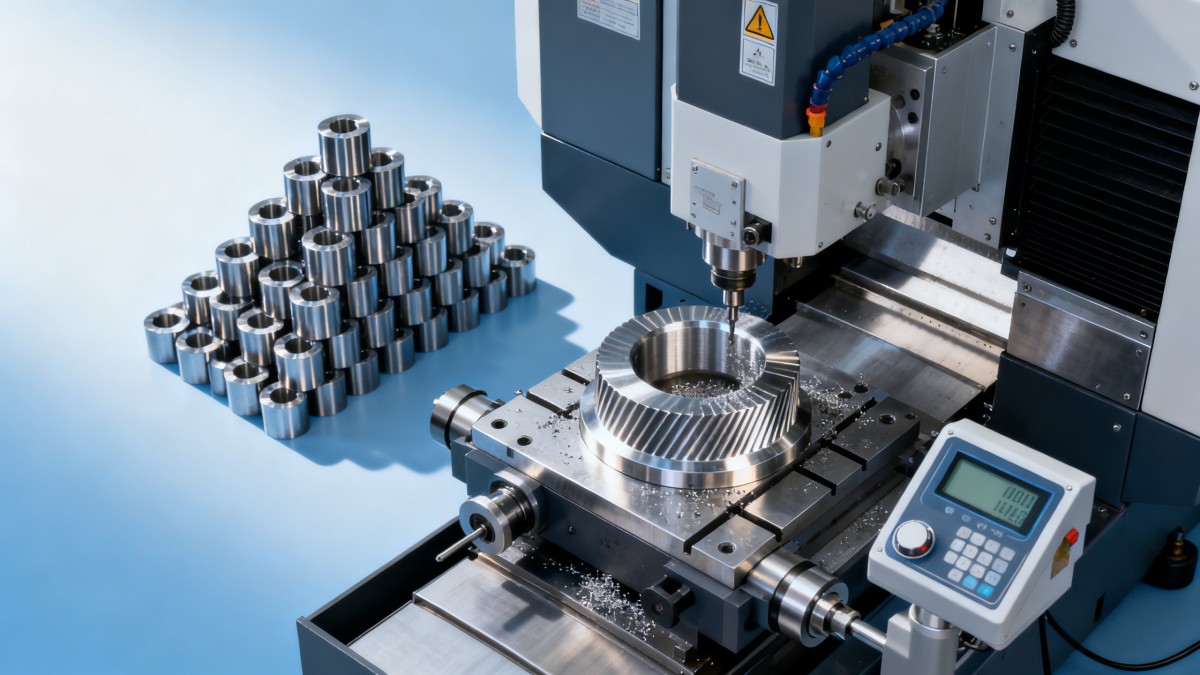
Where shop floor efficiency gains often come from
Efficiency is sometimes misunderstood as simple machine speed. In reality, the strongest productivity gains often come from reducing interruption. A faster spindle does not help much if the production line is repeatedly slowed by setup mistakes, quality holds, tool breakage, or manual rework. CNC-driven operations can contribute to efficiency because they make the process more controllable and repeatable, which supports planning as well as execution.
One major source of efficiency is reduced rework. When dimensions stay closer to target and surface quality is more consistent, fewer parts need adjustment, remachining, or sorting. This has a multiplier effect. Operators spend less time correcting mistakes, inspectors spend less time processing nonconforming lots, and planners deal with fewer delays caused by replacement production. In many plants, reducing rework can free capacity more effectively than simply adding another machine.
Another efficiency gain comes from setup repeatability. Shops handling mixed orders often struggle not during the cutting cycle but during changeovers. Standardized programs, known offsets, fixture libraries, and repeatable setup methods can shorten the time between jobs. That can be particularly valuable for project-based manufacturing and custom industrial work, where order sizes vary and scheduling flexibility matters.
CNC processes may also improve machine utilization by making it easier to sequence jobs according to material type, tolerance class, or tooling requirements. This does not remove the need for experienced personnel, but it can help teams organize production more systematically. For manufacturing managers, the result is often better visibility into cycle time, bottleneck behavior, and available capacity.
What operators and technical evaluators should assess
Not every improvement in accuracy comes from the machine alone. Operators and technical evaluators should look at the entire process chain. Machine rigidity, control system capability, spindle stability, thermal behavior, and axis repeatability all matter, but so do workholding quality, tool condition, program optimization, coolant management, and in-process inspection. A highly capable machine can still produce poor outcomes if upstream and downstream controls are weak.
For users on the shop floor, one practical question is whether the equipment supports stable operation under real workload conditions. A process that performs well during trial cuts may behave differently during longer shifts, variable ambient temperatures, or continuous batch runs. Technical assessment should therefore focus on process stability over time, not only on nominal machine specifications.
Programming workflow is another key factor. Well-structured programs can reduce unnecessary tool movement, improve cutting efficiency, and lower the risk of operator error during setup. Shops should also consider how easily program changes are controlled and communicated. Revision confusion can undermine both accuracy and output, especially when multiple teams handle the same family of parts.
For procurement and engineering stakeholders, compatibility with inspection practices is equally important. If tolerance requirements are rising, the production process should be matched by reliable measurement capability. Otherwise, a shop may produce parts with high precision but struggle to verify them consistently. This can create disputes between production and quality departments and weaken confidence in release decisions.
Quality control, safety, and compliance considerations
For quality control personnel, CNC-enabled production can offer a stronger basis for standardization, but only if inspection checkpoints and process discipline are built in. Repeatable machining does not eliminate the need for first-article inspection, periodic verification, tool wear monitoring, and documented corrective action. In fact, more automated production can increase the importance of early detection, because a programming or setup mistake may be repeated across a larger number of parts before someone intervenes.
Safety managers should also consider how machining accuracy and workflow efficiency intersect with risk control. Stable processes can reduce the likelihood of improvised adjustments, rushed manual corrections, or unnecessary operator intervention inside the work area. However, higher automation also means greater dependence on proper guarding, lockout procedures, tool management, and maintenance discipline. Equipment that improves throughput should still be evaluated within the broader safety system of the plant.
In regulated or specification-driven manufacturing environments, documentation can be almost as important as the machining result itself. Shops may need clear records of program control, calibration, inspection outcomes, and maintenance history. Where customer audits or internal quality reviews are common, a repeatable CNC process may support compliance efforts, provided the surrounding management system is mature enough to capture and maintain the necessary records.
Common decision mistakes when pursuing higher precision
A frequent mistake is treating precision as an equipment-only purchase decision. Organizations may focus heavily on machine features while underestimating the importance of operator training, preventive maintenance, fixture design, and process validation. In many cases, sustainable accuracy comes from the interaction of people, programs, tooling, and measurement—not from hardware alone.
Another mistake is overemphasizing peak capability without considering application fit. A shop producing varied industrial parts may benefit more from flexible, dependable production than from chasing extreme tolerance performance that exceeds actual customer requirements. Over-specifying equipment can increase capital burden and training complexity without delivering proportional operational value.
Some teams also underestimate the impact of maintenance on long-term accuracy. Even well-chosen systems may lose performance if alignment, lubrication, spindle condition, or environmental control are neglected. For production managers, this means that efficiency gains should be measured over the life of the process, not just during commissioning or early operation.
How different roles can use this insight in practice
Operators can focus on setup consistency, tool monitoring, and disciplined execution of approved programs. Their feedback is especially valuable because small recurring issues often appear first at the machine level. Technical evaluators can compare not only machine specifications but also ease of integration, programmability, and stability under actual production scenarios. Quality teams can align inspection plans with machining capability to ensure that process improvement is verified rather than assumed.
Project managers and engineering leads may use this topic to improve planning assumptions. More accurate and stable machining typically supports more realistic lead times, fewer emergency adjustments, and smoother coordination with downstream operations. That can be important in industrial manufacturing projects where delays in one production stage can affect installation, system assembly, or customer delivery commitments.
Companies evaluating their next production upgrade should look at the broader operational result: reduced variability, fewer quality escapes, cleaner scheduling, and stronger process visibility. When those outcomes are considered together, the value of CNC adoption or optimization becomes clearer. It is not only about making parts with tighter dimensions. It is about creating a production environment where quality and efficiency reinforce each other instead of competing for attention.
In industrial and manufacturing settings, that balance is becoming increasingly important. Shops that improve accuracy in a repeatable way are often better positioned to manage complexity, support customer requirements, and control avoidable cost. For decision-makers across operations, engineering, and quality, the real opportunity lies in viewing machining precision as a foundation for stronger overall production performance.
"For verified industry intelligence data or to download the comprehensive benchmarking PDF report, contact our editorial engineering team at info@luyiss.com."
 Which global manufacturing trends by sector matter most for sourcing plans?Global manufacturing trends by sector: identify sourcing risks, supplier resilience, compliance demands, and cost drivers to build smarter, more reliable procurement plans.
 What industrial trade intelligence pricing should include before you subscribeIndustrial trade intelligence pricing explained: compare coverage, data quality, access rights, and workflow value before choosing a subscription that supports smarter trade decisions.
 How an industrial trade intelligence dashboard can identify new supplier marketsDiscover how an industrial trade intelligence dashboard helps identify new supplier markets by comparing capacity, landed cost, logistics resilience, and compliance risk.
 Which global market entry barriers should exporters assess first?Global market entry barriers exporters should assess first: tariffs, compliance, buyer qualification, logistics, and payment risk. Build a practical strategy for confident market entry.
 How trade data aggregation analytics can reveal emerging supplier marketsTrade data aggregation analytics reveals emerging supplier markets by connecting trade flows, capacity signals, logistics, and compliance insights for smarter sourcing decisions.
 When an export market analysis platform can validate demand in a new marketExport market analysis platform insights help validate new-market demand through buyer fit, regulations, logistics, competition, and profitable entry conditions.
 What is driving the beauty and personal care market in the USA?Beauty and personal care in USA is driven by targeted solutions, selective premiumization, digital discovery, clean-label trust, diverse needs, and compliance. Explore key growth opportunities.
 How trade flow monitoring reports reveal changing regional demandTrade flow monitoring reports reveal changing regional demand through import volumes, sourcing shifts, product mix, logistics signals, and regulatory trends. Explore actionable market insights.
 How international market intelligence for investors reduces market-entry riskInternational market intelligence for investors reduces market-entry risk by validating demand, regulations, logistics, and competition before capital is committed.
 How international sourcing intelligence helps identify supplier risk earlyInternational sourcing intelligence helps businesses spot supplier risks early, protect supply continuity, and make smarter global procurement decisions.
 How trade data aggregation analytics reveals emerging supplier marketsTrade data aggregation analytics reveals emerging supplier markets through export trends, input flows, logistics, and regulatory signals. Discover smarter sourcing insights.
 What industrial cluster monitoring in Vietnam reveals about site riskIndustrial cluster monitoring Vietnam reveals hidden site risks across labor, utilities, logistics, compliance, and supplier dependencies. Make smarter sourcing and expansion decisions.
 Food Technology Trends Reshaping Shelf Life, Safety, and Product InnovationFood technology is reshaping shelf life, safety, and innovation. Discover the trends helping food businesses cut risk, improve compliance, and unlock stronger global market growth.
 How electronics manufacturing services are changing with low-volume demandElectronics manufacturing services are evolving fast with low-volume demand. Learn how agile EMS partners improve flexibility, compliance, sourcing resilience, and speed to market.
 How Can Buyers Reduce Procurement Risks for Electronic Components?How to reduce procurement risks for electronic components: learn how buyers assess traceability, lead times, compliance, and supplier types to avoid costly sourcing mistakes.
 What Sourcing Intelligence India Reveals About Supplier Risk and Cost ShiftsSourcing intelligence India reveals hidden supplier risk, compliance gaps, logistics pressure, and real cost shifts—helping buyers compare vendors smarter and source with more confidence.
 Fashion Trends 2026: Which Materials, Colors, and Silhouettes Are Gaining Ground?Fashion trends 2026 spotlight tactile fabrics, mineral colors, and controlled volume. Explore the materials, shades, and silhouettes shaping smarter, more wearable style.
 Smart Device Market Outlook: Key Growth Drivers, Segments, and Business OpportunitiesSmart device market trends are shifting toward system value, industrial demand, and resilient supply chains. Explore key growth drivers, high-potential segments, and business opportunities.
 How Global Trade Intelligence Services Help B2B Firms Evaluate Markets and SuppliersGlobal trade intelligence services help B2B firms compare suppliers, assess market potential, and uncover compliance, logistics, and pricing risks before costly decisions are made.
 Manufacturing Sector Updates for Investors: What Signals Matter Most in 2025?Manufacturing sector updates for investors in 2025: track orders, margins, supply chains, regulation, and exports to spot resilient manufacturers and smarter investment signals.
 How Energy Market Intelligence Helps Businesses Track Price Risks and Demand ShiftsEnergy market intelligence helps businesses spot price risks, demand shifts, and supply pressure early—improving procurement, resilience, and faster strategic decisions.





















Global Trade Insights & Industry
Our mission is to empower global exporters and importers with data-driven insights that foster strategic growth.
Search News
Popular Tags
Industry Overview
The global commercial kitchen equipment market is projected to reach $112 billion by 2027. Driven by urbanization, the rise of e-commerce food delivery, and strict hygiene regulations.