

How to choose industrial instrumentation for high humidity environments
Choosing industrial instrumentation for high humidity environments requires more than checking basic specifications. For project managers and engineering leads, the right decision affects measurement accuracy, equipment lifespan, maintenance planning, and overall system reliability. This guide explains how to evaluate industrial instrumentation under moisture-heavy conditions, helping you reduce failure risk, improve operational stability, and make more informed procurement decisions.
High humidity does not damage instruments only through visible water exposure. The bigger issue is often moisture ingress, condensation, corrosion, drifting signals, connector degradation, and premature failure of seals or electronics.
For project managers, the practical question is not simply which instrument can operate in humid air. It is which solution can maintain stable performance, reasonable maintenance intervals, and predictable lifecycle cost.
When selecting industrial instrumentation for these conditions, focus first on enclosure protection, material compatibility, sensing stability, cable and connector design, installation method, and supplier support. These factors matter more than headline accuracy alone.
What project managers actually need to evaluate in humid environments
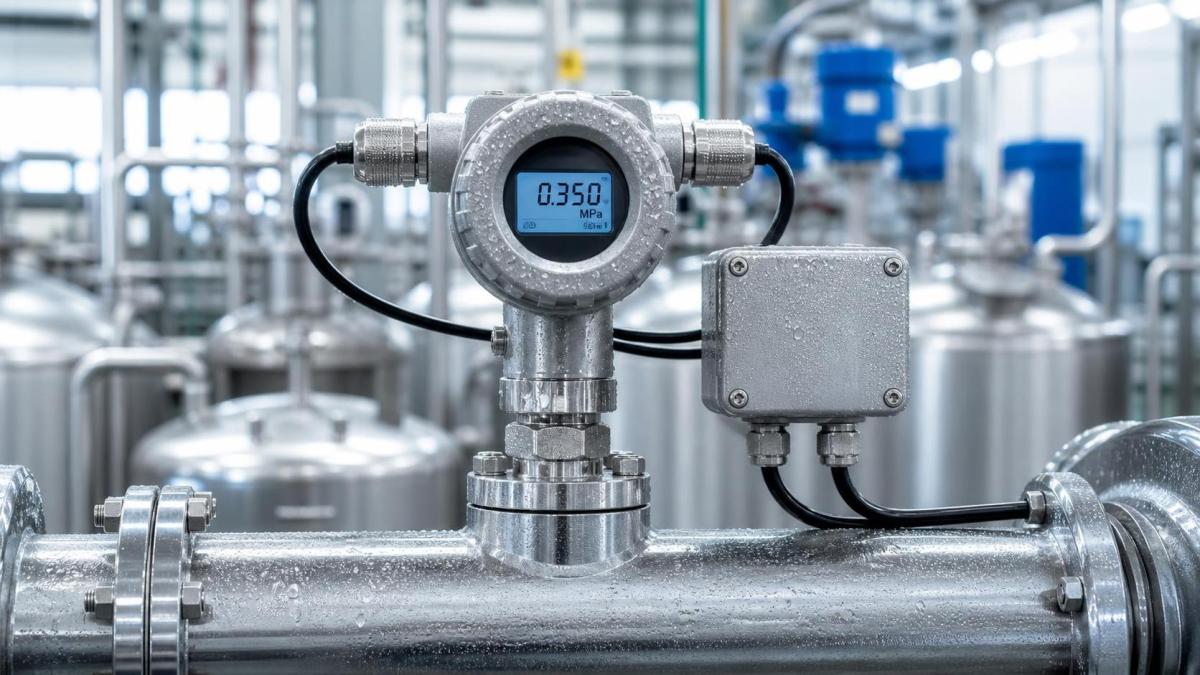
The core search intent behind this topic is transactional and decision-oriented. Readers want a reliable way to choose industrial instrumentation that will keep working in high humidity without creating costly shutdowns or repeated maintenance issues.
That means the article should answer a business-critical question: how to compare options beyond datasheets and identify which specifications truly reduce risk in real operating environments.
For engineering leads, the most useful content is not a generic definition of humidity resistance. They need a framework for vendor comparison, technical screening, risk assessment, and procurement decisions tied to project outcomes.
They are usually balancing several pressures at once: installation deadlines, budget control, warranty concerns, long service intervals, compliance requirements, and the need to avoid hidden failure points after commissioning.
In practice, humid conditions are common in food processing, water treatment, marine applications, chemical plants, pulp and paper facilities, HVAC infrastructure, agriculture, cold storage transitions, and tropical outdoor installations.
Each of these settings creates slightly different risks. Some involve constant damp air, while others create frequent temperature changes that lead to condensation inside enclosures, junction boxes, or sensor housings.
Why high humidity causes instrumentation failures earlier than many teams expect
Many projects underestimate humidity because the environment appears less aggressive than direct washdown or immersion. However, sustained moisture can quietly attack instrument reliability long before a visible failure occurs.
Condensation is often the turning point. When warm, moist air meets a cooler instrument surface, water forms inside cable glands, terminal compartments, impulse lines, display windows, or electronic housings.
Once moisture enters these points, several problems follow. Electrical leakage increases, terminals corrode, insulation resistance drops, readings drift, communication becomes unstable, and calibration intervals may shorten unexpectedly.
Humidity also affects mechanical parts. Stainless steel that performs well in one facility may still suffer tea staining, crevice corrosion, or fastener deterioration if cleaning chemicals and salt-laden air are present.
For procurement and project teams, this means low initial purchase price can become misleading. A cheaper instrument may look acceptable on paper, but weak sealing or poor material choice can raise total ownership cost quickly.
That cost appears through replacement labor, process interruption, spare part consumption, recalibration work, troubleshooting time, and the operational risk of unreliable data feeding control systems or compliance records.
Which specifications matter most when choosing industrial instrumentation
Start with ingress protection, but do not stop there. IP rating is important, yet it only tells part of the story. For high humidity, you need to know how the enclosure performs over time, not only in a laboratory test.
IP65 or IP66 may be enough for some indoor humid areas, while harsher environments may justify IP67, IP68, or NEMA-rated housings depending on washdown exposure, outdoor use, and cleaning procedures.
Next, review housing and wetted materials carefully. For many industrial instrumentation applications, 316 or 316L stainless steel offers stronger corrosion resistance than aluminum or lower-grade stainless alternatives.
Also check whether the sensing element, diaphragm, seals, and cable jacket materials are compatible with both moisture and chemicals present in the facility. Humidity rarely acts alone in industrial settings.
Seal design is another key checkpoint. O-rings, gaskets, cable glands, and connector interfaces often determine field performance more than the main body material. Weak sealing at one connection can compromise the full assembly.
For transmitters and analyzers, evaluate whether the electronics are isolated from the process side and whether venting, desiccation, or pressure equalization methods are designed for humid conditions.
If the application uses displays or local operator panels, examine screen sealing, anti-fog performance, and readability after prolonged exposure to moisture, temperature swings, and cleaning cycles.
For sensors with remote cables, confirm the connector type, overmolding quality, strain relief, and the ability to prevent moisture wicking through the cable into the instrument body.
How to match instrument type to the actual humidity-related risk
Different categories of industrial instrumentation fail in different ways under humid conditions. Project teams should assess risk by instrument function rather than treating all devices as equally exposed.
Pressure transmitters may face condensation in impulse lines, vent tube moisture intrusion, or diaphragm seal compatibility issues. Differential pressure systems can also suffer accuracy problems if moisture accumulates unevenly.
Temperature sensors often appear simple, but junction heads, terminal blocks, and extension cable connections are common moisture entry points. In outdoor or washdown areas, these weak points deserve extra scrutiny.
Level instruments vary widely. Radar sensors may be less sensitive to condensation than some optical methods, but enclosure quality, antenna design, and mounting arrangement still affect long-term reliability.
Flow instruments require application-specific review. Magnetic flowmeters may be robust in wet environments, but transmitter housing, grounding, liner compatibility, and cable routing remain important to stable operation.
Gas analyzers, humidity sensors, and precision analytical instruments need even more attention. In these cases, condensation can directly interfere with measurement principles and damage sensitive internal components.
The right choice depends on whether humidity is only in the ambient air, regularly forms condensation, combines with washdown, or comes with corrosive vapors. These are different operating realities and should be specified clearly.
What to ask suppliers before approving a purchase
Vendor evaluation should go beyond brochure language such as rugged, sealed, or corrosion-resistant. Ask suppliers to provide application-specific evidence and define the exact limits of their product design.
Request the tested operating humidity range, the temperature range at that humidity level, and any conditions where condensation is permitted, restricted, or prohibited for normal operation.
Ask whether the stated enclosure rating applies to the full assembled instrument, including connectors, cable entries, display windows, and optional accessories. Weak accessories often create the actual field failure.
It is also useful to ask for installation references in similar facilities. A supplier that can point to proven use in water treatment, food plants, marine sites, or tropical outdoor projects gives stronger confidence.
For critical loops, ask about mean time between failures, common field failure modes, recommended spare parts, calibration interval expectations, and whether conformal coating or enhanced protection is available.
Project managers should also clarify lead times for replacement units, local service capability, warranty handling, and the availability of documentation needed by EPC teams, maintenance teams, and compliance reviewers.
When comparing quotations, include mounting hardware, protective accessories, certified cable glands, and commissioning support. These details affect deployed reliability and should not be treated as secondary extras.
Installation details often determine whether the instrument succeeds or fails
Even high-quality industrial instrumentation can fail in high humidity if installation design is weak. Procurement decisions should therefore consider how the instrument will actually be mounted, wired, and protected.
Place instruments where airflow, drainage, and thermal exposure are manageable. Avoid mounting positions where water collects around cable entries, connector faces, or enclosure seams.
Cable routing deserves particular attention. Use drip loops where needed, route cables to prevent water tracking into enclosures, and select glands that match both cable diameter and environmental exposure.
Where condensation risk is high, consider sunshades, breathable vents, enclosure heaters, insulation strategies, or remote electronics mounting. These measures can be more effective than simply upgrading the sensor itself.
For outdoor projects, review daytime heating and nighttime cooling cycles. Repeated temperature swings can create internal condensation even when the enclosure is nominally sealed to a high rating.
Commissioning should include insulation resistance checks, loop verification under realistic environmental conditions, and visual inspection of seals, glands, and unused entries. Small installation errors can erase premium product advantages.
How to make a stronger business case for better instrumentation
For project leaders, the challenge is often internal justification. A more durable instrument may cost more upfront, but the financial argument becomes clearer when tied to lifecycle risk rather than unit price alone.
Estimate the cost of one failure event in the actual process. Include troubleshooting labor, downtime, product loss, contractor callout, recalibration, spare inventory, and any quality or compliance exposure.
Then compare that to the premium for a higher-grade enclosure, better materials, improved connectors, or installation accessories. In many cases, the added capital cost is modest relative to one avoidable interruption.
This is especially true in facilities where access is difficult, production windows are tight, or instrumentation failure can halt upstream and downstream systems at the same time.
Procurement teams also benefit from standardizing approved specifications for humid environments. A repeatable selection standard improves sourcing efficiency and reduces the risk of inconsistent decisions across sites or contractors.
Instead of buying purely by model familiarity, define a minimum requirement set: enclosure rating, housing material, sealing method, connector standard, temperature-humidity tolerance, and documentation expectations.
A practical checklist for selecting industrial instrumentation in high humidity areas
Use a structured review before final approval. First, define whether the environment involves constant humidity, intermittent condensation, washdown, corrosive vapors, outdoor exposure, or temperature cycling.
Second, confirm which parts of the instrument are exposed: sensor body, electronics housing, display, cable, junction box, vent path, or process connection. Exposure points often differ from assumptions in early design.
Third, verify the technical basics that support long-term reliability: IP or NEMA protection, material grade, seal design, connector quality, chemical compatibility, and supplier guidance for the exact use case.
Fourth, review installation details before purchase, not after delivery. Cable entry direction, mounting brackets, protective covers, and drainage arrangements should be part of the specification package.
Fifth, compare lifecycle implications. Look at calibration stability, expected service interval, parts availability, local support, and replacement lead time. These factors matter more than small differences in purchase price.
Finally, document the decision logic. This helps future expansion projects, supplier negotiations, and maintenance planning while giving stakeholders a clearer reason why one instrument was chosen over another.
Conclusion
Choosing industrial instrumentation for high humidity environments is ultimately a reliability decision, not just a specification exercise. The best option is the one that keeps stable performance under real moisture-related stress over time.
For project managers and engineering leads, the strongest approach is to combine technical screening with practical installation review and lifecycle cost thinking. That is how better procurement decisions are usually made.
If you evaluate enclosure integrity, material resistance, sealing quality, connector design, condensation risk, and supplier support together, you will reduce avoidable failures and build a more dependable instrumentation system.
In humid environments, accuracy on the datasheet matters. But durability in the field, maintainability across the asset lifecycle, and fit with the actual operating conditions matter more.
 What industrial trade intelligence pricing should include before you subscribeIndustrial trade intelligence pricing explained: compare coverage, data quality, access rights, and workflow value before choosing a subscription that supports smarter trade decisions.
 How an industrial trade intelligence dashboard can identify new supplier marketsDiscover how an industrial trade intelligence dashboard helps identify new supplier markets by comparing capacity, landed cost, logistics resilience, and compliance risk.
 Which global market entry barriers should exporters assess first?Global market entry barriers exporters should assess first: tariffs, compliance, buyer qualification, logistics, and payment risk. Build a practical strategy for confident market entry.
 How trade data aggregation analytics can reveal emerging supplier marketsTrade data aggregation analytics reveals emerging supplier markets by connecting trade flows, capacity signals, logistics, and compliance insights for smarter sourcing decisions.
 When an export market analysis platform can validate demand in a new marketExport market analysis platform insights help validate new-market demand through buyer fit, regulations, logistics, competition, and profitable entry conditions.
 What is driving the beauty and personal care market in the USA?Beauty and personal care in USA is driven by targeted solutions, selective premiumization, digital discovery, clean-label trust, diverse needs, and compliance. Explore key growth opportunities.
 How trade flow monitoring reports reveal changing regional demandTrade flow monitoring reports reveal changing regional demand through import volumes, sourcing shifts, product mix, logistics signals, and regulatory trends. Explore actionable market insights.
 How international market intelligence for investors reduces market-entry riskInternational market intelligence for investors reduces market-entry risk by validating demand, regulations, logistics, and competition before capital is committed.
 How international sourcing intelligence helps identify supplier risk earlyInternational sourcing intelligence helps businesses spot supplier risks early, protect supply continuity, and make smarter global procurement decisions.
 How trade data aggregation analytics reveals emerging supplier marketsTrade data aggregation analytics reveals emerging supplier markets through export trends, input flows, logistics, and regulatory signals. Discover smarter sourcing insights.
 What industrial cluster monitoring in Vietnam reveals about site riskIndustrial cluster monitoring Vietnam reveals hidden site risks across labor, utilities, logistics, compliance, and supplier dependencies. Make smarter sourcing and expansion decisions.
 Food Technology Trends Reshaping Shelf Life, Safety, and Product InnovationFood technology is reshaping shelf life, safety, and innovation. Discover the trends helping food businesses cut risk, improve compliance, and unlock stronger global market growth.
 How electronics manufacturing services are changing with low-volume demandElectronics manufacturing services are evolving fast with low-volume demand. Learn how agile EMS partners improve flexibility, compliance, sourcing resilience, and speed to market.
 How Can Buyers Reduce Procurement Risks for Electronic Components?How to reduce procurement risks for electronic components: learn how buyers assess traceability, lead times, compliance, and supplier types to avoid costly sourcing mistakes.
 What Sourcing Intelligence India Reveals About Supplier Risk and Cost ShiftsSourcing intelligence India reveals hidden supplier risk, compliance gaps, logistics pressure, and real cost shifts—helping buyers compare vendors smarter and source with more confidence.
 Fashion Trends 2026: Which Materials, Colors, and Silhouettes Are Gaining Ground?Fashion trends 2026 spotlight tactile fabrics, mineral colors, and controlled volume. Explore the materials, shades, and silhouettes shaping smarter, more wearable style.
 Smart Device Market Outlook: Key Growth Drivers, Segments, and Business OpportunitiesSmart device market trends are shifting toward system value, industrial demand, and resilient supply chains. Explore key growth drivers, high-potential segments, and business opportunities.
 How Global Trade Intelligence Services Help B2B Firms Evaluate Markets and SuppliersGlobal trade intelligence services help B2B firms compare suppliers, assess market potential, and uncover compliance, logistics, and pricing risks before costly decisions are made.
 Manufacturing Sector Updates for Investors: What Signals Matter Most in 2025?Manufacturing sector updates for investors in 2025: track orders, margins, supply chains, regulation, and exports to spot resilient manufacturers and smarter investment signals.
 How Energy Market Intelligence Helps Businesses Track Price Risks and Demand ShiftsEnergy market intelligence helps businesses spot price risks, demand shifts, and supply pressure early—improving procurement, resilience, and faster strategic decisions.
 Precision Hardware Tools Market: Key Demand Drivers, Segments, and Growth OutlookPrecision hardware tools market trends are reshaping sourcing, compliance, and automation. Explore key demand drivers, segment shifts, regional supply patterns, and growth opportunities.





















Global Trade Insights & Industry
Our mission is to empower global exporters and importers with data-driven insights that foster strategic growth.
Search News
Popular Tags
Industry Overview
The global commercial kitchen equipment market is projected to reach $112 billion by 2027. Driven by urbanization, the rise of e-commerce food delivery, and strict hygiene regulations.