

Outdoor Storage Solutions That Actually Hold Up in Wet Seasons
Wet seasons can ruin gear faster than most users expect, especially when storage fails under constant moisture, mud, and temperature swings. This guide explores outdoor storage solutions that are built to withstand real-world conditions, helping operators protect equipment, extend product life, and reduce replacement costs. From material choices to practical setup tips, you’ll learn what actually works when the weather refuses to cooperate.
Why do so many outdoor storage solutions fail in wet seasons?
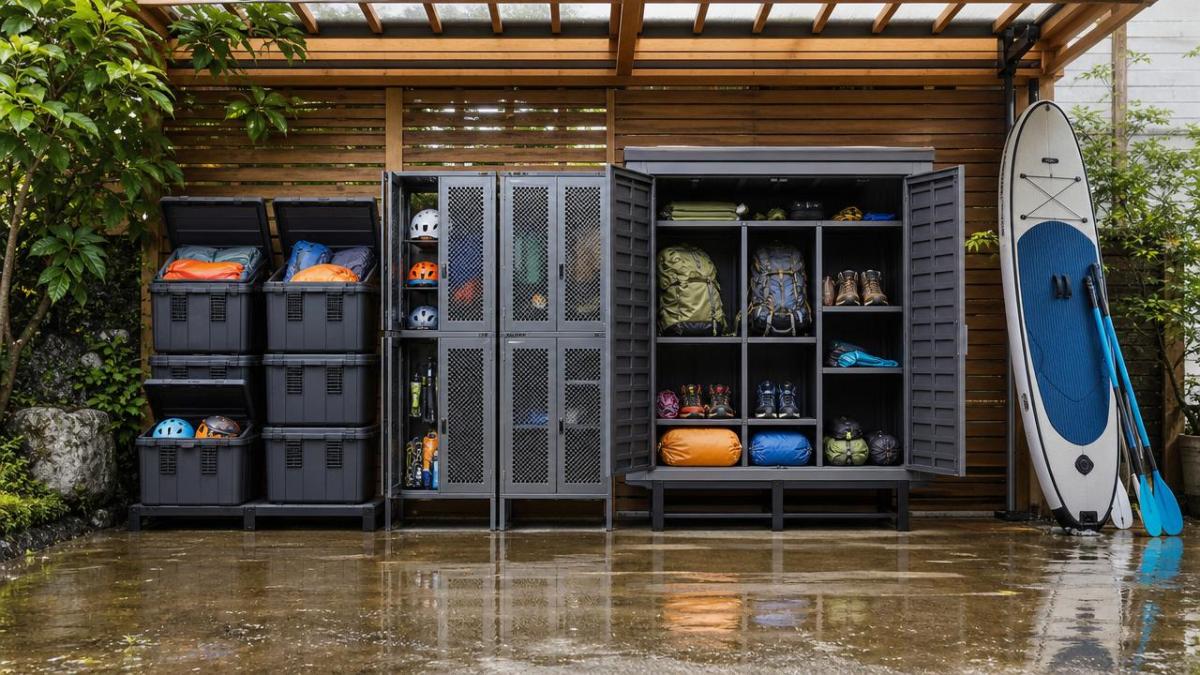
In the outdoor sports equipment sector, storage is not just about putting gear away. Operators deal with soaked tents, muddy boots, helmets, ropes, paddles, protective wear, and seasonal accessories that return from field use carrying water, grit, and biological residue.
Many outdoor storage solutions look durable at first glance, yet fail because they are designed for dry garages, not exposed service yards, camp bases, rental depots, event logistics points, or trailhead support stations. Moisture enters through seams, pooled water forms under the base, airflow gets blocked, and corrosion starts early.
For operators, the hidden cost is rarely the storage unit alone. The real loss comes from moldy fabrics, rusted metal hardware, swollen wood handles, degraded adhesives, and extra labor spent sorting damaged inventory before the next trip, rental cycle, or shipment.
- Poor drainage leaves water trapped under bins, cabinets, and deck boxes, accelerating rot and corrosion.
- Weak seals protect against dust but not wind-driven rain, splashback, or long humid exposure.
- Non-breathable storage traps wet gear inside, creating mildew even when the shell appears waterproof.
- Low-grade hardware such as untreated hinges, rivets, and fasteners often fail before the main body does.
That is why effective outdoor storage solutions must be judged as operational systems, not just containers. In wet seasons, performance depends on water management, ventilation, structural stability, cleanability, and how well the storage method matches the type of sports gear being handled.
What actually works for outdoor sports equipment in wet conditions?
The most reliable outdoor storage solutions combine weather resistance with controlled airflow. For outdoor sports operations, fully sealed storage is rarely the answer if gear is returned damp. A better approach is to separate rain protection from moisture release.
Storage types that perform better in wet weather
Before selecting a structure, operators should compare the intended use, exposure level, and drying requirement. The table below outlines common outdoor storage solutions used around sporting gear and field operations.
The key takeaway is simple: storage that works in wet seasons usually balances cover, elevation, and ventilation. If gear enters wet, airflow matters as much as waterproofing. If the contents are already dry and need protection from splash and humidity, sealing quality becomes more important.
Materials worth prioritizing
- UV-stabilized resin resists swelling, peeling, and many common cleaning chemicals used on sports gear.
- Galvanized or coated steel offers strength for tools and heavy equipment, but only if edges and hardware are treated properly.
- Marine-grade aluminum helps reduce rust risk in coastal or lakeside operating environments.
- Synthetic slatted shelving improves drainage compared with flat wood panels that trap water and dirt.
Which technical features matter most when choosing outdoor storage solutions?
Operators often focus on size first. In wet climates, that is a mistake. Capacity matters, but certain technical details decide whether outdoor storage solutions remain usable after one season or continue performing over repeated weather cycles.
Priority features for field reliability
- Raised base design. Even a small clearance helps prevent standing water from entering through the floor line.
- Passive ventilation. Side vents, rear vents, or louvered sections reduce condensation without exposing contents directly to rain.
- Drain-friendly interior. Removable trays, slatted shelves, and wipe-clean surfaces simplify mud and water management.
- Corrosion-resistant hardware. Hinges, hasps, gas struts, and screws should match the moisture level of the site.
- Stable anchoring points. Storms and saturated ground can shift lightweight units if they are not secured.
For outdoor sports equipment, internal layout also matters. Long gear such as trekking poles, fishing rods, paddles, and folded shelters should not be forced into oversized bins where retained moisture transfers between items. Segmented storage lowers that risk.
The next table gives a practical parameter checklist for evaluating outdoor storage solutions before purchase or deployment.
A good procurement decision is rarely about the biggest unit for the lowest price. It is about matching moisture exposure, gear profile, turnover frequency, and cleaning workflow to a storage design that can handle repeated wet use.
How should operators match storage to actual outdoor gear scenarios?
Different categories of sports equipment fail in different ways. That means outdoor storage solutions should be chosen by risk profile, not generic storage capacity alone.
Scenario-based selection
- Camping and trekking gear: Tents, sleeping mats, and backpacks need ventilation first, then enclosure. Storing them wet in sealed boxes leads quickly to odor and coating damage.
- Watersports gear: Life jackets, paddles, wetsuits, and helmets need rinse, drip, and drying zones before final storage. Open-frame racks under a covered area usually outperform closed bins for first-stage handling.
- Cycling and trail equipment: Muddy shoes, gloves, tools, and pumps benefit from compartmentalized lockers with cleanable bottoms and corrosion-resistant shelving.
- Event and rental inventory: High-turnover gear needs labeling, easy inspection, and stock rotation. Ventilated sheds with zone separation reduce confusion and damage.
If your team handles both wet-return gear and packaged reserve stock, use a two-stage method. First, place returned equipment in a sheltered drying area. Second, move fully dry items into enclosed outdoor storage solutions designed for protection and organization.
What should buyers compare before purchasing outdoor storage solutions?
Price remains important, but buyers in outdoor sports operations should compare labor impact, maintenance demand, replacement risk, and delivery fit. A cheap unit that fails in one monsoon cycle can cost more than a better unit with lower gear loss and fewer service interruptions.
A practical comparison framework
Use the following checkpoints when reviewing outdoor storage solutions from suppliers or channel partners.
- Ask how the unit manages both direct rain and internal condensation.
- Confirm whether the hardware finish is suitable for humid or coastal exposure.
- Review assembly complexity, anchoring needs, and drainage preparation at the site.
- Check whether the interior supports actual equipment dimensions instead of generic box volume.
- Request information on lead times, packaging, spare parts, and replacement hardware availability.
For procurement teams working across borders, information quality matters almost as much as product quality. GTIIN and TradeVantage support importers, exporters, and sourcing teams with market intelligence, supplier visibility, trend tracking, and industry reporting across global supply chains. That helps buyers narrow options faster, compare categories more accurately, and reduce risk before quoting or ordering.
How can you reduce total cost without lowering wet-season performance?
The lowest upfront cost does not always produce the lowest ownership cost. Outdoor storage solutions should be measured against product lifespan, gear protection value, maintenance labor, and operational downtime.
Cost-saving moves that still make sense
- Use open covered racks for wet-return items instead of forcing all gear into enclosed storage immediately.
- Upgrade hardware and base support first if the main enclosure body is already serviceable.
- Group storage by moisture level: wet, drying, and ready-to-deploy inventory should not share the same zone.
- Install simple drainage and gravel pads under sheds and boxes to prevent standing water damage.
These adjustments often deliver better results than replacing everything at once. For operators with budget limits, phased improvement is usually more realistic and more effective than buying a large enclosure with poor airflow.
Are there compliance and quality checks worth considering?
Outdoor storage solutions for sports equipment do not always require complex certification, but buyers should still check common quality signals. Material declarations, corrosion protection details, weather resistance claims, and packaging durability all influence long-distance trade and field performance.
Useful checkpoints for importers and operators
- Ask for material specifications rather than general phrases such as weatherproof or heavy duty.
- Check if metal components are galvanized, coated, or otherwise treated for humid exposure.
- Review packaging for export handling, especially if panels or corners can deform in transit.
- Confirm spare parts availability for hinges, locks, vents, and fasteners.
This is where a global information platform becomes useful. GTIIN and TradeVantage help businesses monitor sourcing regions, industrial updates, and supplier visibility trends, making it easier to connect storage product decisions with wider procurement strategy.
FAQ: common operator questions about outdoor storage solutions
Can waterproof boxes alone protect wet sports gear?
Not reliably. Waterproof shells can keep rain out, but if helmets, textiles, or footwear go in damp, trapped moisture remains inside. For many outdoor sports operations, a drying stage before enclosed storage is the better system.
Which outdoor storage solutions are better for high-turnover rental gear?
Ventilated sheds, modular lockers, and covered open racks usually work best in combination. Rental gear moves fast, so operators need inspection access, labeling, and a clear separation between returned, drying, and ready stock.
How important is base elevation in wet seasons?
Very important. Even durable outdoor storage solutions can fail early if they sit directly on saturated soil or uneven concrete. A raised base helps prevent underside moisture buildup, splashback, and difficult-to-clean mud accumulation.
What is the most common buyer mistake?
Choosing by advertised capacity only. Operators often underestimate ventilation, hardware quality, and drainage setup. In wet climates, those factors usually determine whether the storage protects gear or silently damages it.
Why choose us for sourcing insight and next-step planning?
If you are evaluating outdoor storage solutions for outdoor sports equipment, the right decision often depends on more than a product sheet. You may need help comparing materials, clarifying application fit, understanding sourcing regions, or judging delivery risk across suppliers.
GTIIN and TradeVantage provide a practical advantage for global buyers and trade-focused businesses: real-time industrial updates, cross-sector market intelligence, international supply chain visibility, and a high-authority platform that supports brand exposure and informed procurement decisions.
You can contact us to discuss concrete topics such as parameter confirmation, storage type selection for wet-return gear, supplier comparison, estimated delivery cycles, customization feasibility, packaging concerns, sample support, and quotation communication for export-oriented projects.
For operators under pressure to protect equipment through the next wet season, better information leads to better storage decisions. Start with the scenario, verify the technical details, and use trusted market insight to move faster with less risk.
 How an industrial trade intelligence dashboard can identify new supplier marketsDiscover how an industrial trade intelligence dashboard helps identify new supplier markets by comparing capacity, landed cost, logistics resilience, and compliance risk.
 Which global market entry barriers should exporters assess first?Global market entry barriers exporters should assess first: tariffs, compliance, buyer qualification, logistics, and payment risk. Build a practical strategy for confident market entry.
 How trade data aggregation analytics can reveal emerging supplier marketsTrade data aggregation analytics reveals emerging supplier markets by connecting trade flows, capacity signals, logistics, and compliance insights for smarter sourcing decisions.
 When an export market analysis platform can validate demand in a new marketExport market analysis platform insights help validate new-market demand through buyer fit, regulations, logistics, competition, and profitable entry conditions.
 What is driving the beauty and personal care market in the USA?Beauty and personal care in USA is driven by targeted solutions, selective premiumization, digital discovery, clean-label trust, diverse needs, and compliance. Explore key growth opportunities.
 How trade flow monitoring reports reveal changing regional demandTrade flow monitoring reports reveal changing regional demand through import volumes, sourcing shifts, product mix, logistics signals, and regulatory trends. Explore actionable market insights.
 How international market intelligence for investors reduces market-entry riskInternational market intelligence for investors reduces market-entry risk by validating demand, regulations, logistics, and competition before capital is committed.
 How international sourcing intelligence helps identify supplier risk earlyInternational sourcing intelligence helps businesses spot supplier risks early, protect supply continuity, and make smarter global procurement decisions.
 How trade data aggregation analytics reveals emerging supplier marketsTrade data aggregation analytics reveals emerging supplier markets through export trends, input flows, logistics, and regulatory signals. Discover smarter sourcing insights.
 What industrial cluster monitoring in Vietnam reveals about site riskIndustrial cluster monitoring Vietnam reveals hidden site risks across labor, utilities, logistics, compliance, and supplier dependencies. Make smarter sourcing and expansion decisions.
 Food Technology Trends Reshaping Shelf Life, Safety, and Product InnovationFood technology is reshaping shelf life, safety, and innovation. Discover the trends helping food businesses cut risk, improve compliance, and unlock stronger global market growth.
 How electronics manufacturing services are changing with low-volume demandElectronics manufacturing services are evolving fast with low-volume demand. Learn how agile EMS partners improve flexibility, compliance, sourcing resilience, and speed to market.
 How Can Buyers Reduce Procurement Risks for Electronic Components?How to reduce procurement risks for electronic components: learn how buyers assess traceability, lead times, compliance, and supplier types to avoid costly sourcing mistakes.
 What Sourcing Intelligence India Reveals About Supplier Risk and Cost ShiftsSourcing intelligence India reveals hidden supplier risk, compliance gaps, logistics pressure, and real cost shifts—helping buyers compare vendors smarter and source with more confidence.
 Fashion Trends 2026: Which Materials, Colors, and Silhouettes Are Gaining Ground?Fashion trends 2026 spotlight tactile fabrics, mineral colors, and controlled volume. Explore the materials, shades, and silhouettes shaping smarter, more wearable style.
 Smart Device Market Outlook: Key Growth Drivers, Segments, and Business OpportunitiesSmart device market trends are shifting toward system value, industrial demand, and resilient supply chains. Explore key growth drivers, high-potential segments, and business opportunities.
 How Global Trade Intelligence Services Help B2B Firms Evaluate Markets and SuppliersGlobal trade intelligence services help B2B firms compare suppliers, assess market potential, and uncover compliance, logistics, and pricing risks before costly decisions are made.
 Manufacturing Sector Updates for Investors: What Signals Matter Most in 2025?Manufacturing sector updates for investors in 2025: track orders, margins, supply chains, regulation, and exports to spot resilient manufacturers and smarter investment signals.
 How Energy Market Intelligence Helps Businesses Track Price Risks and Demand ShiftsEnergy market intelligence helps businesses spot price risks, demand shifts, and supply pressure early—improving procurement, resilience, and faster strategic decisions.
 Precision Hardware Tools Market: Key Demand Drivers, Segments, and Growth OutlookPrecision hardware tools market trends are reshaping sourcing, compliance, and automation. Explore key demand drivers, segment shifts, regional supply patterns, and growth opportunities.
 How to Use Customs Import Data to Find Buyers, Track Competitors, and Spot Demand?Customs import data helps you find real buyers, track competitors, and spot demand shifts early. Learn practical ways to turn trade records into smarter global business decisions.





















Global Trade Insights & Industry
Our mission is to empower global exporters and importers with data-driven insights that foster strategic growth.
Search News
Popular Tags
Industry Overview
The global commercial kitchen equipment market is projected to reach $112 billion by 2027. Driven by urbanization, the rise of e-commerce food delivery, and strict hygiene regulations.