

Why robotic innovations now matter more than speed alone
In industrial robotics, speed no longer defines system value on its own. Today, robotic innovations shape how reliably a cell adapts, integrates, and scales. Better sensing, smarter control, and easier redeployment now influence output more than peak cycle time alone.
That shift matters across welding, assembly, inspection, palletizing, and machine tending. A fast robot that lacks flexible software, stable data feedback, or safe human interaction can limit productivity. In contrast, robotic innovations improve precision, uptime, and lifecycle return.
For global industrial intelligence platforms such as GTIIN and TradeVantage, this trend is also strategic. Evaluating robotic innovations helps map supply chain capability, benchmark factory readiness, and identify where automation investments create durable competitive advantage.
Why a checklist matters when evaluating robotic innovations
Industrial automation decisions often fail when teams compare only speed, payload, and upfront cost. Those metrics are useful, but they rarely explain how a robotic system behaves after installation, during product changeovers, or across mixed production volumes.
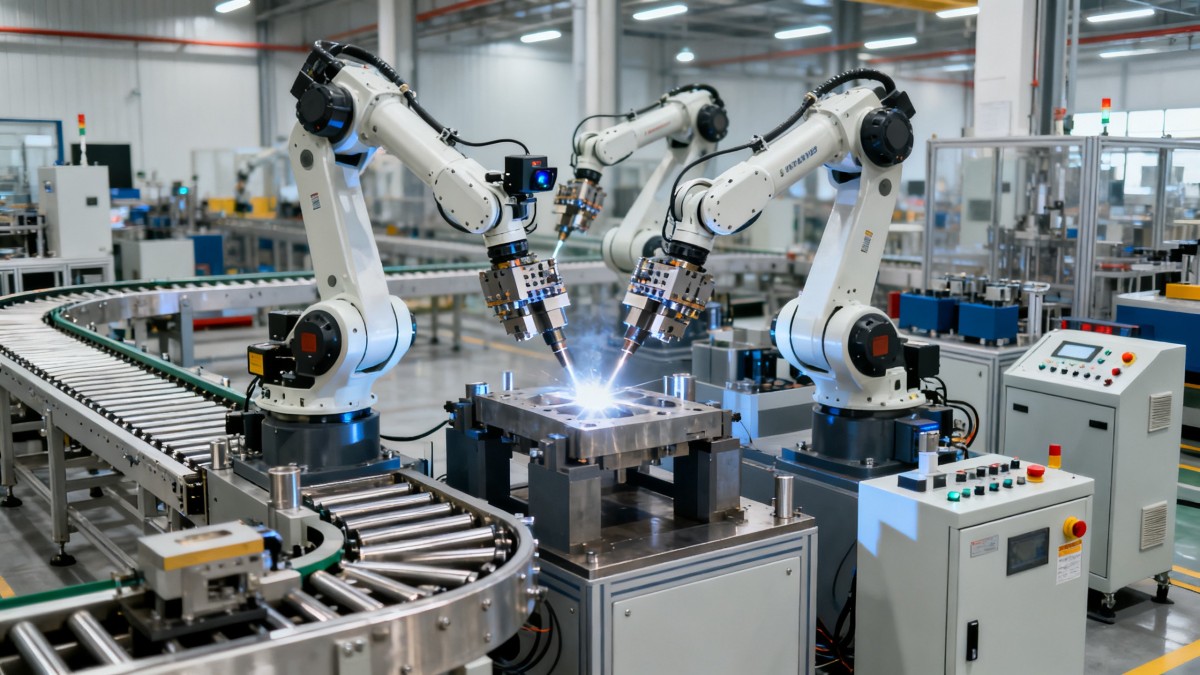
A structured checklist reduces that risk. It forces attention toward integration depth, software maturity, vision capability, maintenance access, and data visibility. These are the areas where robotic innovations usually create measurable value over time.
The checklist below is designed for practical comparison. It supports technical review, project planning, and long-term automation strategy without reducing industrial robotics to a single performance number.
Core checklist: how to judge robotic innovations beyond raw speed
- Verify adaptive sensing performance under real plant conditions, including dust, vibration, reflective surfaces, and variable part orientation, not only in clean demo environments.
- Check software openness for PLC communication, MES connectivity, API access, and future upgrades, because closed systems often slow expansion more than mechanical limits.
- Measure changeover efficiency by testing recipe switching, gripper replacement, and operator interface clarity across multiple SKUs and short production runs.
- Assess path accuracy and repeatability during actual process loads, since thermal drift, tool wear, and acceleration behavior can affect quality more than nominal speed.
- Review safety architecture, including collaborative modes, area scanners, speed separation monitoring, and restart logic, especially where human interaction is frequent.
- Inspect maintenance access for cabling, reducers, end-of-arm tooling, and controller diagnostics, because service delays directly reduce robot cell availability.
- Confirm data capture capabilities for cycle time, fault history, energy use, and process quality, so robotic innovations can support continuous improvement.
- Test vision-guided handling accuracy with mixed parts, unstable lighting, and moving conveyors to determine whether flexible automation is truly production ready.
- Compare total deployment effort, including simulation quality, offline programming tools, and commissioning support, because faster installation shortens ROI timelines.
- Evaluate scalability across sites and lines, ensuring robotic innovations can be standardized, replicated, and supported consistently within a broader automation roadmap.
How robotic innovations perform in different industrial scenarios
High-mix assembly
In high-mix assembly, robotic innovations matter because product variation is constant. Flexible gripping, vision guidance, and intuitive recipe control reduce downtime between part families.
Here, the best system is rarely the fastest on a single part. The stronger solution maintains quality during frequent changeovers and supports fast validation when new components enter production.
Welding and surface treatment
For welding, dispensing, and coating, process stability outweighs headline motion speed. Robotic innovations such as seam tracking, arc sensing, and adaptive path correction protect consistency.
A robot may move quickly between points, yet still produce defects if sensing and feedback are weak. Innovation improves first-pass yield and lowers rework, which often drives the true savings.
Machine tending and logistics cells
In machine tending, palletizing, and intralogistics, robotic innovations support unattended operation. Smart scheduling, fault recovery routines, and reliable object detection become critical.
When upstream and downstream systems vary, integration quality matters more than top robot speed. Smooth handshakes with conveyors, AGVs, and CNC equipment determine actual throughput.
Inspection and quality control
For vision inspection, robotic innovations create value through repeatable positioning, synchronized imaging, and traceable data output. These functions support both quality assurance and compliance documentation.
A slower but smarter inspection cell can outperform a faster one if it reduces escapes, supports analytics, and simplifies root-cause investigation across shifts and production lots.
Commonly overlooked issues when comparing robotic innovations
Ignoring integration maturity
Many projects underestimate software and interface complexity. Robotic innovations lose value when ERP, MES, vision, and controller layers cannot exchange data cleanly.
Overvaluing demo speed
A showroom cycle time often excludes fixturing delays, part inconsistency, safety slowdowns, and recovery events. Real production performance depends on the full cell, not the arm alone.
Missing tooling constraints
End-of-arm tooling can limit flexibility more than the robot itself. Gripper weight, cable routing, and wear parts should be reviewed early when assessing robotic innovations.
Underestimating maintenance demands
Predictive diagnostics are valuable only if service tasks are practical. Access to components, spare part availability, and remote support quality directly affect uptime.
Neglecting data ownership
Industrial robotics increasingly depend on data for optimization. If data export is restricted or poorly structured, future analysis and cross-site benchmarking become difficult.
Practical steps for applying this checklist
- Start with the process constraint, not the robot model, and define whether variation, quality, labor continuity, or throughput is the main problem.
- Run side-by-side evaluations using real parts, actual tolerances, and expected line conditions instead of vendor-prepared samples alone.
- Score robotic innovations across integration, adaptability, data access, safety, and serviceability with weighted criteria tied to business impact.
- Model lifecycle cost by including downtime risk, engineering effort, training, spare parts, and software maintenance beside capital expenditure.
- Pilot in one stable use case first, then standardize documentation, interfaces, and support rules before broader rollout.
This method aligns well with global market intelligence workflows. It helps compare vendors, track technology maturity, and identify which robotic innovations are scalable across regions and sectors.
Conclusion and next actions
The industrial robotics market is moving beyond a speed-first mindset. Robotic innovations now define resilience, precision, digital integration, and the ability to adapt under changing production demands.
Use a checklist-driven review to separate meaningful innovation from surface-level performance claims. Focus on sensing, software, safety, serviceability, and scalable data architecture.
When robotic innovations are evaluated this way, automation decisions become more durable and more measurable. The next step is simple: test each option in real operating conditions and score what improves long-term output, not just motion speed.
 Which global manufacturing trends by sector matter most for sourcing plans?Global manufacturing trends by sector: identify sourcing risks, supplier resilience, compliance demands, and cost drivers to build smarter, more reliable procurement plans.
 What industrial trade intelligence pricing should include before you subscribeIndustrial trade intelligence pricing explained: compare coverage, data quality, access rights, and workflow value before choosing a subscription that supports smarter trade decisions.
 How an industrial trade intelligence dashboard can identify new supplier marketsDiscover how an industrial trade intelligence dashboard helps identify new supplier markets by comparing capacity, landed cost, logistics resilience, and compliance risk.
 Which global market entry barriers should exporters assess first?Global market entry barriers exporters should assess first: tariffs, compliance, buyer qualification, logistics, and payment risk. Build a practical strategy for confident market entry.
 How trade data aggregation analytics can reveal emerging supplier marketsTrade data aggregation analytics reveals emerging supplier markets by connecting trade flows, capacity signals, logistics, and compliance insights for smarter sourcing decisions.
 When an export market analysis platform can validate demand in a new marketExport market analysis platform insights help validate new-market demand through buyer fit, regulations, logistics, competition, and profitable entry conditions.
 What is driving the beauty and personal care market in the USA?Beauty and personal care in USA is driven by targeted solutions, selective premiumization, digital discovery, clean-label trust, diverse needs, and compliance. Explore key growth opportunities.
 How trade flow monitoring reports reveal changing regional demandTrade flow monitoring reports reveal changing regional demand through import volumes, sourcing shifts, product mix, logistics signals, and regulatory trends. Explore actionable market insights.
 How international market intelligence for investors reduces market-entry riskInternational market intelligence for investors reduces market-entry risk by validating demand, regulations, logistics, and competition before capital is committed.
 How international sourcing intelligence helps identify supplier risk earlyInternational sourcing intelligence helps businesses spot supplier risks early, protect supply continuity, and make smarter global procurement decisions.
 How trade data aggregation analytics reveals emerging supplier marketsTrade data aggregation analytics reveals emerging supplier markets through export trends, input flows, logistics, and regulatory signals. Discover smarter sourcing insights.
 What industrial cluster monitoring in Vietnam reveals about site riskIndustrial cluster monitoring Vietnam reveals hidden site risks across labor, utilities, logistics, compliance, and supplier dependencies. Make smarter sourcing and expansion decisions.
 Food Technology Trends Reshaping Shelf Life, Safety, and Product InnovationFood technology is reshaping shelf life, safety, and innovation. Discover the trends helping food businesses cut risk, improve compliance, and unlock stronger global market growth.
 How electronics manufacturing services are changing with low-volume demandElectronics manufacturing services are evolving fast with low-volume demand. Learn how agile EMS partners improve flexibility, compliance, sourcing resilience, and speed to market.
 How Can Buyers Reduce Procurement Risks for Electronic Components?How to reduce procurement risks for electronic components: learn how buyers assess traceability, lead times, compliance, and supplier types to avoid costly sourcing mistakes.
 What Sourcing Intelligence India Reveals About Supplier Risk and Cost ShiftsSourcing intelligence India reveals hidden supplier risk, compliance gaps, logistics pressure, and real cost shifts—helping buyers compare vendors smarter and source with more confidence.
 Fashion Trends 2026: Which Materials, Colors, and Silhouettes Are Gaining Ground?Fashion trends 2026 spotlight tactile fabrics, mineral colors, and controlled volume. Explore the materials, shades, and silhouettes shaping smarter, more wearable style.
 Smart Device Market Outlook: Key Growth Drivers, Segments, and Business OpportunitiesSmart device market trends are shifting toward system value, industrial demand, and resilient supply chains. Explore key growth drivers, high-potential segments, and business opportunities.
 How Global Trade Intelligence Services Help B2B Firms Evaluate Markets and SuppliersGlobal trade intelligence services help B2B firms compare suppliers, assess market potential, and uncover compliance, logistics, and pricing risks before costly decisions are made.
 Manufacturing Sector Updates for Investors: What Signals Matter Most in 2025?Manufacturing sector updates for investors in 2025: track orders, margins, supply chains, regulation, and exports to spot resilient manufacturers and smarter investment signals.
 How Energy Market Intelligence Helps Businesses Track Price Risks and Demand ShiftsEnergy market intelligence helps businesses spot price risks, demand shifts, and supply pressure early—improving procurement, resilience, and faster strategic decisions.




















Global Trade Insights & Industry
Our mission is to empower global exporters and importers with data-driven insights that foster strategic growth.
Search News
Popular Tags
Industry Overview
The global commercial kitchen equipment market is projected to reach $112 billion by 2027. Driven by urbanization, the rise of e-commerce food delivery, and strict hygiene regulations.