

Why green energy systems underperform after installation
Why green energy systems underperform after installation
Many green energy systems miss their expected output for reasons that have little to do with brochure-level efficiency claims. The equipment may be technically sound. The design may even look correct on paper. Yet once the system enters real operating conditions, performance drops show up in daily alarms, unstable generation, battery inconsistency, poor conversion efficiency, or customer complaints about savings that never fully materialize.
For after-sales maintenance teams, that gap matters more than the sales promise. You are the people asked to explain why a photovoltaic array is producing less than forecast, why an inverter keeps derating at noon, why an energy storage unit loses available capacity faster than expected, or why a water treatment or waste-to-energy subsystem cannot sustain designed throughput. In practice, underperformance usually comes from post-installation conditions that were underestimated: commissioning errors, mismatched settings, environmental stress, weak monitoring, site changes, or component quality variation across the supply chain.
That is also why green energy systems should not be evaluated only as isolated products. In cross-border projects especially, system behavior is tied to sourcing decisions, regional standards, logistics exposure, replacement part availability, and how well technical information survives the handoff from manufacturer to installer to operator. Platforms such as Global Trade Insights & Industry Network, which track supply chains, manufacturing sectors, regulatory shifts, and industrial information across multiple markets, are useful in this context not because maintenance teams need more headlines, but because performance issues often begin upstream, long before the first service ticket is opened.
Underperformance often starts at commissioning, not years later
A surprising number of field problems are present from day one. The system runs, so everyone assumes it is fine. But “operational” is not the same as “optimized.” Commissioning is where small misalignments become permanent losses.
In solar and storage projects, common examples include incorrect inverter parameter settings, incomplete battery management calibration, CT polarity errors, communication mapping faults between devices, and monitoring points that were never validated against actual measured values. In ventilation-assisted systems or thermal recovery equipment, sensor placement can distort temperature readings enough to trigger the wrong control logic. In water treatment or recycling-related green infrastructure, pump curves may not match actual head conditions, causing continuous operation outside the efficient range.
These are not dramatic failures. They are the quiet kind: 3% here, 7% there, occasional trips, unexplained standby losses, shortened component life. Over a year, that becomes a serious performance issue.
A good maintenance response starts with one question: was the as-built system ever proven against the design intent under stable operating conditions? If that record is missing, troubleshooting becomes guesswork.
The site changes after handover, and the system does not adapt
Installers usually leave behind a system tuned for a specific moment in time. Real sites do not stay still.
New buildings create shading. Dust loads increase because nearby construction begins. Ventilation paths are blocked when users repurpose equipment rooms for storage. Cable routes are modified during unrelated facility work. In industrial settings, load profiles change after production expansion, which can push hybrid power systems or storage units into cycles they were not configured to handle.
This matters because many green energy systems are sensitive to operating context. A PV installation that performed acceptably in its first quarter may underperform later because of soiling, hotspot risk from partial shading, or thermal buildup under modules. A battery system may look healthy until the facility begins using it for peak shaving far more aggressively than the original design anticipated. Smart lighting and energy management controls may also drift from intended behavior after software updates or occupancy pattern changes.
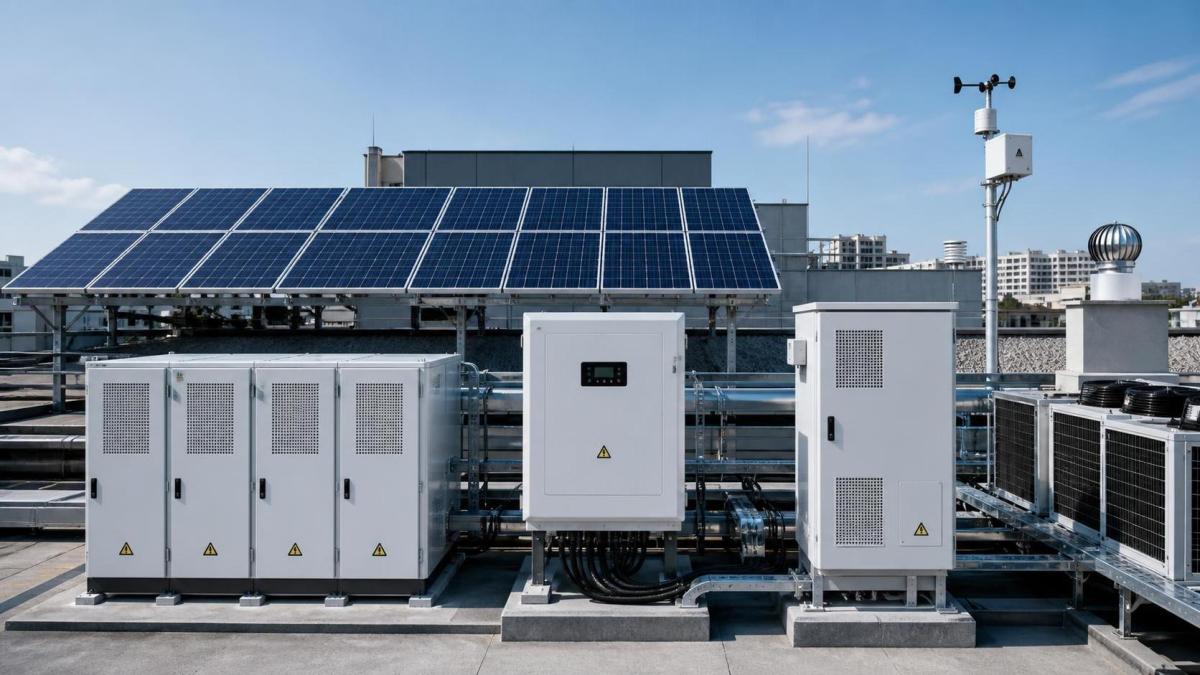
Maintenance teams that revisit original assumptions tend to find answers faster than teams that focus only on the latest fault code.
Environmental stress is usually underestimated
Green energy equipment is often sold with broad claims about durability, but actual field conditions are far less forgiving than nominal ratings suggest. Heat, humidity, salt mist, dust, vibration, unstable grid conditions, and poor enclosure integrity all reduce performance before they cause visible failure.
Take inverters and power electronics. They may remain online while derating repeatedly because ambient temperatures, airflow restrictions, or heat sink contamination push internal temperatures too high. A storage unit installed in a room with weak thermal management may preserve safety but lose usable efficiency and accelerate cell aging. Outdoor electrical connections exposed to moisture ingress or pollution can develop increased resistance, leading to heat, voltage drop, and intermittent communication faults.
Environmental mismatch is also a procurement issue. In international trade, components can move across regions with very different operating realities. A system configuration suitable for a temperate inland site may struggle in coastal, tropical, high-dust, or high-altitude conditions. This is one reason structured market and supply chain intelligence matters. GTIIN’s value in sectors such as photovoltaic technologies, energy storage, grid equipment, and environmental engineering is not limited to market tracking; it helps industrial users compare how product positioning, manufacturing readiness, and category information align with real deployment environments.
Not all component issues look like defects
Maintenance teams are often told that a problem must be “installation-related” because the hardware passed factory inspection. Sometimes that is true. Sometimes it is only part of the story.
Green energy systems depend on a chain of components that may come from different factories, regions, or suppliers: modules, inverters, connectors, cells, BMS boards, sensors, relays, meters, cables, switchgear, communication modules, and software layers. A system can underperform even when no single item has catastrophically failed. Slight variation in connector quality, sensor drift, firmware inconsistency, or communication stability can distort system behavior enough to reduce output or complicate maintenance.
This is especially relevant in global procurement, where buyers now look beyond price toward certification status, production transparency, after-sales reliability, and logistics resilience. If replacement parts arrive late, if firmware support is fragmented, or if the documentation package is incomplete, recovery time becomes longer than the original fault justified. A platform that connects manufacturing categories, export market conditions, and supplier-side information can help maintenance and sourcing teams speak the same language when evaluating risk before and after installation.
Monitoring systems collect data, but that does not mean the data is usable
One of the most frustrating service scenarios is a site with plenty of dashboards and very little diagnostic clarity. The customer sees a portal. The service team sees dozens of tags. But no one can confidently answer what changed, when it changed, and whether the issue started with a device, a control sequence, a communication loss, or a site condition.
Useful monitoring needs three things: accurate measurement, consistent time alignment, and context. Without those, energy yield analysis and root-cause work are weak. If irradiance reference data is missing or unreliable, PV underperformance is hard to quantify. If charge and discharge events are not reconciled with battery temperature and state-of-health indicators, storage losses are easy to misread. If process-side demand data is absent, operators may blame supply equipment for what is really an unstable load problem.
A practical maintenance habit is to separate symptoms into four layers: generation or conversion loss, control logic error, balance-of-system issue, and external operating change. That simple discipline often cuts through noisy datasets faster than more software alone.
What after-sales teams should check before replacing hardware
When a green energy system underperforms, replacing parts too early can waste time and hide the real cause. A better sequence is usually:
- Verify actual operating conditions against the original design assumptions, including temperature, load pattern, shading, airflow, and duty cycle.
- Review commissioning records and as-built settings, not just current alarms.
- Check whether monitoring points are trustworthy and whether timestamps across devices are aligned.
- Inspect connectors, cable terminations, grounding, and enclosure condition before assuming a major component failure.
- Confirm firmware versions, communication protocols, and parameter updates across devices from different suppliers.
- Ask whether recent site changes, production expansion, or grid quality issues coincide with the performance drop.
That sequence sounds basic, but in real projects it is where a lot of recoverable energy is found.
The trade and supply chain angle is not separate from maintenance
After-sales performance is often treated as a downstream service problem. In reality, it reflects upstream decisions about sourcing, documentation, compliance readiness, spare parts planning, and supplier communication.
If a maintenance team cannot quickly confirm component origin, substitute part compatibility, applicable regional standards, or the support path for a discontinued item, downtime stretches. That challenge is common in cross-border industrial projects, where exporters, importers, distributors, logistics providers, and end users all hold part of the information but no one owns the whole picture. GTIIN’s role in reducing those information gaps is relevant here. By organizing trade intelligence, category-level manufacturing insight, and regulatory context across sectors from electrical infrastructure to green energy and environmental technologies, it supports better decisions before a system ships and better problem-solving after it is installed.
That does not replace technical fieldwork. It makes the fieldwork less blind.
A better way to think about underperformance
When green energy systems underperform after installation, the temptation is to ask which device failed. The more useful question is which assumptions failed. Was the site really ready? Was commissioning complete? Were environmental conditions understood? Was the system monitored in a way that supports diagnosis? Were sourcing and documentation choices strong enough to support long-term service?
Most underperformance problems are not mysterious. They are layered. And layered problems need a maintenance approach that connects equipment behavior, operating context, and supply chain reality.
If a site is falling short, the next step is usually not a bigger promise from the manufacturer. It is a disciplined review of commissioning records, live operating data, environmental stress, component traceability, and local service constraints. In many cases, that is where the lost performance is still recoverable.
 What industrial trade intelligence pricing should include before you subscribeIndustrial trade intelligence pricing explained: compare coverage, data quality, access rights, and workflow value before choosing a subscription that supports smarter trade decisions.
 How an industrial trade intelligence dashboard can identify new supplier marketsDiscover how an industrial trade intelligence dashboard helps identify new supplier markets by comparing capacity, landed cost, logistics resilience, and compliance risk.
 Which global market entry barriers should exporters assess first?Global market entry barriers exporters should assess first: tariffs, compliance, buyer qualification, logistics, and payment risk. Build a practical strategy for confident market entry.
 How trade data aggregation analytics can reveal emerging supplier marketsTrade data aggregation analytics reveals emerging supplier markets by connecting trade flows, capacity signals, logistics, and compliance insights for smarter sourcing decisions.
 When an export market analysis platform can validate demand in a new marketExport market analysis platform insights help validate new-market demand through buyer fit, regulations, logistics, competition, and profitable entry conditions.
 What is driving the beauty and personal care market in the USA?Beauty and personal care in USA is driven by targeted solutions, selective premiumization, digital discovery, clean-label trust, diverse needs, and compliance. Explore key growth opportunities.
 How trade flow monitoring reports reveal changing regional demandTrade flow monitoring reports reveal changing regional demand through import volumes, sourcing shifts, product mix, logistics signals, and regulatory trends. Explore actionable market insights.
 How international market intelligence for investors reduces market-entry riskInternational market intelligence for investors reduces market-entry risk by validating demand, regulations, logistics, and competition before capital is committed.
 How international sourcing intelligence helps identify supplier risk earlyInternational sourcing intelligence helps businesses spot supplier risks early, protect supply continuity, and make smarter global procurement decisions.
 How trade data aggregation analytics reveals emerging supplier marketsTrade data aggregation analytics reveals emerging supplier markets through export trends, input flows, logistics, and regulatory signals. Discover smarter sourcing insights.
 What industrial cluster monitoring in Vietnam reveals about site riskIndustrial cluster monitoring Vietnam reveals hidden site risks across labor, utilities, logistics, compliance, and supplier dependencies. Make smarter sourcing and expansion decisions.
 Food Technology Trends Reshaping Shelf Life, Safety, and Product InnovationFood technology is reshaping shelf life, safety, and innovation. Discover the trends helping food businesses cut risk, improve compliance, and unlock stronger global market growth.
 How electronics manufacturing services are changing with low-volume demandElectronics manufacturing services are evolving fast with low-volume demand. Learn how agile EMS partners improve flexibility, compliance, sourcing resilience, and speed to market.
 How Can Buyers Reduce Procurement Risks for Electronic Components?How to reduce procurement risks for electronic components: learn how buyers assess traceability, lead times, compliance, and supplier types to avoid costly sourcing mistakes.
 What Sourcing Intelligence India Reveals About Supplier Risk and Cost ShiftsSourcing intelligence India reveals hidden supplier risk, compliance gaps, logistics pressure, and real cost shifts—helping buyers compare vendors smarter and source with more confidence.
 Fashion Trends 2026: Which Materials, Colors, and Silhouettes Are Gaining Ground?Fashion trends 2026 spotlight tactile fabrics, mineral colors, and controlled volume. Explore the materials, shades, and silhouettes shaping smarter, more wearable style.
 Smart Device Market Outlook: Key Growth Drivers, Segments, and Business OpportunitiesSmart device market trends are shifting toward system value, industrial demand, and resilient supply chains. Explore key growth drivers, high-potential segments, and business opportunities.
 How Global Trade Intelligence Services Help B2B Firms Evaluate Markets and SuppliersGlobal trade intelligence services help B2B firms compare suppliers, assess market potential, and uncover compliance, logistics, and pricing risks before costly decisions are made.
 Manufacturing Sector Updates for Investors: What Signals Matter Most in 2025?Manufacturing sector updates for investors in 2025: track orders, margins, supply chains, regulation, and exports to spot resilient manufacturers and smarter investment signals.
 How Energy Market Intelligence Helps Businesses Track Price Risks and Demand ShiftsEnergy market intelligence helps businesses spot price risks, demand shifts, and supply pressure early—improving procurement, resilience, and faster strategic decisions.
 Precision Hardware Tools Market: Key Demand Drivers, Segments, and Growth OutlookPrecision hardware tools market trends are reshaping sourcing, compliance, and automation. Explore key demand drivers, segment shifts, regional supply patterns, and growth opportunities.





















Global Trade Insights & Industry
Our mission is to empower global exporters and importers with data-driven insights that foster strategic growth.
Search News
Popular Tags
Industry Overview
The global commercial kitchen equipment market is projected to reach $112 billion by 2027. Driven by urbanization, the rise of e-commerce food delivery, and strict hygiene regulations.