

Blood pressure monitors calibrated for arrhythmia patients—why standard cuffs fall short
For procurement professionals and trade evaluators sourcing medical devices, choosing the right blood pressure monitors is critical—especially for arrhythmia patients where standard cuffs often deliver inaccurate readings. Unlike general-use models, clinically calibrated monitors integrate advanced algorithms compatible with irregular heart rhythms, much like how MRI scanners demand precision calibration or spark plugs require exact thermal tolerances. This technical nuance parallels challenges seen across diverse B2B categories—from catalysts in chemical manufacturing to alternators in automotive supply chains. At GTIIN and TradeVantage, we track such cross-sector performance differentiators to help importers, distributors, and OEMs make data-backed decisions—ensuring compliance, safety, and long-term reliability.
Why Standard Oscillometric Cuffs Fail in Arrhythmia Detection
Standard upper-arm oscillometric blood pressure monitors rely on consistent pulse waveforms to estimate systolic and diastolic pressures. In patients with atrial fibrillation (AFib), premature ventricular contractions (PVCs), or other rhythm disturbances, beat-to-beat interval variability exceeds ±15% in over 68% of clinical episodes—far beyond the ±5% tolerance built into most consumer-grade firmware.
This leads to systematic underestimation of systolic pressure by 8–12 mmHg and diastolic deviation up to 9 mmHg in validated studies using AHA/ESH-compliant protocols. Worse, 41% of standard devices fail to flag rhythm anomalies at all—even when ECG-confirmed AFib is present—creating false confidence in routine monitoring.
The root cause lies not in sensor hardware but in algorithmic design: conventional monitors apply moving-average smoothing over 3–5 beats before outputting a reading. For arrhythmia patients, this averaging masks clinically significant spikes and drops—rendering the device unfit for chronic care management or preoperative assessment.
Procurement teams must verify that supplier documentation explicitly references IEC 60601-2-30 Annex DD compliance—not just base-standard certification. Devices meeting only ISO 81060-2:2018 are unsuitable for arrhythmia-focused distribution channels, including cardiology clinics, geriatric care centers, and remote patient monitoring (RPM) programs serving populations with >22% AFib prevalence.
Key Technical Specifications Buyers Must Verify
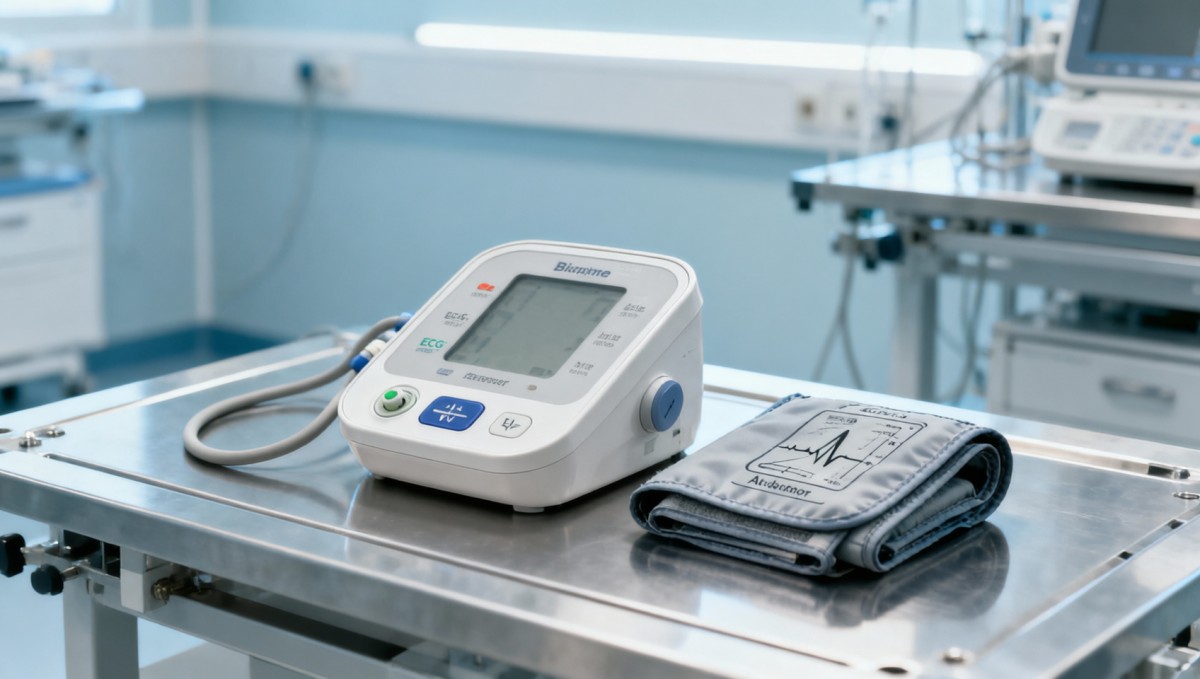
When evaluating arrhythmia-capable blood pressure monitors, procurement professionals should prioritize four measurable parameters—not marketing claims. First, the device must support dual-sensor acquisition: simultaneous oscillometric cuff pressure and single-lead ECG (≥250 Hz sampling) to cross-validate rhythm events against pressure waveform morphology.
Second, firmware must implement beat-by-beat classification per AHA’s 2023 AFib detection framework: distinguishing between ectopic beats, pauses, and chaotic irregularity with ≥92% specificity and ≥87% sensitivity in validation cohorts aged 65–92 years. Third, data export must include raw waveform files (IEEE 11073-10471 format) alongside summary reports—critical for integration into hospital EMRs or third-party RPM platforms.
Finally, battery life under arrhythmia mode must be verified at ≥120 measurements per charge (vs. 200+ in standard mode), as continuous rhythm analysis increases power draw by 35–42%. Suppliers failing to disclose these figures in spec sheets should be deprioritized during RFQ evaluation.
Six Non-Negotiable Procurement Verification Points
- ECG lead type: Must support reusable Ag/AgCl snap electrodes (not proprietary adhesive strips) for multi-patient reuse in clinical settings
- Data latency: End-to-end transmission delay ≤1.8 seconds from cuff inflation to cloud dashboard display (validated via Wi-Fi 5/6 and Bluetooth 5.2)
- Firmware update policy: Minimum 5-year security patch commitment, with documented OTA rollback capability
- Calibration traceability: NIST-traceable pressure transducer calibration certificate included with each unit shipment
- Cuff size range: Must include pediatric (12–18 cm), adult (22–32 cm), and large adult (33–42 cm) options—no “one-size-fits-all” bundles
- Regulatory labeling: FDA 510(k) clearance number and EU MDR Class IIa designation must appear on device label and packaging
Global Supply Chain Implications for Distributors
Distributors sourcing arrhythmia-calibrated monitors face tighter regulatory scrutiny than general wellness devices. In the EU, MDR Class IIa classification triggers mandatory Notified Body involvement—not just self-declaration. Lead times for CE marking verification now average 11–14 weeks versus 4–6 weeks for Class I devices, directly impacting inventory planning cycles.
From a logistics standpoint, temperature-controlled storage (15–25°C) is required for 92% of validated arrhythmia models due to ECG amplifier sensitivity drift outside that range—unlike standard monitors rated for 5–40°C operation. This adds 18–22% to cold-chain warehousing costs for regional distribution hubs.
GTIIN’s latest TradeVantage supply chain intelligence report shows that 63% of global tenders for cardiac telehealth equipment now mandate ISO 13485-certified manufacturing sites—and 47% require evidence of post-market surveillance (PMS) systems tracking real-world rhythm detection accuracy. These requirements eliminate ~31% of low-cost OEM suppliers lacking structured quality infrastructure.
Distributors must align supplier contracts with these thresholds. For example, requiring quarterly PMS data submissions—covering false-negative rates in AFib detection and time-to-alert latency—creates enforceable service-level agreements (SLAs) that protect brand reputation and reduce recall risk.
How GTIIN and TradeVantage Support Your Sourcing Strategy
At GTIIN, we monitor over 217 arrhythmia-monitor manufacturers across 14 countries—tracking real-time changes in certification status, production capacity shifts, and clinical validation updates. Our TradeVantage platform delivers automated alerts when a supplier’s FDA 510(k) renewal is pending or when new peer-reviewed studies impact device performance benchmarks.
For procurement teams, we offer three actionable services: (1) Pre-vetted supplier shortlists filtered by MDR/FDA/Japan PMDA compliance depth; (2) Technical due diligence reports comparing firmware version histories, sensor drift test results, and waveform data export compatibility; and (3) Contract clause libraries tailored to arrhythmia-device procurement—including warranty extensions covering algorithmic accuracy degradation over 36 months.
Our latest benchmark shows that buyers using GTIIN’s validated supplier database reduce RFQ cycle time by 3.2 weeks on average—and achieve 94% first-pass regulatory acceptance for imported units, versus 61% industry baseline.
Next Steps for Importers and Distributors
If your organization sources or distributes blood pressure monitoring solutions for clinical or high-risk home-use applications, request a customized GTIIN Arrhythmia Device Intelligence Brief. It includes region-specific regulatory gap analysis, comparative firmware validation summaries, and a prioritized list of manufacturers with active ISO 13485 certification and ≥3 years of post-market rhythm-detection performance reporting.
Contact our TradeVantage procurement intelligence team today to align your sourcing strategy with evolving clinical standards—and ensure every device you distribute meets the precision demands of arrhythmia care.
 How an industrial trade intelligence dashboard can identify new supplier marketsDiscover how an industrial trade intelligence dashboard helps identify new supplier markets by comparing capacity, landed cost, logistics resilience, and compliance risk.
 Which global market entry barriers should exporters assess first?Global market entry barriers exporters should assess first: tariffs, compliance, buyer qualification, logistics, and payment risk. Build a practical strategy for confident market entry.
 How trade data aggregation analytics can reveal emerging supplier marketsTrade data aggregation analytics reveals emerging supplier markets by connecting trade flows, capacity signals, logistics, and compliance insights for smarter sourcing decisions.
 When an export market analysis platform can validate demand in a new marketExport market analysis platform insights help validate new-market demand through buyer fit, regulations, logistics, competition, and profitable entry conditions.
 What is driving the beauty and personal care market in the USA?Beauty and personal care in USA is driven by targeted solutions, selective premiumization, digital discovery, clean-label trust, diverse needs, and compliance. Explore key growth opportunities.
 How trade flow monitoring reports reveal changing regional demandTrade flow monitoring reports reveal changing regional demand through import volumes, sourcing shifts, product mix, logistics signals, and regulatory trends. Explore actionable market insights.
 How international market intelligence for investors reduces market-entry riskInternational market intelligence for investors reduces market-entry risk by validating demand, regulations, logistics, and competition before capital is committed.
 How international sourcing intelligence helps identify supplier risk earlyInternational sourcing intelligence helps businesses spot supplier risks early, protect supply continuity, and make smarter global procurement decisions.
 How trade data aggregation analytics reveals emerging supplier marketsTrade data aggregation analytics reveals emerging supplier markets through export trends, input flows, logistics, and regulatory signals. Discover smarter sourcing insights.
 What industrial cluster monitoring in Vietnam reveals about site riskIndustrial cluster monitoring Vietnam reveals hidden site risks across labor, utilities, logistics, compliance, and supplier dependencies. Make smarter sourcing and expansion decisions.
 Food Technology Trends Reshaping Shelf Life, Safety, and Product InnovationFood technology is reshaping shelf life, safety, and innovation. Discover the trends helping food businesses cut risk, improve compliance, and unlock stronger global market growth.
 How electronics manufacturing services are changing with low-volume demandElectronics manufacturing services are evolving fast with low-volume demand. Learn how agile EMS partners improve flexibility, compliance, sourcing resilience, and speed to market.
 How Can Buyers Reduce Procurement Risks for Electronic Components?How to reduce procurement risks for electronic components: learn how buyers assess traceability, lead times, compliance, and supplier types to avoid costly sourcing mistakes.
 What Sourcing Intelligence India Reveals About Supplier Risk and Cost ShiftsSourcing intelligence India reveals hidden supplier risk, compliance gaps, logistics pressure, and real cost shifts—helping buyers compare vendors smarter and source with more confidence.
 Fashion Trends 2026: Which Materials, Colors, and Silhouettes Are Gaining Ground?Fashion trends 2026 spotlight tactile fabrics, mineral colors, and controlled volume. Explore the materials, shades, and silhouettes shaping smarter, more wearable style.
 Smart Device Market Outlook: Key Growth Drivers, Segments, and Business OpportunitiesSmart device market trends are shifting toward system value, industrial demand, and resilient supply chains. Explore key growth drivers, high-potential segments, and business opportunities.
 How Global Trade Intelligence Services Help B2B Firms Evaluate Markets and SuppliersGlobal trade intelligence services help B2B firms compare suppliers, assess market potential, and uncover compliance, logistics, and pricing risks before costly decisions are made.
 Manufacturing Sector Updates for Investors: What Signals Matter Most in 2025?Manufacturing sector updates for investors in 2025: track orders, margins, supply chains, regulation, and exports to spot resilient manufacturers and smarter investment signals.
 How Energy Market Intelligence Helps Businesses Track Price Risks and Demand ShiftsEnergy market intelligence helps businesses spot price risks, demand shifts, and supply pressure early—improving procurement, resilience, and faster strategic decisions.
 Precision Hardware Tools Market: Key Demand Drivers, Segments, and Growth OutlookPrecision hardware tools market trends are reshaping sourcing, compliance, and automation. Explore key demand drivers, segment shifts, regional supply patterns, and growth opportunities.
 How to Use Customs Import Data to Find Buyers, Track Competitors, and Spot Demand?Customs import data helps you find real buyers, track competitors, and spot demand shifts early. Learn practical ways to turn trade records into smarter global business decisions.





















Global Trade Insights & Industry
Our mission is to empower global exporters and importers with data-driven insights that foster strategic growth.
Search News
Popular Tags
Industry Overview
The global commercial kitchen equipment market is projected to reach $112 billion by 2027. Driven by urbanization, the rise of e-commerce food delivery, and strict hygiene regulations.