

What makes hotel room service carts easier to clean
In hotels, cleanliness is more than a visual standard—it directly affects safety, efficiency, and guest trust. For quality control and safety teams, understanding what makes hotel room service carts easier to clean can help reduce contamination risks, simplify inspections, and improve daily operations. From material choice to structural design, several practical factors determine how well these carts support hygiene-focused management.
What features make hotel room service carts easier to clean?
The easiest hotel room service carts to clean share one core trait: fewer places for dirt, moisture, and food residue to hide.
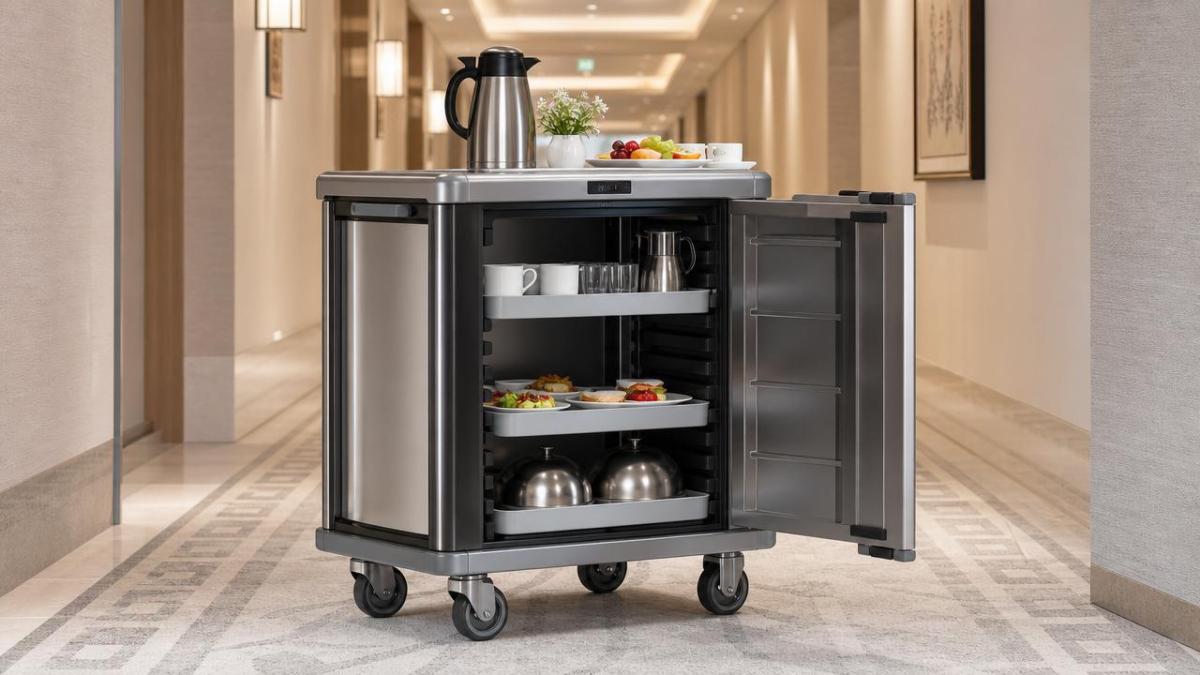
Smooth surfaces are the first priority. Flat panels without deep grooves allow faster wipe-downs and reduce trapped debris after meal delivery rounds.
Rounded internal corners also matter. Sharp angles collect crumbs, liquids, and cleaning chemical buildup, making sanitation slower and less consistent.
Sealed joints improve hygiene performance. When seams are exposed or poorly finished, carts become harder to disinfect and inspect properly.
Removable trays, bins, and shelves simplify deep cleaning. Staff can clean each part separately instead of reaching around fixed obstacles.
Open access design helps as well. If staff can easily reach all surfaces, hotel room service carts stay cleaner with less labor.
- Non-porous work surfaces
- Minimal exposed fasteners
- Drain-friendly shelf design
- Easy-roll wheels with low dirt retention
- Handles shaped for full-surface wiping
Which materials are best for hygienic hotel room service carts?
Material selection strongly affects cleaning speed, chemical resistance, and long-term hygiene control.
Stainless steel is a leading option for hotel room service carts. It resists corrosion, tolerates frequent sanitizing, and shows contamination clearly.
High-quality molded plastic can also perform well. It is lightweight, impact-resistant, and often easier to shape into seamless components.
Laminate or wood-look finishes may suit luxury interiors, but they require careful specification. Cracked edges and swelling surfaces quickly become hygiene risks.
Powder-coated metal can work in low-moisture settings. However, chipped coatings may expose rough surfaces that collect residue and complicate cleaning.
The best material depends on use frequency, menu type, and cleaning chemicals. A buffet-heavy operation has different needs than a tea-and-snacks service cart.
How does cart design affect daily cleaning and inspection?
Design determines whether cleaning is a quick routine or a recurring operational burden.
Large wheels help hotel room service carts move over thresholds, but wheel housings should avoid deep recesses that trap hair and dust.
Shelf spacing should allow hand access and cloth movement. Tight gaps often lead to missed areas during fast turnovers.
Folding leaves, decorative trim, and fabric skirts may improve appearance, yet they usually increase cleaning time and inspection complexity.
Door panels should open wide and stay stable. If compartments are awkward to access, internal sanitation becomes inconsistent.
A practical cart supports visual inspection. Supervisors should be able to confirm cleanliness quickly without dismantling half the unit.
Useful design signals
- Visible surfaces from multiple angles
- Limited decorative cavities
- Detachable waste section
- Moisture-resistant edges and corners
- Simple hardware with wipeable shapes
What cleaning risks are often overlooked with hotel room service carts?
Many hygiene problems do not start on the main tray. They appear in hidden contact points and neglected moving parts.
Handles are high-touch surfaces. If grip areas have textured patterns, oils and residue build up faster than expected.
Caster assemblies are another weak point. Wet corridors, carpet fibers, and food spills can create persistent contamination around the wheels.
Underside panels are often skipped during routine cleaning. Yet these areas can spread dust into guest corridors and service elevators.
Accessory containers, condiment holders, and cutlery modules also need attention. Small inserts often become the least-cleaned parts of hotel room service carts.
Another mistake is choosing surfaces that look clean but scratch easily. Fine scratches hold stains and reduce sanitation confidence over time.
Common mistakes to avoid
- Prioritizing appearance over cleanability
- Ignoring wheel and base sanitation
- Using incompatible disinfectants
- Selecting fixed parts that should be removable
- Overlooking moisture damage on edges
How can hotels compare options before choosing hotel room service carts?
A side-by-side cleaning assessment is more useful than relying on catalog descriptions alone.
Start with a wipe test. Check how quickly fingerprints, liquid marks, and food residue are removed from the main surfaces.
Then inspect corners, fasteners, and wheel zones. If a cloth snags or misses a section, cleaning consistency may suffer later.
Ask whether key parts are removable without tools. This simple detail can reduce labor during end-of-day sanitation.
Review chemical compatibility data. Some hotel room service carts tolerate stronger disinfectants better than others.
It also helps to measure cleaning time during a real service simulation. Efficiency gains often justify a better design.
Are easier-to-clean hotel room service carts worth the extra cost?
In many properties, yes. The value appears in labor savings, reduced wear, and more reliable hygiene outcomes.
If carts require extra scrubbing every shift, cleaning time accumulates quickly across daily operations.
Better-designed hotel room service carts often reduce inspection failures and support more consistent sanitation documentation.
Longer service life is another benefit. Materials that resist staining, swelling, and coating damage maintain both hygiene and appearance.
The lowest purchase price may lead to higher replacement frequency. Total cost should include cleaning labor, maintenance, and downtime.
For hotel operations seeking stronger trust signals, cleanability is not a minor detail. It is part of risk control and guest experience protection.
Quick FAQ summary
Choosing hotel room service carts with strong cleanability features helps support safer service, faster turnover, and easier inspections.
Focus on materials, seams, corners, wheels, and removable components before making a final decision.
When hygiene standards and operational efficiency both matter, a cleanable cart design becomes a practical long-term advantage.
For hospitality brands building visibility and trust in global markets, clear equipment standards also strengthen the credibility behind every service promise.
 How an industrial trade intelligence dashboard can identify new supplier marketsDiscover how an industrial trade intelligence dashboard helps identify new supplier markets by comparing capacity, landed cost, logistics resilience, and compliance risk.
 Which global market entry barriers should exporters assess first?Global market entry barriers exporters should assess first: tariffs, compliance, buyer qualification, logistics, and payment risk. Build a practical strategy for confident market entry.
 How trade data aggregation analytics can reveal emerging supplier marketsTrade data aggregation analytics reveals emerging supplier markets by connecting trade flows, capacity signals, logistics, and compliance insights for smarter sourcing decisions.
 When an export market analysis platform can validate demand in a new marketExport market analysis platform insights help validate new-market demand through buyer fit, regulations, logistics, competition, and profitable entry conditions.
 What is driving the beauty and personal care market in the USA?Beauty and personal care in USA is driven by targeted solutions, selective premiumization, digital discovery, clean-label trust, diverse needs, and compliance. Explore key growth opportunities.
 How trade flow monitoring reports reveal changing regional demandTrade flow monitoring reports reveal changing regional demand through import volumes, sourcing shifts, product mix, logistics signals, and regulatory trends. Explore actionable market insights.
 How international market intelligence for investors reduces market-entry riskInternational market intelligence for investors reduces market-entry risk by validating demand, regulations, logistics, and competition before capital is committed.
 How international sourcing intelligence helps identify supplier risk earlyInternational sourcing intelligence helps businesses spot supplier risks early, protect supply continuity, and make smarter global procurement decisions.
 How trade data aggregation analytics reveals emerging supplier marketsTrade data aggregation analytics reveals emerging supplier markets through export trends, input flows, logistics, and regulatory signals. Discover smarter sourcing insights.
 What industrial cluster monitoring in Vietnam reveals about site riskIndustrial cluster monitoring Vietnam reveals hidden site risks across labor, utilities, logistics, compliance, and supplier dependencies. Make smarter sourcing and expansion decisions.
 Food Technology Trends Reshaping Shelf Life, Safety, and Product InnovationFood technology is reshaping shelf life, safety, and innovation. Discover the trends helping food businesses cut risk, improve compliance, and unlock stronger global market growth.
 How electronics manufacturing services are changing with low-volume demandElectronics manufacturing services are evolving fast with low-volume demand. Learn how agile EMS partners improve flexibility, compliance, sourcing resilience, and speed to market.
 How Can Buyers Reduce Procurement Risks for Electronic Components?How to reduce procurement risks for electronic components: learn how buyers assess traceability, lead times, compliance, and supplier types to avoid costly sourcing mistakes.
 What Sourcing Intelligence India Reveals About Supplier Risk and Cost ShiftsSourcing intelligence India reveals hidden supplier risk, compliance gaps, logistics pressure, and real cost shifts—helping buyers compare vendors smarter and source with more confidence.
 Fashion Trends 2026: Which Materials, Colors, and Silhouettes Are Gaining Ground?Fashion trends 2026 spotlight tactile fabrics, mineral colors, and controlled volume. Explore the materials, shades, and silhouettes shaping smarter, more wearable style.
 Smart Device Market Outlook: Key Growth Drivers, Segments, and Business OpportunitiesSmart device market trends are shifting toward system value, industrial demand, and resilient supply chains. Explore key growth drivers, high-potential segments, and business opportunities.
 How Global Trade Intelligence Services Help B2B Firms Evaluate Markets and SuppliersGlobal trade intelligence services help B2B firms compare suppliers, assess market potential, and uncover compliance, logistics, and pricing risks before costly decisions are made.
 Manufacturing Sector Updates for Investors: What Signals Matter Most in 2025?Manufacturing sector updates for investors in 2025: track orders, margins, supply chains, regulation, and exports to spot resilient manufacturers and smarter investment signals.
 How Energy Market Intelligence Helps Businesses Track Price Risks and Demand ShiftsEnergy market intelligence helps businesses spot price risks, demand shifts, and supply pressure early—improving procurement, resilience, and faster strategic decisions.
 Precision Hardware Tools Market: Key Demand Drivers, Segments, and Growth OutlookPrecision hardware tools market trends are reshaping sourcing, compliance, and automation. Explore key demand drivers, segment shifts, regional supply patterns, and growth opportunities.
 How to Use Customs Import Data to Find Buyers, Track Competitors, and Spot Demand?Customs import data helps you find real buyers, track competitors, and spot demand shifts early. Learn practical ways to turn trade records into smarter global business decisions.





















Global Trade Insights & Industry
Our mission is to empower global exporters and importers with data-driven insights that foster strategic growth.
Search News
Popular Tags
Industry Overview
The global commercial kitchen equipment market is projected to reach $112 billion by 2027. Driven by urbanization, the rise of e-commerce food delivery, and strict hygiene regulations.