

Hotel luggage racks: wood or metal for daily use?
Why hotel luggage racks need a practical daily-use review
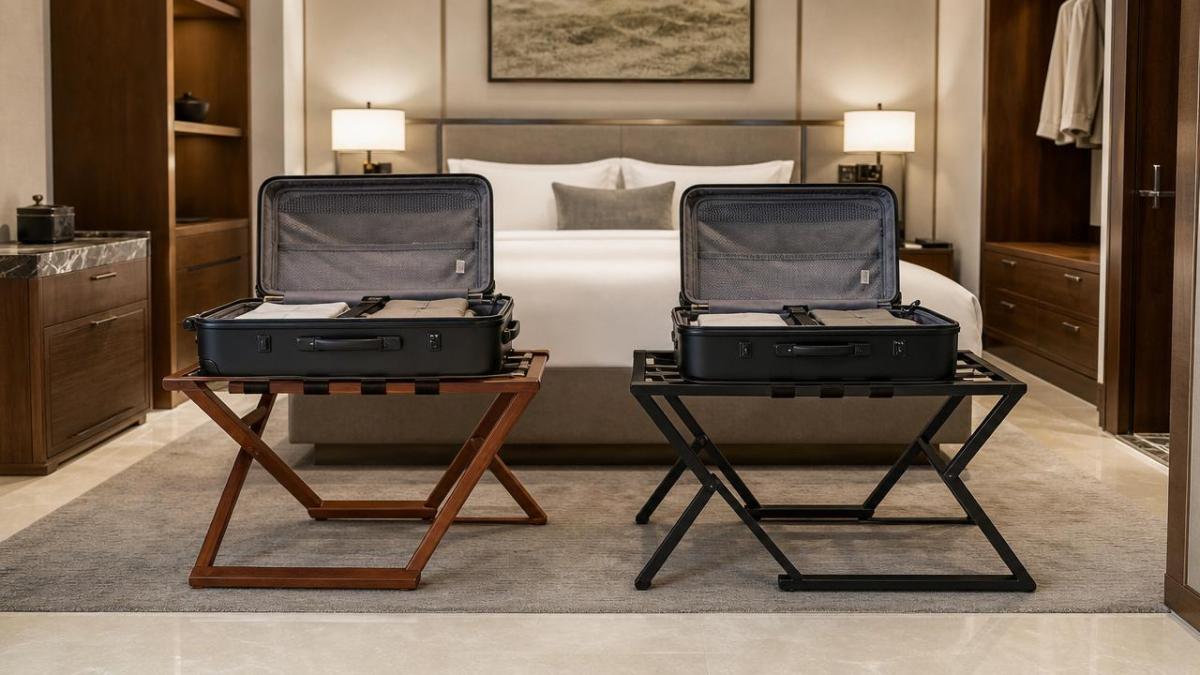
Choosing between wooden and metal hotel luggage racks affects guest comfort, room style, cleaning routines, and replacement cycles.
For hospitality properties, daily use matters more than showroom appearance. A rack must survive repeated loading, quick room turns, and changing guest expectations.
This comparison explains how hotel luggage racks perform in real rooms, helping buyers balance durability, maintenance, safety, and visual consistency.
It also supports smarter sourcing decisions for hotels, serviced apartments, resorts, and boutique stays where every furniture detail shapes guest perception.
Why a checklist matters when comparing wood and metal
Many hotel luggage racks look similar online, yet daily performance often differs after months of use.
A checklist prevents decisions based only on price or appearance. It helps compare weight capacity, finish wear, frame stability, noise, and cleaning effort.
This structured review is especially useful when rooms have different layouts, guest profiles, or brand design standards.
It also reduces hidden costs, including scratched flooring, loose straps, chipped edges, rust spots, and early product replacement.
Core points to check before buying hotel luggage racks
- Check load capacity first. Hotel luggage racks should hold large suitcases without wobbling, bending, or stressing the straps during repeated daily placement and removal.
- Review frame stability on carpet and hard flooring. Uneven feet or weak hinges can make hotel luggage racks feel unsafe and create avoidable guest complaints.
- Inspect strap quality carefully. Thick, tightly fixed straps reduce sagging, support heavier baggage, and keep hotel luggage racks looking neat after long use.
- Compare finish durability. Wooden surfaces may chip or scratch, while metal hotel luggage racks may show paint wear or corrosion in humid environments.
- Consider cleaning routines. Smooth metal frames wipe quickly, while wood grain, corners, and decorative joints may trap dust in busy hospitality settings.
- Match the rack to room aesthetics. Wooden hotel luggage racks suit classic interiors, while metal styles often support modern, urban, or minimalist designs.
- Assess folded storage size. Properties with spare stock need hotel luggage racks that store compactly without damaging nearby furniture or walls.
- Verify edge and corner safety. Rounded finishes, smooth welds, and secure joints reduce snags, guest injuries, and housekeeping handling issues.
- Measure the footprint in actual rooms. Hotel luggage racks must fit near wardrobes, beds, or entry areas without blocking circulation or luggage opening space.
- Review lifecycle value, not only unit price. Lower-cost hotel luggage racks can become expensive if repairs, replacements, and appearance decline happen too fast.
Wooden hotel luggage racks for daily use
Wooden hotel luggage racks are often chosen for their warm appearance. They fit traditional hotels, luxury suites, heritage stays, and rooms with natural material palettes.
In guest-facing design, wood can feel more premium and residential. That impression may support comfort, especially in upscale or boutique environments.
What wood does well
- Creates a softer visual tone and blends naturally with wood wardrobes, bed frames, and side tables.
- Can support premium positioning when finish quality, color consistency, and joinery are well controlled.
- Often feels quieter during use, with less metallic contact sound when luggage is placed quickly.
What needs closer review
Wood may show scratches, dents, and chipped corners faster in high-turnover rooms. Dark finishes can also reveal impact marks near the top rails.
If storage areas are humid, some wooden hotel luggage racks may weaken at joints or lose finish consistency over time.
Metal hotel luggage racks for daily use
Metal hotel luggage racks are valued for strength, slim profiles, and easy maintenance. They are common in business hotels, compact rooms, and modern hospitality formats.
For properties handling frequent guest turnover, metal frames often provide a dependable balance between durability and cleaning speed.
What metal does well
- Supports repeated loading well when welds, tubing thickness, and hinge construction are properly specified.
- Usually wipes down faster than textured wood, which helps room turnover and routine hygiene control.
- Fits compact layouts because many metal hotel luggage racks use slimmer frames and lighter visual mass.
What needs closer review
Poor coating quality can lead to scratches, exposed metal, or rust in coastal and humid areas. Weld points also need careful inspection.
Some metal hotel luggage racks can look too utilitarian for luxury rooms unless paired with refined finishes or accent materials.
Best fit by hospitality setting
Boutique and upscale rooms
Wooden hotel luggage racks often align better with curated interiors. Prioritize finish quality, color matching, and reinforced corners.
If metal is selected, choose matte black, brushed, or mixed-material styles that complement premium furniture rather than compete with it.
Business hotels and high-turnover properties
Metal hotel luggage racks usually perform better where cleaning speed, durability, and standardization matter most.
Check foot stability, folding action, and anti-scratch coating because these details drive long-term operating value.
Resorts, coastal stays, and humid environments
Humidity changes the decision. Powder-coated or corrosion-resistant metal hotel luggage racks may outlast many wood options.
If choosing wood, confirm sealing quality and inspect how joints respond to moisture, storage conditions, and repeated housekeeping movement.
Small guest rooms and extended-stay units
Compact rooms benefit from lighter-looking, easy-fold designs. Metal hotel luggage racks often win on footprint efficiency.
Extended-stay rooms may justify stronger top straps or lower shelves for extra bags, shoes, or folded belongings.
Commonly overlooked risks
Ignoring strap replacement needs is a frequent mistake. Even strong hotel luggage racks fail in practice when straps stretch, fray, or loosen early.
Another risk is choosing style over room measurements. Oversized hotel luggage racks can obstruct circulation and reduce perceived room comfort.
Floor protection is also missed. Hard feet can scratch surfaces or create noise during repositioning, especially in premium rooms.
Finally, sample review is often too brief. A product may look strong initially but develop hinge looseness after repeated folding cycles.
Practical steps for a better selection
- Test one wooden and one metal sample in an active room for several weeks before confirming a full order.
- Use loaded suitcases of different sizes to evaluate wobble, strap tension, and guest-friendly opening height.
- Ask for finish specifications, corrosion resistance details, hinge construction, and replacement part availability.
- Review cleaning feedback from actual room operations to compare maintenance time and visible wear patterns.
- Standardize color, dimensions, and hardware so replacement hotel luggage racks stay visually consistent across rooms.
FAQ about hotel luggage racks
Are wooden hotel luggage racks less durable?
Not always. Quality wood construction can perform well, but surface wear is often more visible than on well-finished metal frames.
Are metal hotel luggage racks better for housekeeping?
In many cases, yes. Metal hotel luggage racks are usually faster to wipe and inspect, especially in high-turnover rooms.
Which style is better for guest perception?
That depends on room design. Wood often feels warmer, while metal supports a clean, modern impression when well integrated.
Final decision and next step
For daily use, the best hotel luggage racks are the ones that match room style, survive constant handling, and stay easy to maintain.
Wood usually suits design-led spaces. Metal often suits efficiency-led operations. The right choice comes from testing real use conditions, not catalog photos.
Compare samples, score them against a fixed checklist, and confirm lifecycle value before scaling across the property.
Reliable hotel luggage racks support guest convenience every day while protecting aesthetics, operational flow, and long-term furnishing budgets.
 How an industrial trade intelligence dashboard can identify new supplier marketsDiscover how an industrial trade intelligence dashboard helps identify new supplier markets by comparing capacity, landed cost, logistics resilience, and compliance risk.
 Which global market entry barriers should exporters assess first?Global market entry barriers exporters should assess first: tariffs, compliance, buyer qualification, logistics, and payment risk. Build a practical strategy for confident market entry.
 How trade data aggregation analytics can reveal emerging supplier marketsTrade data aggregation analytics reveals emerging supplier markets by connecting trade flows, capacity signals, logistics, and compliance insights for smarter sourcing decisions.
 When an export market analysis platform can validate demand in a new marketExport market analysis platform insights help validate new-market demand through buyer fit, regulations, logistics, competition, and profitable entry conditions.
 What is driving the beauty and personal care market in the USA?Beauty and personal care in USA is driven by targeted solutions, selective premiumization, digital discovery, clean-label trust, diverse needs, and compliance. Explore key growth opportunities.
 How trade flow monitoring reports reveal changing regional demandTrade flow monitoring reports reveal changing regional demand through import volumes, sourcing shifts, product mix, logistics signals, and regulatory trends. Explore actionable market insights.
 How international market intelligence for investors reduces market-entry riskInternational market intelligence for investors reduces market-entry risk by validating demand, regulations, logistics, and competition before capital is committed.
 How international sourcing intelligence helps identify supplier risk earlyInternational sourcing intelligence helps businesses spot supplier risks early, protect supply continuity, and make smarter global procurement decisions.
 How trade data aggregation analytics reveals emerging supplier marketsTrade data aggregation analytics reveals emerging supplier markets through export trends, input flows, logistics, and regulatory signals. Discover smarter sourcing insights.
 What industrial cluster monitoring in Vietnam reveals about site riskIndustrial cluster monitoring Vietnam reveals hidden site risks across labor, utilities, logistics, compliance, and supplier dependencies. Make smarter sourcing and expansion decisions.
 Food Technology Trends Reshaping Shelf Life, Safety, and Product InnovationFood technology is reshaping shelf life, safety, and innovation. Discover the trends helping food businesses cut risk, improve compliance, and unlock stronger global market growth.
 How electronics manufacturing services are changing with low-volume demandElectronics manufacturing services are evolving fast with low-volume demand. Learn how agile EMS partners improve flexibility, compliance, sourcing resilience, and speed to market.
 How Can Buyers Reduce Procurement Risks for Electronic Components?How to reduce procurement risks for electronic components: learn how buyers assess traceability, lead times, compliance, and supplier types to avoid costly sourcing mistakes.
 What Sourcing Intelligence India Reveals About Supplier Risk and Cost ShiftsSourcing intelligence India reveals hidden supplier risk, compliance gaps, logistics pressure, and real cost shifts—helping buyers compare vendors smarter and source with more confidence.
 Fashion Trends 2026: Which Materials, Colors, and Silhouettes Are Gaining Ground?Fashion trends 2026 spotlight tactile fabrics, mineral colors, and controlled volume. Explore the materials, shades, and silhouettes shaping smarter, more wearable style.
 Smart Device Market Outlook: Key Growth Drivers, Segments, and Business OpportunitiesSmart device market trends are shifting toward system value, industrial demand, and resilient supply chains. Explore key growth drivers, high-potential segments, and business opportunities.
 How Global Trade Intelligence Services Help B2B Firms Evaluate Markets and SuppliersGlobal trade intelligence services help B2B firms compare suppliers, assess market potential, and uncover compliance, logistics, and pricing risks before costly decisions are made.
 Manufacturing Sector Updates for Investors: What Signals Matter Most in 2025?Manufacturing sector updates for investors in 2025: track orders, margins, supply chains, regulation, and exports to spot resilient manufacturers and smarter investment signals.
 How Energy Market Intelligence Helps Businesses Track Price Risks and Demand ShiftsEnergy market intelligence helps businesses spot price risks, demand shifts, and supply pressure early—improving procurement, resilience, and faster strategic decisions.
 Precision Hardware Tools Market: Key Demand Drivers, Segments, and Growth OutlookPrecision hardware tools market trends are reshaping sourcing, compliance, and automation. Explore key demand drivers, segment shifts, regional supply patterns, and growth opportunities.
 How to Use Customs Import Data to Find Buyers, Track Competitors, and Spot Demand?Customs import data helps you find real buyers, track competitors, and spot demand shifts early. Learn practical ways to turn trade records into smarter global business decisions.





















Global Trade Insights & Industry
Our mission is to empower global exporters and importers with data-driven insights that foster strategic growth.
Search News
Popular Tags
Industry Overview
The global commercial kitchen equipment market is projected to reach $112 billion by 2027. Driven by urbanization, the rise of e-commerce food delivery, and strict hygiene regulations.