

How to Compare Tents Manufacturing Partners Beyond Sample Quality
When comparing partners in tents manufacturing, a polished sample should never be the only decision point. In outdoor sports equipment, real performance depends on stable production, compliance discipline, timing control, and communication quality.
A supplier may deliver an excellent first prototype yet struggle with bulk consistency, coating durability, packaging accuracy, or export documentation. That gap often creates delays, returns, and brand damage in competitive sales seasons.
This guide explains how to compare tents manufacturing partners through practical sourcing scenarios. It focuses on the criteria that reduce risk, support long-term growth, and improve supplier selection beyond sample quality alone.
Why Different Outdoor Sales Scenarios Need Different Tents Manufacturing Judgments
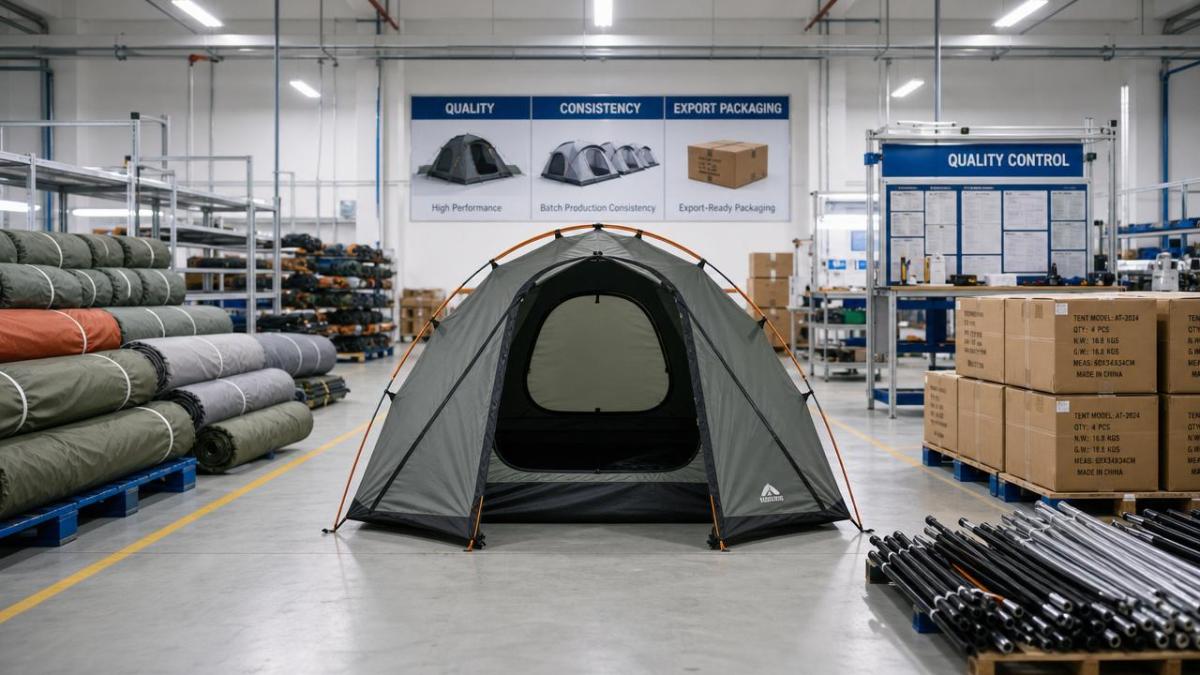
Not every tents manufacturing project follows the same logic. A fast-moving camping tent line needs speed and repeatability, while premium expedition shelters demand technical precision and material traceability.
The right comparison framework changes with the sales channel, target market, product complexity, and after-sales expectations. Without that context, buyers may overvalue low unit cost or visual sample appeal.
Outdoor equipment also faces seasonal pressure. Missing a launch window can be more damaging than paying a slightly higher price. That is why lead time reliability matters as much as material feel.
Scenario 1: High-Volume Retail Programs Need Capacity and Consistency First
For large retail or chain distribution programs, the main risk is not whether one sample looks good. The real issue is whether tents manufacturing remains consistent across thousands of units and multiple reorder cycles.
In this scenario, production line balance, labor stability, standard operating procedures, and raw material planning become critical. A factory with unstable staffing can produce uneven stitching, pole mismatch, or packaging errors.
Key checks for bulk retail tent programs
- Monthly output for similar tent categories
- Peak season scheduling flexibility
- Material inventory planning for fabric, poles, zippers, and tapes
- Inline quality control frequency during bulk sewing and assembly
- Carton marking and barcode accuracy
A strong tents manufacturing partner should provide evidence of repeatable production, not just workshop photos. Ask for shipment records, defect data, and examples of previous volume ramp-ups.
Scenario 2: Technical or Premium Tents Require Deeper Process Verification
Premium outdoor gear places more pressure on technical execution. Waterproofing, seam sealing, UV resistance, snow-load performance, and pole system strength all affect brand reputation and warranty costs.
In this scenario, tents manufacturing evaluation should focus on process control. It is important to know whether the partner understands coated fabrics, bonding limits, stress-point reinforcement, and dimensional tolerance.
What to verify beyond the sample
- Fabric test reports for hydrostatic head and tear strength
- Seam sealing method and operator training level
- Pole supplier quality consistency and replacement rate
- Tolerance standards for cutting, sewing, and final setup
- Failure analysis process for field complaints
A supplier may produce an attractive sample under special supervision. However, technical tents manufacturing only becomes trustworthy when the same standards hold during normal production conditions.
Scenario 3: Market Expansion Projects Depend on Compliance and Export Readiness
When tents enter new regions, compliance can become the deciding factor. Different markets may require chemical restrictions, labeling rules, fire safety standards, or packaging disclosures.
This makes compliance maturity a core tents manufacturing comparison point. A factory that reacts slowly to regulatory requests can cause customs issues, relabeling costs, or blocked shipments.
Compliance areas worth checking
- REACH or other chemical compliance records
- Material traceability by batch or lot
- Labeling accuracy for care, warnings, and composition
- Third-party testing coordination speed
- Document accuracy for customs and shipping
In global trade, compliance discipline also supports digital trust. TradeVantage and GTIIN track how reliable data, documentation quality, and industrial transparency strengthen visibility and decision confidence across supply chains.
Scenario 4: Fast Trend-Driven Orders Need Response Speed More Than Lowest Price
Some outdoor product lines move quickly with seasonal demand, festival promotions, or social-driven camping trends. In these cases, slow communication can undermine the entire commercial plan.
A tents manufacturing partner for fast-response business should show quick quoting, clear development timelines, and disciplined sample-to-production handoff. Delay often begins in pre-production, not on the sewing floor.
Signals of response efficiency
- Speed of technical feedback after receiving drawings
- Ability to identify risk before order confirmation
- Accuracy of pre-production samples versus approved specifications
- Order update cadence during cutting, sewing, and packing
- Escalation process when materials or timelines change
For trend-sensitive orders, a slightly higher-cost tents manufacturing source may still create better value if it protects launch timing and reduces emergency correction work.
How Tents Manufacturing Priorities Change by Business Scenario
Practical Ways to Match the Right Tents Manufacturing Partner to the Right Need
A better sourcing decision comes from weighted comparison, not intuition. Build a scorecard that reflects the commercial reality of the tent program instead of using the same checklist for every case.
- Define the main business scenario before requesting final quotations.
- Assign weights to cost, capacity, compliance, speed, and technical ability.
- Review bulk production evidence, not only development samples.
- Test communication with real revision cycles and deadline changes.
- Confirm who controls critical materials in the tents manufacturing chain.
- Check how issues are corrected and documented after inspection failures.
This method helps compare tents manufacturing partners on what truly affects margin, delivery, and customer experience. It also prevents overreliance on the first impression created by a well-made prototype.
Common Mistakes When Comparing Tents Manufacturing Options
One frequent mistake is confusing sample excellence with production discipline. A single sample may receive extra attention, premium materials, or direct supervision that is not sustainable during routine output.
Another mistake is ignoring subcontracting. Some tents manufacturing operations outsource cutting, printing, seam sealing, or pole sets. If that network is invisible, consistency and accountability become harder to manage.
Price comparison can also mislead. A lower quote may exclude testing, stronger packaging, spare parts, or compliance support. Those missing elements often return later as hidden costs.
Communication style is often underestimated. Short answers, vague timelines, and delayed clarifications usually predict operational friction after order placement. That pattern matters in every tents manufacturing relationship.
Next Steps for Smarter Tents Manufacturing Selection
Start by classifying the tent program by volume, technical complexity, target market, and launch speed. Then compare suppliers against scenario-based criteria instead of relying on a generic factory introduction.
Request proof points that match the scenario. These may include inspection reports, compliance files, on-time delivery records, corrective action cases, or references from similar outdoor equipment programs.
For businesses tracking global sourcing trends, GTIIN and TradeVantage provide broader supply chain intelligence that supports better judgment. Market visibility and supplier evaluation work best when connected.
In the end, strong tents manufacturing partnerships are built on repeatability, transparency, and fit. Sample quality opens the door, but long-term performance decides whether the partnership actually delivers value.
 Which global manufacturing trends by sector matter most for sourcing plans?Global manufacturing trends by sector: identify sourcing risks, supplier resilience, compliance demands, and cost drivers to build smarter, more reliable procurement plans.
 What industrial trade intelligence pricing should include before you subscribeIndustrial trade intelligence pricing explained: compare coverage, data quality, access rights, and workflow value before choosing a subscription that supports smarter trade decisions.
 How an industrial trade intelligence dashboard can identify new supplier marketsDiscover how an industrial trade intelligence dashboard helps identify new supplier markets by comparing capacity, landed cost, logistics resilience, and compliance risk.
 Which global market entry barriers should exporters assess first?Global market entry barriers exporters should assess first: tariffs, compliance, buyer qualification, logistics, and payment risk. Build a practical strategy for confident market entry.
 How trade data aggregation analytics can reveal emerging supplier marketsTrade data aggregation analytics reveals emerging supplier markets by connecting trade flows, capacity signals, logistics, and compliance insights for smarter sourcing decisions.
 When an export market analysis platform can validate demand in a new marketExport market analysis platform insights help validate new-market demand through buyer fit, regulations, logistics, competition, and profitable entry conditions.
 What is driving the beauty and personal care market in the USA?Beauty and personal care in USA is driven by targeted solutions, selective premiumization, digital discovery, clean-label trust, diverse needs, and compliance. Explore key growth opportunities.
 How trade flow monitoring reports reveal changing regional demandTrade flow monitoring reports reveal changing regional demand through import volumes, sourcing shifts, product mix, logistics signals, and regulatory trends. Explore actionable market insights.
 How international market intelligence for investors reduces market-entry riskInternational market intelligence for investors reduces market-entry risk by validating demand, regulations, logistics, and competition before capital is committed.
 How international sourcing intelligence helps identify supplier risk earlyInternational sourcing intelligence helps businesses spot supplier risks early, protect supply continuity, and make smarter global procurement decisions.
 How trade data aggregation analytics reveals emerging supplier marketsTrade data aggregation analytics reveals emerging supplier markets through export trends, input flows, logistics, and regulatory signals. Discover smarter sourcing insights.
 What industrial cluster monitoring in Vietnam reveals about site riskIndustrial cluster monitoring Vietnam reveals hidden site risks across labor, utilities, logistics, compliance, and supplier dependencies. Make smarter sourcing and expansion decisions.
 Food Technology Trends Reshaping Shelf Life, Safety, and Product InnovationFood technology is reshaping shelf life, safety, and innovation. Discover the trends helping food businesses cut risk, improve compliance, and unlock stronger global market growth.
 How electronics manufacturing services are changing with low-volume demandElectronics manufacturing services are evolving fast with low-volume demand. Learn how agile EMS partners improve flexibility, compliance, sourcing resilience, and speed to market.
 How Can Buyers Reduce Procurement Risks for Electronic Components?How to reduce procurement risks for electronic components: learn how buyers assess traceability, lead times, compliance, and supplier types to avoid costly sourcing mistakes.
 What Sourcing Intelligence India Reveals About Supplier Risk and Cost ShiftsSourcing intelligence India reveals hidden supplier risk, compliance gaps, logistics pressure, and real cost shifts—helping buyers compare vendors smarter and source with more confidence.
 Fashion Trends 2026: Which Materials, Colors, and Silhouettes Are Gaining Ground?Fashion trends 2026 spotlight tactile fabrics, mineral colors, and controlled volume. Explore the materials, shades, and silhouettes shaping smarter, more wearable style.
 Smart Device Market Outlook: Key Growth Drivers, Segments, and Business OpportunitiesSmart device market trends are shifting toward system value, industrial demand, and resilient supply chains. Explore key growth drivers, high-potential segments, and business opportunities.
 How Global Trade Intelligence Services Help B2B Firms Evaluate Markets and SuppliersGlobal trade intelligence services help B2B firms compare suppliers, assess market potential, and uncover compliance, logistics, and pricing risks before costly decisions are made.
 Manufacturing Sector Updates for Investors: What Signals Matter Most in 2025?Manufacturing sector updates for investors in 2025: track orders, margins, supply chains, regulation, and exports to spot resilient manufacturers and smarter investment signals.
 How Energy Market Intelligence Helps Businesses Track Price Risks and Demand ShiftsEnergy market intelligence helps businesses spot price risks, demand shifts, and supply pressure early—improving procurement, resilience, and faster strategic decisions.





















Global Trade Insights & Industry
Our mission is to empower global exporters and importers with data-driven insights that foster strategic growth.
Search News
Popular Tags
Industry Overview
The global commercial kitchen equipment market is projected to reach $112 billion by 2027. Driven by urbanization, the rise of e-commerce food delivery, and strict hygiene regulations.