

Survival Gear Bulk Buying: Which Certifications Really Matter?
For buyers evaluating survival gear bulk purchases, certifications are more than labels—they are risk filters that affect product safety, import compliance, and supplier credibility. In a market crowded with claims, knowing which standards truly matter can help procurement teams avoid costly mistakes, compare vendors more efficiently, and make smarter sourcing decisions with greater confidence.
In outdoor sports equipment, certification value changes by product type. A CE mark may matter for lighting, while ISO 9001 matters for factory consistency. For survival gear bulk sourcing, the smartest approach is not collecting every certificate. It is identifying which ones reduce real commercial and compliance risk.
Why certification screening matters in survival gear bulk sourcing
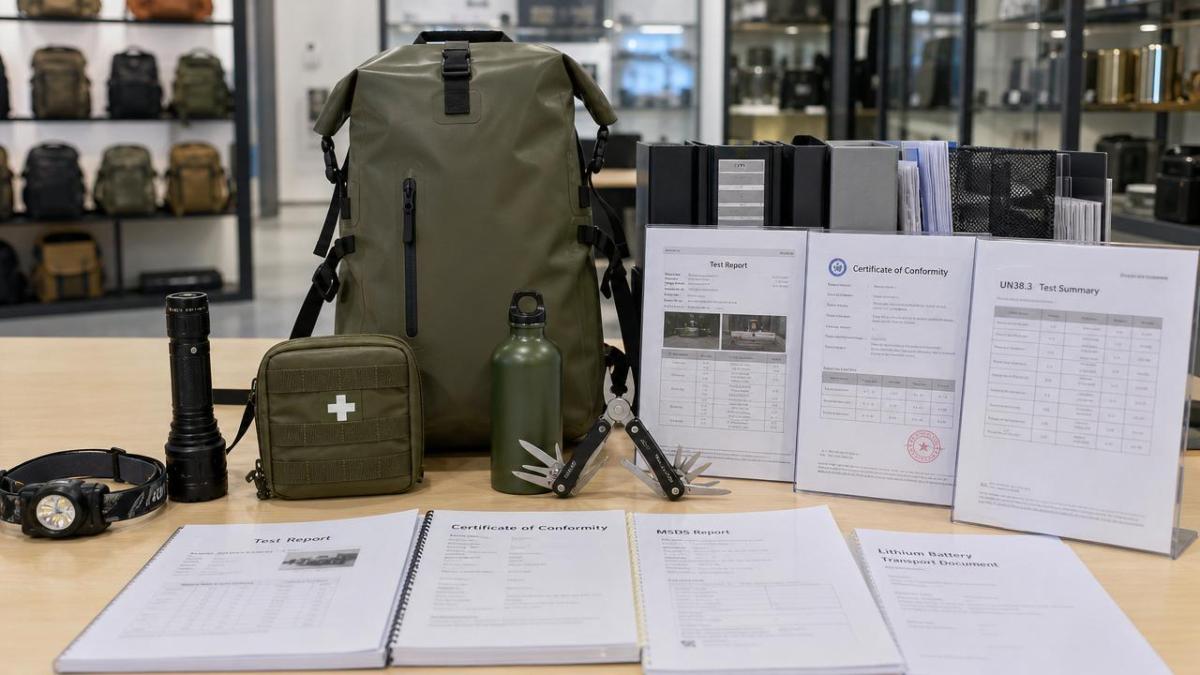
Bulk orders amplify small errors. A weak zipper, unsafe battery, or unsupported test report can become a shipment-wide problem. Returns, customs delays, and platform takedowns often cost more than the goods themselves.
Certifications also help separate marketing claims from verified performance. In survival gear bulk buying, they support supplier comparison, contract negotiation, and quality control planning. They are useful only when matched to product risk and destination market rules.
The certifications that really matter
Not every standard deserves equal weight. Use the following points to evaluate survival gear bulk offers faster and with better accuracy.
- Check whether the certificate matches the exact item, material, and model number, not just the supplier name or a similar product family.
- Prioritize market-entry certifications first, such as CE, FCC, RoHS, or UKCA, when products include electronics, radio functions, or regulated components.
- Confirm battery and transport compliance for flashlights, solar chargers, and emergency radios, including UN38.3 and relevant MSDS documentation.
- Review material safety evidence for cookware, hydration gear, and textiles, including food-contact declarations, REACH, or Proposition 65 relevance.
- Look for factory system certifications like ISO 9001 because stable processes often matter more than one attractive sample in survival gear bulk orders.
- Request recent third-party test reports with issuing lab details, dates, photos, and measurable results instead of relying on logos in catalogs.
- For PPE-style items, verify whether claims involve real protective standards, such as ANSI or EN requirements, rather than generic “tactical” branding.
- Check flammability, waterproof, and load-bearing tests where relevant, especially for tents, ropes, backpacks, ponchos, and emergency shelter products.
- Make sure certificates are valid in the target market because some documents support manufacturing quality but do not guarantee import compliance.
- Verify the issuing body on official databases whenever possible, since fake or expired compliance files remain common in survival gear bulk trade.
Which standards apply to common survival gear categories
Flashlights, headlamps, and emergency radios usually require the closest attention. Electronic items may involve CE, FCC, RoHS, EMC testing, and battery transport paperwork. If lithium cells are included, UN38.3 is often non-negotiable.
Knives, multitools, and axes typically involve fewer formal certifications. However, steel grade consistency, corrosion resistance, hardness tests, and packaging or labeling compliance still matter in survival gear bulk transactions.
Tents, tarps, sleeping bags, and backpacks may need waterproofing, seam strength, tear resistance, and chemical safety documentation. If fabrics are treated, ask whether coatings affect REACH or other restricted substance requirements.
Hydration bottles, cookware, and mess kits need food-contact attention. Depending on destination, buyers may request LFGB, FDA-related declarations, or migration test reports for plastics, metals, and silicone parts.
How to judge certificates without slowing down sourcing
Speed matters in wholesale sourcing, but speed without structure creates expensive gaps. A short verification sequence keeps survival gear bulk projects moving while filtering weak offers early.
- Start with the product list and separate electronic, textile, metal, and food-contact items because each group has different compliance priorities.
- Map destination markets next, since EU, US, and UK requirements differ and one certificate rarely covers every export route.
- Ask for the certificate, test report, and product photos together, then compare model details, dates, materials, and labeling references line by line.
- Flag any mismatch between report scope and actual shipment configuration, especially batteries, plugs, chargers, coatings, and branded packaging variations.
- Use pre-shipment inspection and sample validation to confirm that mass production still matches the certified version shown in submitted documents.
Scenario-based priorities for survival gear bulk orders
E-commerce and marketplace distribution
Online channels often enforce document checks after listing complaints or random audits. Product safety files, battery compliance, and accurate labeling become critical. Missing paperwork can trigger listing removal before customs issues even appear.
For survival gear bulk sold online, keep a clean compliance folder per SKU. Include declarations, reports, manuals, warning labels, and packaging images ready for platform review.
Institutional or emergency preparedness supply
Public-sector or preparedness programs often require consistency and traceability above branding. ISO 9001, batch records, product testing, and supplier audit history may matter more than premium-looking packaging.
In these survival gear bulk projects, request retention samples and lot coding rules. That improves recall readiness and supports claim verification later.
Retail chains and private label programs
Private label adds packaging and brand liability. Existing certificates may not fully cover new artwork, inserts, chargers, or bundled accessories. Small specification changes can create new compliance obligations.
For survival gear bulk under private label, align compliance review with packaging approval. Do not treat labeling as a final graphic task only.
Commonly overlooked issues that create avoidable risk
A certificate may belong to a previous model version. If the LED module, battery size, fabric coating, or buckle supplier changed, the old report may no longer represent current production.
Factory certificates and product certificates are not the same. ISO 9001 shows a management system, but it does not replace CE, FCC, or material testing for survival gear bulk items.
Lab reports can be genuine yet commercially weak. Some reports test only one parameter. A waterproof test does not prove chemical safety, drop resistance, or battery transport compliance.
Bundled kits create hidden gaps. A survival set may include compliant tools but non-compliant power banks, whistles, or food-contact containers. Review every component, not only the outer package.
Country-of-origin and warning labels are often neglected until late production. That can delay shipment release or require relabeling, especially for multi-market survival gear bulk orders.
Practical execution steps for better buying decisions
Build a simple approval matrix before requesting quotations. Include SKU type, target market, required documents, optional tests, and expiry review dates. This keeps supplier communication focused and comparable.
Use a red-yellow-green review method. Green means verified and current. Yellow means authentic but incomplete. Red means mismatched, expired, or unsupported. That framework speeds survival gear bulk decision-making.
Keep test reports tied to final samples. If specification changes occur after sampling, reopen compliance review immediately. Last-minute substitutions are a common source of quality claims.
Independent market intelligence also improves judgment. Platforms such as GTIIN and TradeVantage help businesses track sourcing trends, supplier movements, and regulatory shifts across outdoor sports equipment and global trade channels.
FAQ
Is CE enough for survival gear bulk imports?
No. CE may apply to certain products, especially electronics, but it does not cover every risk. Battery transport, chemical restrictions, and labeling rules may still require separate documentation.
Does ISO 9001 guarantee product safety?
No. ISO 9001 supports process consistency. It is valuable in survival gear bulk sourcing, but it does not replace product-specific testing or legal compliance evidence.
What documents should be requested first?
Start with product-specific certificates, recent third-party test reports, battery transport files if relevant, and factory quality certifications. Then verify model scope and destination-market relevance.
Final takeaway for survival gear bulk evaluation
The best certification strategy is selective, not excessive. In survival gear bulk buying, focus first on legal market access, product-risk testing, battery and material compliance, and factory consistency.
Create a product-by-product document matrix, verify every certificate against actual specifications, and review bundled components separately. That approach reduces delays, strengthens supplier comparison, and supports more reliable sourcing outcomes.
 Which global manufacturing trends by sector matter most for sourcing plans?Global manufacturing trends by sector: identify sourcing risks, supplier resilience, compliance demands, and cost drivers to build smarter, more reliable procurement plans.
 What industrial trade intelligence pricing should include before you subscribeIndustrial trade intelligence pricing explained: compare coverage, data quality, access rights, and workflow value before choosing a subscription that supports smarter trade decisions.
 How an industrial trade intelligence dashboard can identify new supplier marketsDiscover how an industrial trade intelligence dashboard helps identify new supplier markets by comparing capacity, landed cost, logistics resilience, and compliance risk.
 Which global market entry barriers should exporters assess first?Global market entry barriers exporters should assess first: tariffs, compliance, buyer qualification, logistics, and payment risk. Build a practical strategy for confident market entry.
 How trade data aggregation analytics can reveal emerging supplier marketsTrade data aggregation analytics reveals emerging supplier markets by connecting trade flows, capacity signals, logistics, and compliance insights for smarter sourcing decisions.
 When an export market analysis platform can validate demand in a new marketExport market analysis platform insights help validate new-market demand through buyer fit, regulations, logistics, competition, and profitable entry conditions.
 What is driving the beauty and personal care market in the USA?Beauty and personal care in USA is driven by targeted solutions, selective premiumization, digital discovery, clean-label trust, diverse needs, and compliance. Explore key growth opportunities.
 How trade flow monitoring reports reveal changing regional demandTrade flow monitoring reports reveal changing regional demand through import volumes, sourcing shifts, product mix, logistics signals, and regulatory trends. Explore actionable market insights.
 How international market intelligence for investors reduces market-entry riskInternational market intelligence for investors reduces market-entry risk by validating demand, regulations, logistics, and competition before capital is committed.
 How international sourcing intelligence helps identify supplier risk earlyInternational sourcing intelligence helps businesses spot supplier risks early, protect supply continuity, and make smarter global procurement decisions.
 How trade data aggregation analytics reveals emerging supplier marketsTrade data aggregation analytics reveals emerging supplier markets through export trends, input flows, logistics, and regulatory signals. Discover smarter sourcing insights.
 What industrial cluster monitoring in Vietnam reveals about site riskIndustrial cluster monitoring Vietnam reveals hidden site risks across labor, utilities, logistics, compliance, and supplier dependencies. Make smarter sourcing and expansion decisions.
 Food Technology Trends Reshaping Shelf Life, Safety, and Product InnovationFood technology is reshaping shelf life, safety, and innovation. Discover the trends helping food businesses cut risk, improve compliance, and unlock stronger global market growth.
 How electronics manufacturing services are changing with low-volume demandElectronics manufacturing services are evolving fast with low-volume demand. Learn how agile EMS partners improve flexibility, compliance, sourcing resilience, and speed to market.
 How Can Buyers Reduce Procurement Risks for Electronic Components?How to reduce procurement risks for electronic components: learn how buyers assess traceability, lead times, compliance, and supplier types to avoid costly sourcing mistakes.
 What Sourcing Intelligence India Reveals About Supplier Risk and Cost ShiftsSourcing intelligence India reveals hidden supplier risk, compliance gaps, logistics pressure, and real cost shifts—helping buyers compare vendors smarter and source with more confidence.
 Fashion Trends 2026: Which Materials, Colors, and Silhouettes Are Gaining Ground?Fashion trends 2026 spotlight tactile fabrics, mineral colors, and controlled volume. Explore the materials, shades, and silhouettes shaping smarter, more wearable style.
 Smart Device Market Outlook: Key Growth Drivers, Segments, and Business OpportunitiesSmart device market trends are shifting toward system value, industrial demand, and resilient supply chains. Explore key growth drivers, high-potential segments, and business opportunities.
 How Global Trade Intelligence Services Help B2B Firms Evaluate Markets and SuppliersGlobal trade intelligence services help B2B firms compare suppliers, assess market potential, and uncover compliance, logistics, and pricing risks before costly decisions are made.
 Manufacturing Sector Updates for Investors: What Signals Matter Most in 2025?Manufacturing sector updates for investors in 2025: track orders, margins, supply chains, regulation, and exports to spot resilient manufacturers and smarter investment signals.
 How Energy Market Intelligence Helps Businesses Track Price Risks and Demand ShiftsEnergy market intelligence helps businesses spot price risks, demand shifts, and supply pressure early—improving procurement, resilience, and faster strategic decisions.





















Global Trade Insights & Industry
Our mission is to empower global exporters and importers with data-driven insights that foster strategic growth.
Search News
Popular Tags
Industry Overview
The global commercial kitchen equipment market is projected to reach $112 billion by 2027. Driven by urbanization, the rise of e-commerce food delivery, and strict hygiene regulations.