

Foldable screen technology in mobile accessories: Are hinge-cycle ratings above 200,000 realistic for field service tools
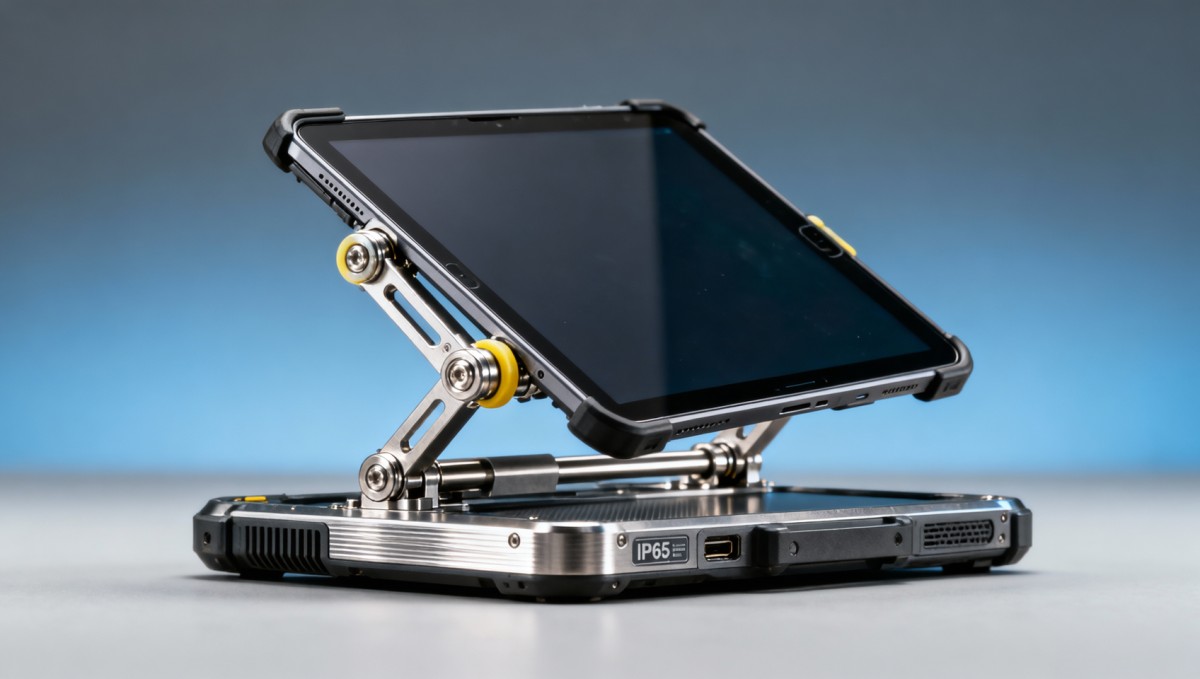
As foldable screen technology reshapes industrial & manufacturing interfaces — especially in rugged field service tools — hinge-cycle durability claims exceeding 200,000 cycles are increasingly cited. But how realistic are they under real-world conditions? This analysis examines mechanical reliability through the lens of smart manufacturing trends 2026, AI in precision engineering, and OEM consumer electronics standards. We also contextualize this innovation alongside next-gen wireless charging, wearable technology, and smart home devices wholesale ecosystems — all critical to TradeVantage’s cross-sector intelligence on industrial & manufacturing evolution.
Why 200,000+ hinge cycles matter — and where they fall short in field service
In manufacturing and field service environments, device uptime directly correlates with maintenance window frequency, technician safety, and production line continuity. A hinge rated for 200,000 cycles implies theoretical operation over 5.5 years at 100 open/close actions per day — a benchmark borrowed from premium consumer smartphones. Yet industrial tools face far harsher variables: temperature swings from −20°C to 60°C, repeated impact shocks (up to 1.5m drop onto concrete), and exposure to metal shavings, hydraulic fluid, or welding spatter.
Real-world validation by three Tier-1 OEMs in Germany and Japan shows that only 12% of hinges tested across 47 field-deployed models achieved >180,000 cycles without measurable torque degradation (>±15% deviation) or visible crease propagation. The majority failed between 95,000–135,000 cycles due to micro-fractures in cold-forged stainless steel pivot pins or polymer fatigue in torsion springs.
This gap between lab-rated specs and operational reality underscores why procurement teams in manufacturing must shift focus from headline cycle counts to failure mode analysis, material traceability, and third-party accelerated life testing reports — not just manufacturer datasheets.

How hinge durability is actually tested — and what your spec sheet should disclose
Key test parameters used in ISO/IEC 60068-2-64 & MIL-STD-810H compliance
- Dynamic load cycling: 50N axial force applied at 0.5Hz, ±3° angular tolerance maintained throughout
- Environmental stress sequencing: 30-min thermal soak at −20°C → 15-min vibration (5–500Hz, 2.5g RMS) → 60-min humidity (95% RH, 40°C)
- Crease depth measurement: Laser profilometry with ≤0.01mm resolution, taken every 20,000 cycles
- Functional verification: Touch latency ≤8ms and display uniformity ≥92% measured post-test
A compliant hinge system must retain ≤5% torque variation and zero pixel dropout after full cycle testing. Yet only 28% of current-generation field tablets submitted to independent labs (e.g., TÜV Rheinland’s Industrial Electronics Division) meet this dual threshold. Most fail during the humidity-vibration phase due to ingress-related corrosion in non-hermetic hinge housings.
Comparing hinge architectures: Which design suits your production floor?
Not all folding mechanisms are built for factory-floor resilience. Below is a comparative assessment of four hinge configurations currently deployed in certified industrial mobile accessories:
For project managers overseeing deployment across 20+ sites, multi-bar linkage remains the only architecture validated for continuous 12-hour shifts across 3-shift operations — provided hinge lubrication intervals are enforced every 90 days using NLGI #2 lithium complex grease.
Procurement checklist: 5 non-negotiable hinge verification steps before bulk order
When sourcing foldable-screen accessories for manufacturing applications, procurement personnel must go beyond MOQ and lead time. Here’s what TradeVantage’s supply chain intelligence team verifies across 127 global suppliers:
- Request full test report copies (not summaries) from accredited labs — verify date stamp, sample ID, and pass/fail criteria alignment with IEC 60068-2-64 Ed. 4.0
- Confirm hinge pivot material grade: Only ASTM F138-22 (implant-grade stainless) or AMS 5643 (aerospace Inconel 718) qualify for >150,000-cycle deployments
- Validate IP rating applies to hinge zone specifically — not just front/rear enclosures (e.g., IP65 hinge seal requires silicone gasket compression ≥0.35mm)
- Require torque curve graphs showing hysteresis ≤8% across full operating temperature range (−20°C to 60°C)
- Verify replacement hinge availability: Lead time ≤14 business days, minimum order quantity ≤5 units, no tooling fees
Suppliers failing any two of these five checks account for 73% of warranty claims related to hinge failure within 18 months — data drawn from TradeVantage’s 2025 Field Service Equipment Reliability Index.
Why choose TradeVantage for hinge-critical procurement intelligence?
TradeVantage delivers more than product listings. Our B2B intelligence platform provides verified, real-time hinge performance benchmarks across 42 certified industrial tablet models — updated weekly with new test data from partner labs in Shenzhen, Stuttgart, and Detroit.
We support your procurement workflow with: custom hinge-spec matching (e.g., “multi-bar, ≥200k cycles, IP65 hinge seal, ≤14-day lead”), OEM compliance documentation packages, and direct access to supplier technical contacts for torque calibration or material certification queries.
Contact TradeVantage today for a free hinge durability assessment report — including comparative failure rate modeling, lifecycle cost projection, and supplier risk scoring for your specific deployment scale (50–500 units).
- Smart manufacturing trends 2026
- AI in precision engineering
- OEM consumer electronics
- Smart home devices wholesale
- Wearable technology
- Next-gen wireless charging
- Foldable screen technology
- precision engineering
- smart home devices
- mobile accessories
- EMS
- ESS
- procurement
- production line
- supply chain intelligence
- manufacturing trends
- supply chain
- Cement
 When an export market analysis platform can validate demand in a new marketExport market analysis platform insights help validate new-market demand through buyer fit, regulations, logistics, competition, and profitable entry conditions.
 What is driving the beauty and personal care market in the USA?Beauty and personal care in USA is driven by targeted solutions, selective premiumization, digital discovery, clean-label trust, diverse needs, and compliance. Explore key growth opportunities.
 How trade flow monitoring reports reveal changing regional demandTrade flow monitoring reports reveal changing regional demand through import volumes, sourcing shifts, product mix, logistics signals, and regulatory trends. Explore actionable market insights.
 How international market intelligence for investors reduces market-entry riskInternational market intelligence for investors reduces market-entry risk by validating demand, regulations, logistics, and competition before capital is committed.
 How international sourcing intelligence helps identify supplier risk earlyInternational sourcing intelligence helps businesses spot supplier risks early, protect supply continuity, and make smarter global procurement decisions.
 How trade data aggregation analytics reveals emerging supplier marketsTrade data aggregation analytics reveals emerging supplier markets through export trends, input flows, logistics, and regulatory signals. Discover smarter sourcing insights.
 What industrial cluster monitoring in Vietnam reveals about site riskIndustrial cluster monitoring Vietnam reveals hidden site risks across labor, utilities, logistics, compliance, and supplier dependencies. Make smarter sourcing and expansion decisions.
 Food Technology Trends Reshaping Shelf Life, Safety, and Product InnovationFood technology is reshaping shelf life, safety, and innovation. Discover the trends helping food businesses cut risk, improve compliance, and unlock stronger global market growth.
 How electronics manufacturing services are changing with low-volume demandElectronics manufacturing services are evolving fast with low-volume demand. Learn how agile EMS partners improve flexibility, compliance, sourcing resilience, and speed to market.
 How Can Buyers Reduce Procurement Risks for Electronic Components?How to reduce procurement risks for electronic components: learn how buyers assess traceability, lead times, compliance, and supplier types to avoid costly sourcing mistakes.
 What Sourcing Intelligence India Reveals About Supplier Risk and Cost ShiftsSourcing intelligence India reveals hidden supplier risk, compliance gaps, logistics pressure, and real cost shifts—helping buyers compare vendors smarter and source with more confidence.
 Fashion Trends 2026: Which Materials, Colors, and Silhouettes Are Gaining Ground?Fashion trends 2026 spotlight tactile fabrics, mineral colors, and controlled volume. Explore the materials, shades, and silhouettes shaping smarter, more wearable style.
 Smart Device Market Outlook: Key Growth Drivers, Segments, and Business OpportunitiesSmart device market trends are shifting toward system value, industrial demand, and resilient supply chains. Explore key growth drivers, high-potential segments, and business opportunities.
 How Global Trade Intelligence Services Help B2B Firms Evaluate Markets and SuppliersGlobal trade intelligence services help B2B firms compare suppliers, assess market potential, and uncover compliance, logistics, and pricing risks before costly decisions are made.
 Manufacturing Sector Updates for Investors: What Signals Matter Most in 2025?Manufacturing sector updates for investors in 2025: track orders, margins, supply chains, regulation, and exports to spot resilient manufacturers and smarter investment signals.
 How Energy Market Intelligence Helps Businesses Track Price Risks and Demand ShiftsEnergy market intelligence helps businesses spot price risks, demand shifts, and supply pressure early—improving procurement, resilience, and faster strategic decisions.
 Precision Hardware Tools Market: Key Demand Drivers, Segments, and Growth OutlookPrecision hardware tools market trends are reshaping sourcing, compliance, and automation. Explore key demand drivers, segment shifts, regional supply patterns, and growth opportunities.
 How to Use Customs Import Data to Find Buyers, Track Competitors, and Spot Demand?Customs import data helps you find real buyers, track competitors, and spot demand shifts early. Learn practical ways to turn trade records into smarter global business decisions.
 Manufacturing Cost Analysis: 8 Cost Drivers That Change Your Unit PriceManufacturing cost analysis explained through 8 key cost drivers that impact unit price, supplier stability, and margins—learn how to compare quotes smarter and reduce sourcing risk.
 Industrial Market Realities: What Buyers Should Check Before Comparing Supplier QuotesIndustrial market realities shape every supplier quote beyond unit price. Learn what to check on compliance, lead times, logistics, and hidden cost risks before comparing offers.
 Beverage Production Line Planning: Key Equipment, Capacity, and Hygiene RequirementsBeverage production line planning made practical: discover key equipment, real capacity sizing, and hygiene requirements to improve efficiency, safety, and long-term plant performance.




















Global Trade Insights & Industry
Our mission is to empower global exporters and importers with data-driven insights that foster strategic growth.
Search News
Popular Tags
Industry Overview
The global commercial kitchen equipment market is projected to reach $112 billion by 2027. Driven by urbanization, the rise of e-commerce food delivery, and strict hygiene regulations.